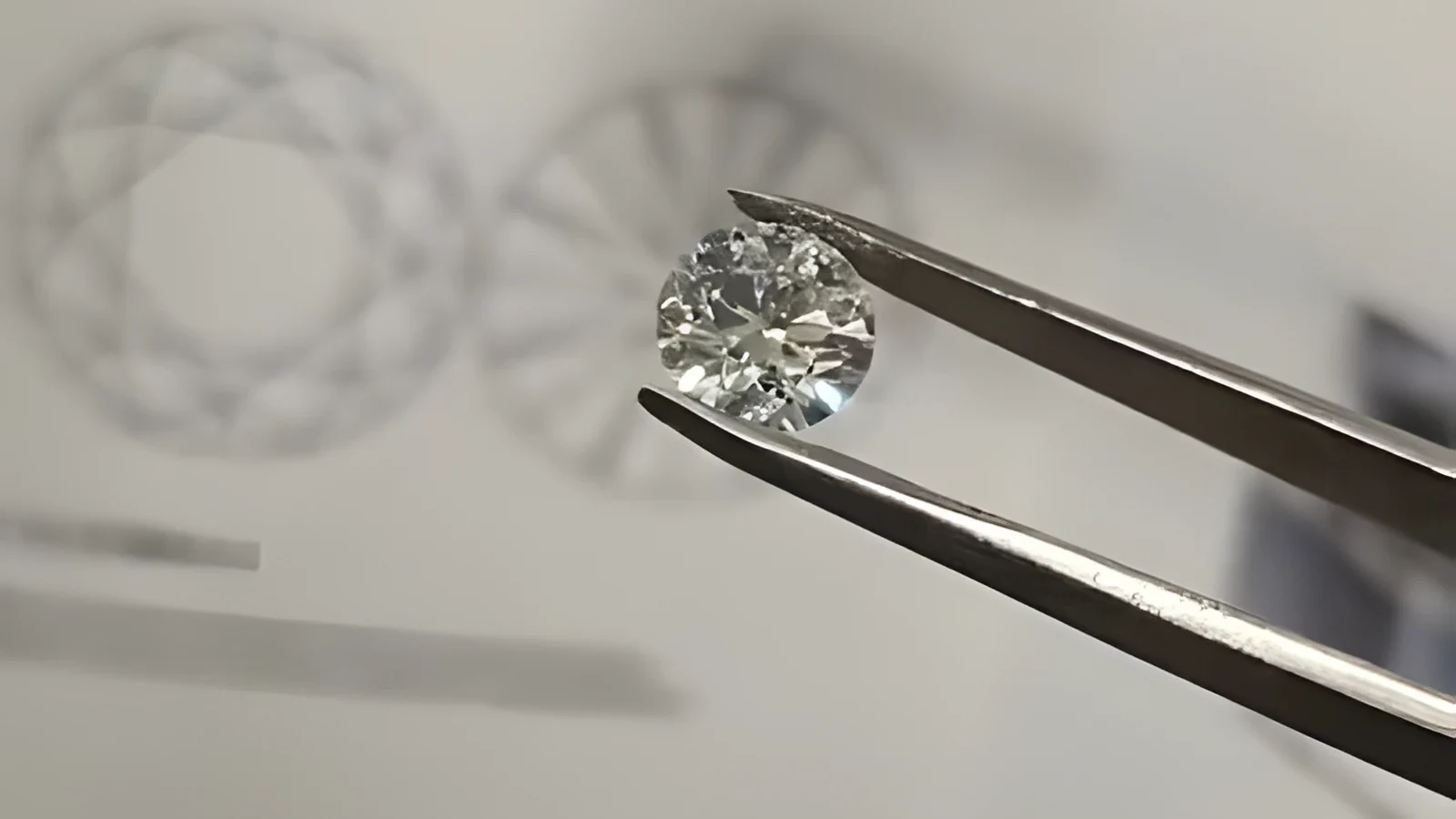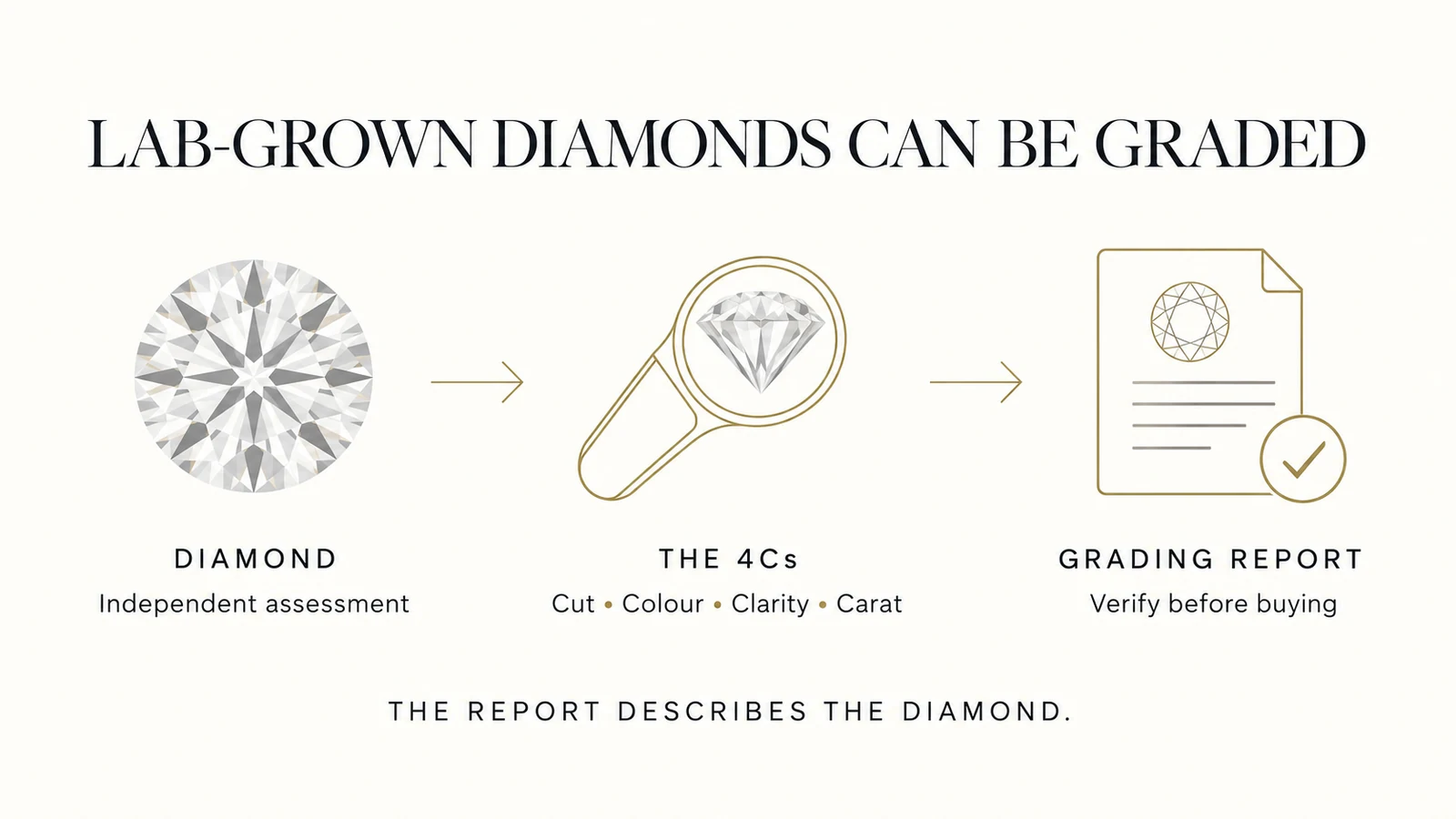
Are Lab-Grown Diamonds Certified?
A report is the one part of a diamond purchase you can check for yourself. Here is what it does and does not tell you.
The Aureva Journal explores lab-grown diamonds, diamond education, modern jewellery and the ideas shaping contemporary luxury.
A report is the one part of a diamond purchase you can check for yourself. Here is what it does and does not tell you.
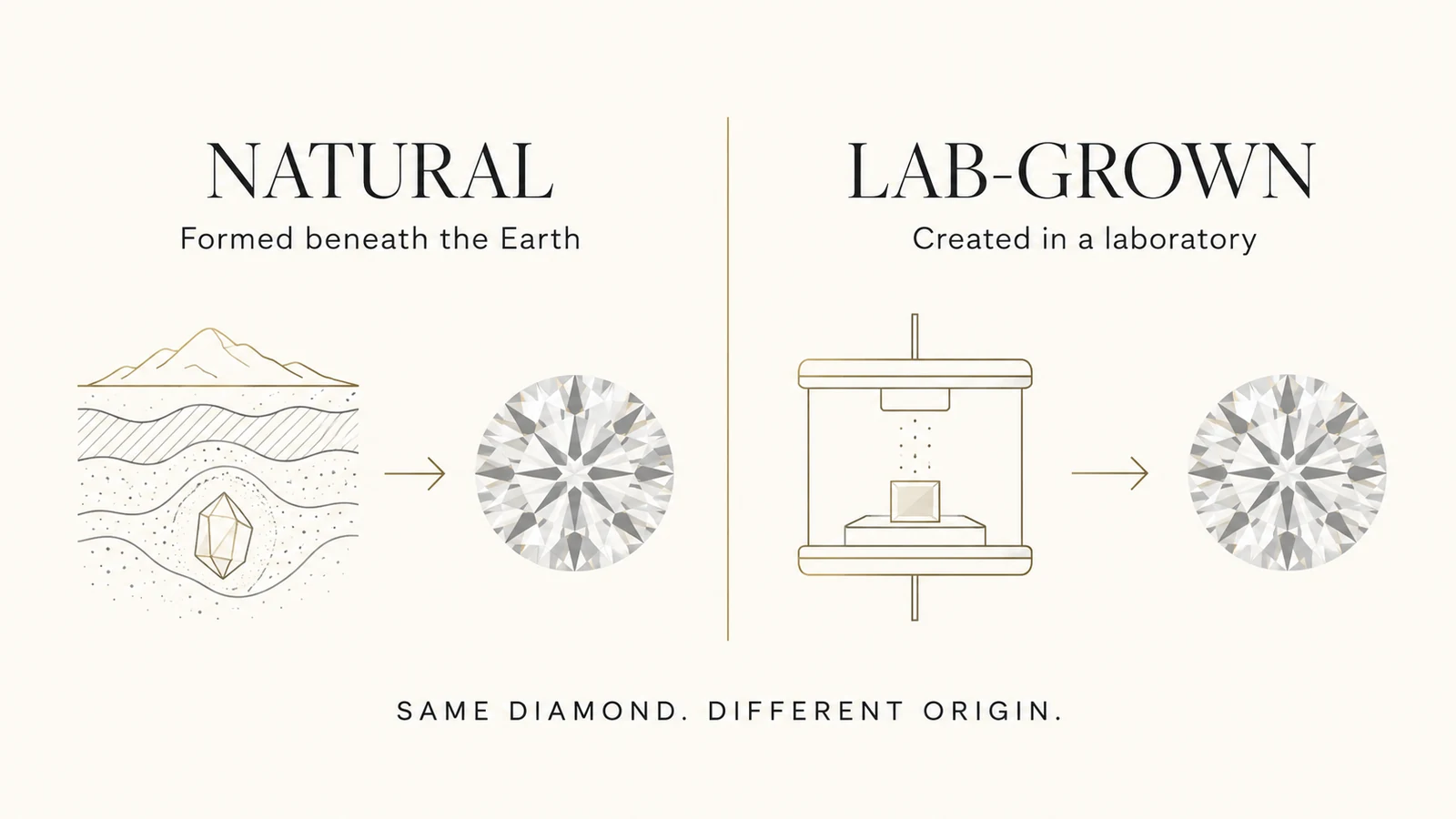
Both are diamonds. The difference sits in where they came from, and it is narrower than most people expect.
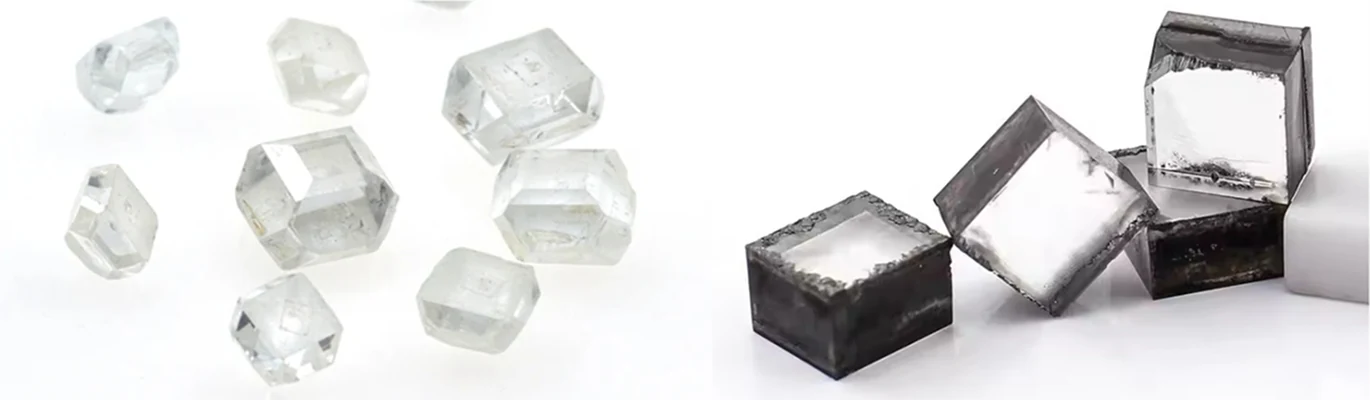
Two routes to the same material. What actually separates them, and how much it matters once a stone is finished.
Two very different processes, one result. A plain walkthrough of what happens inside each chamber.
The short answer is yes. The more useful answer is about what the question is really asking.
Same material, different origin. What that actually means, and why a simulant is a different thing altogether.
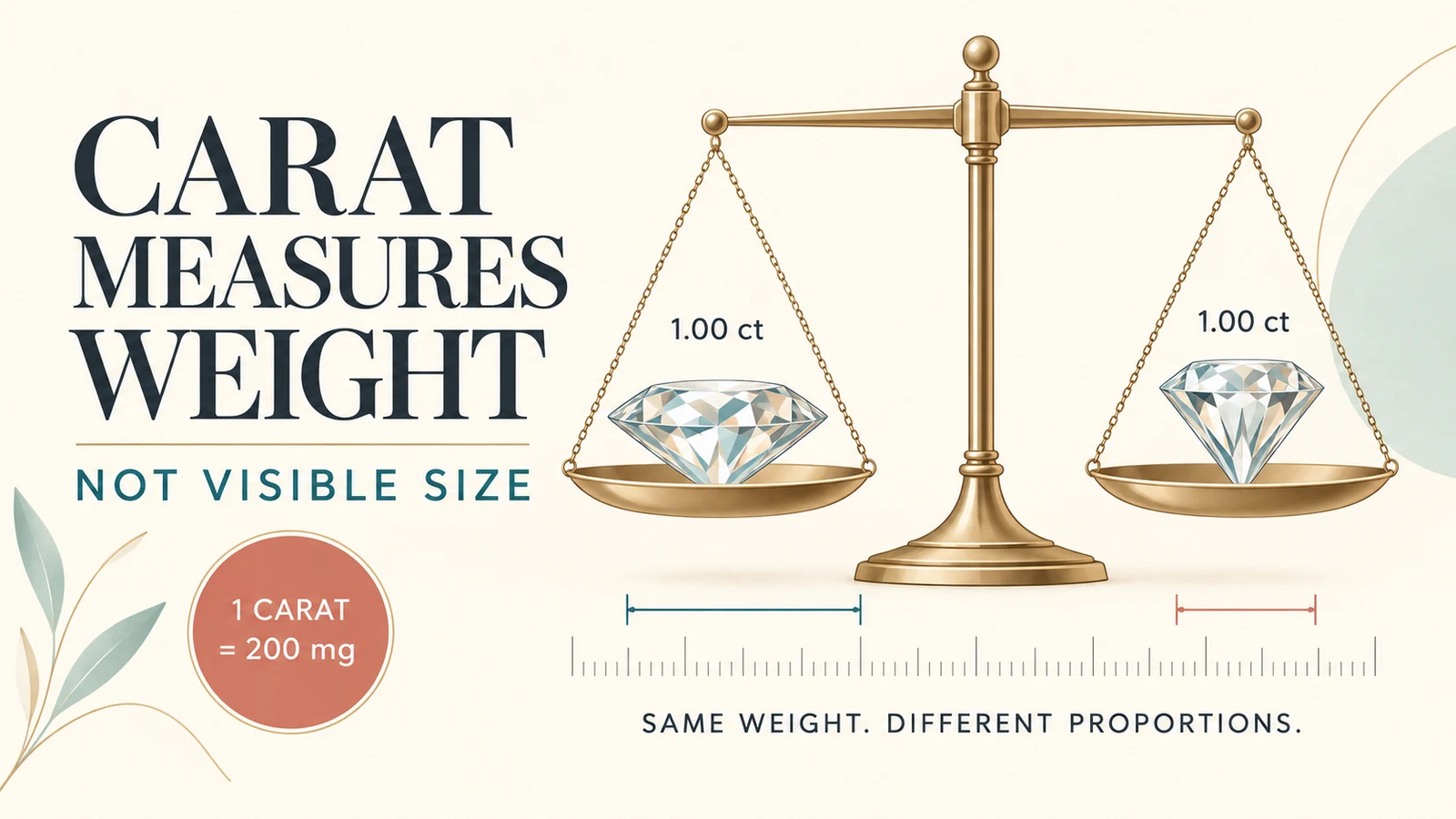
Carat is a weight, and weight can hide where nobody sees it. That gap is where most of the confusion lives.
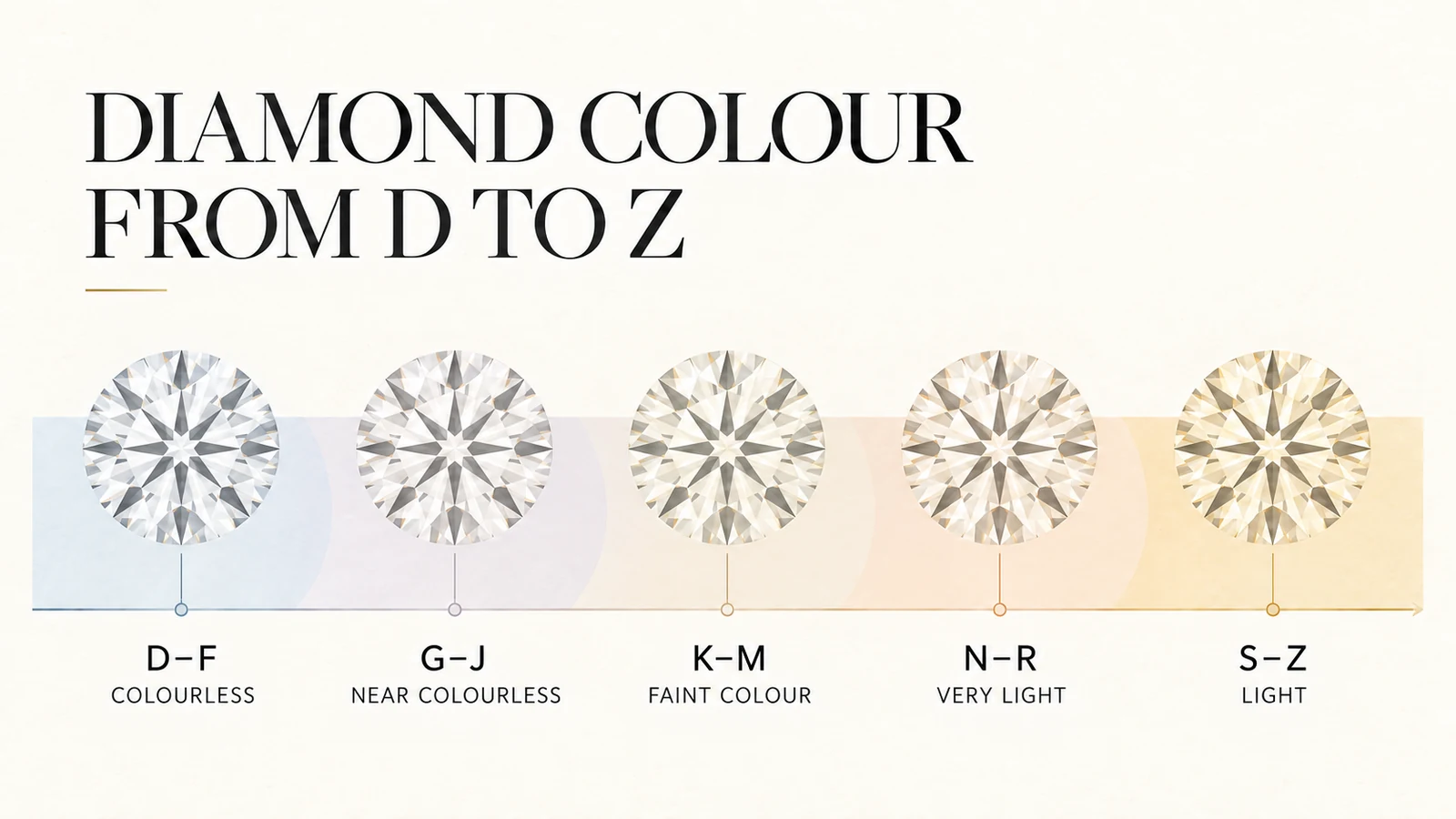
The scale runs from D downward. Shape, metal and size all change how a grade reads — but on a lab-grown diamond the colourless range costs little enough to simply stay inside it.
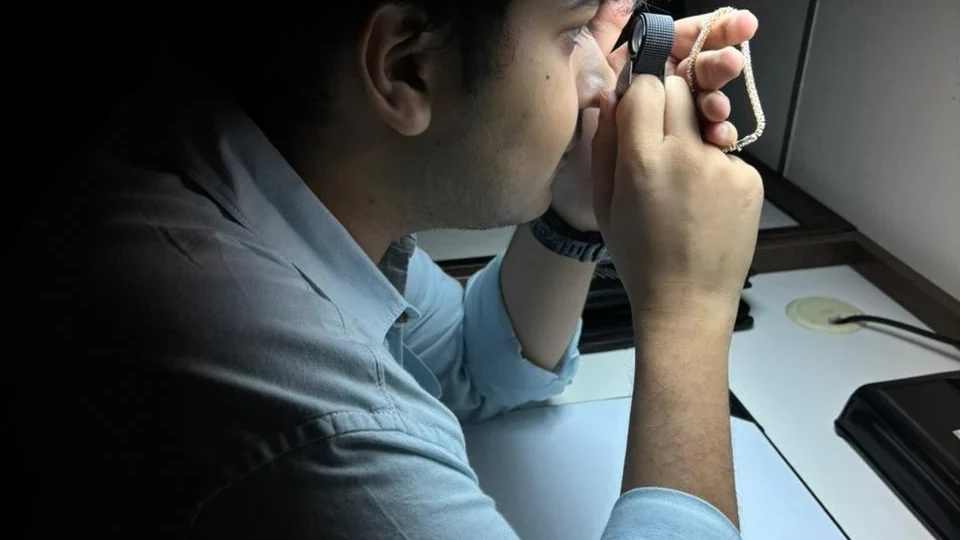
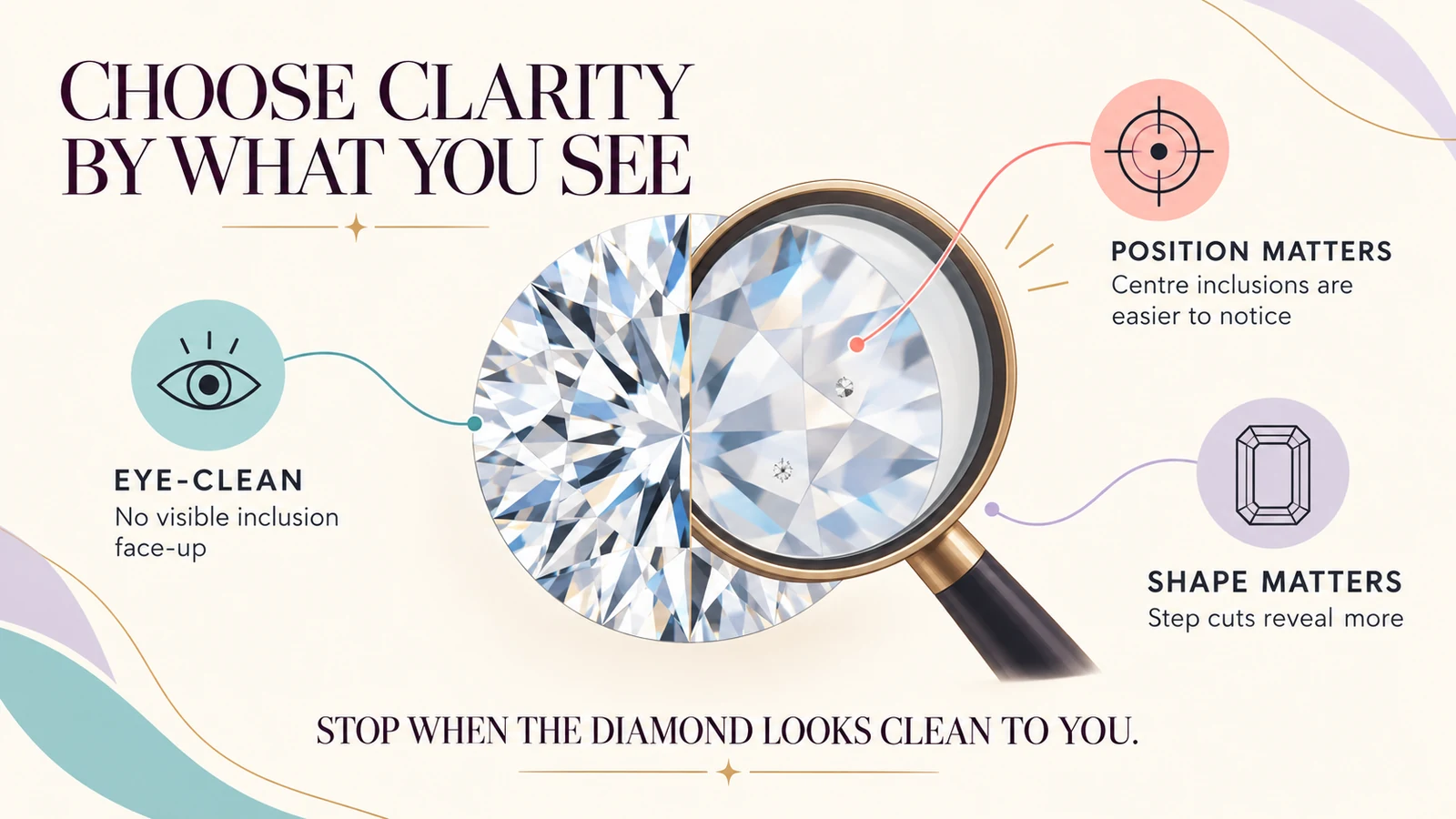
Clarity is graded under magnification; you will look at the stone with your eyes. Both facts matter — and on a lab-grown diamond you can have the top grades without choosing between them.
Shape is the outline. Cut is the craft. Only one of the two decides whether a diamond looks alive.
Four measures, one stone. What each of them describes, and why the balance between them matters more than any single grade.
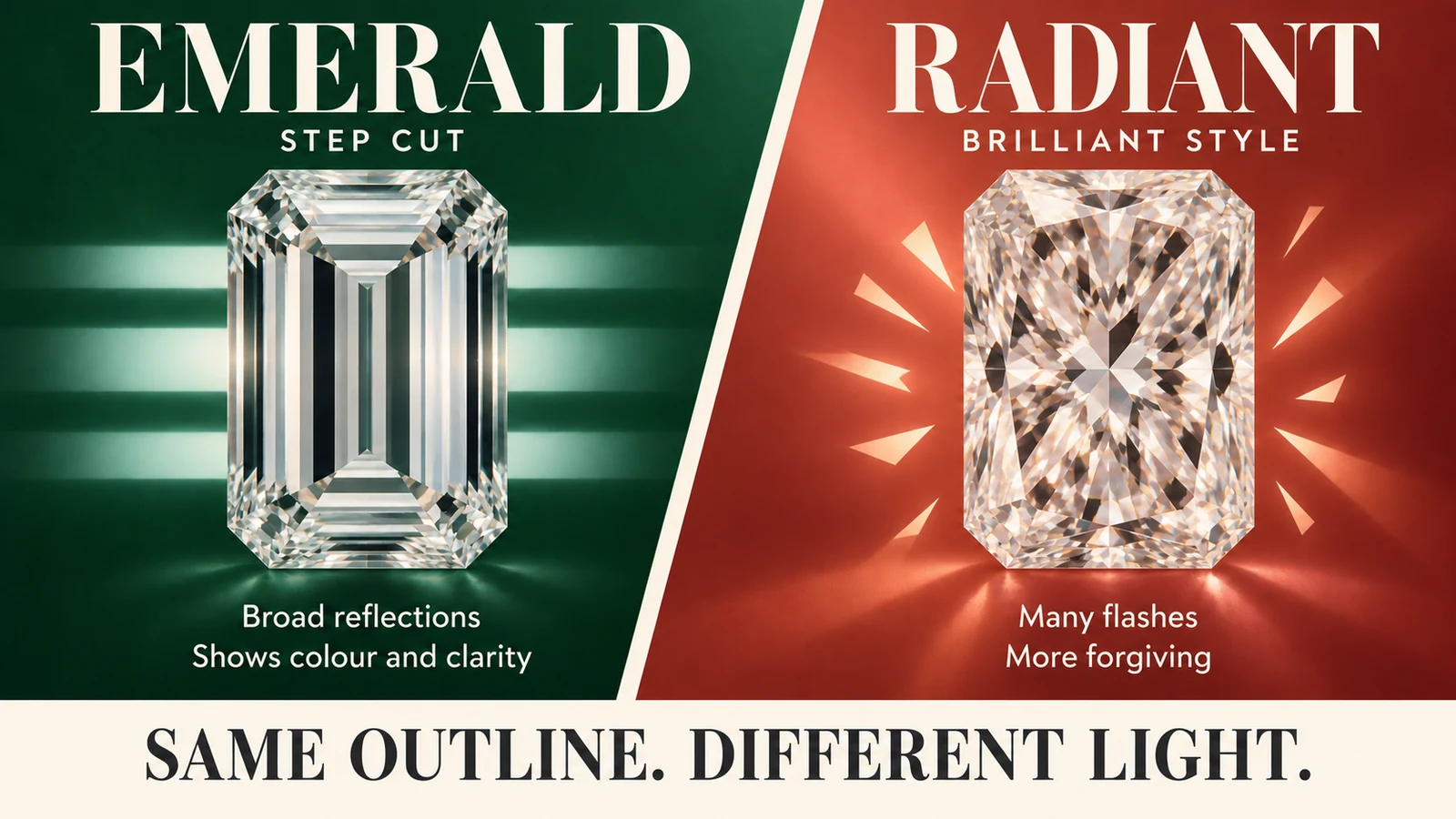
They can share a rectangular outline, but emerald and radiant cuts create almost opposite kinds of light.
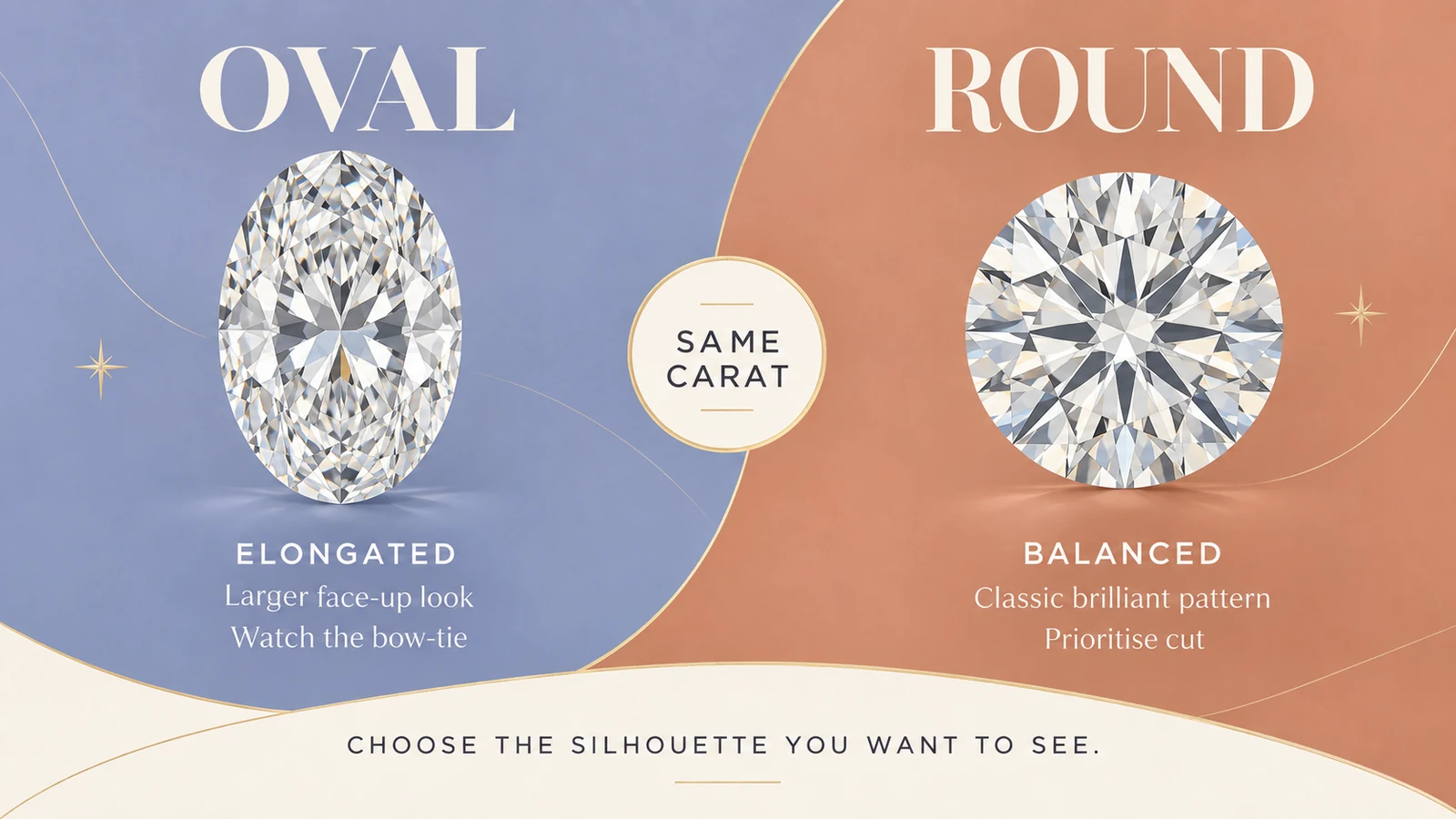
Round is the classic. Oval gives you a longer outline and can look larger for its weight. The better choice depends on what you want to see on the hand.
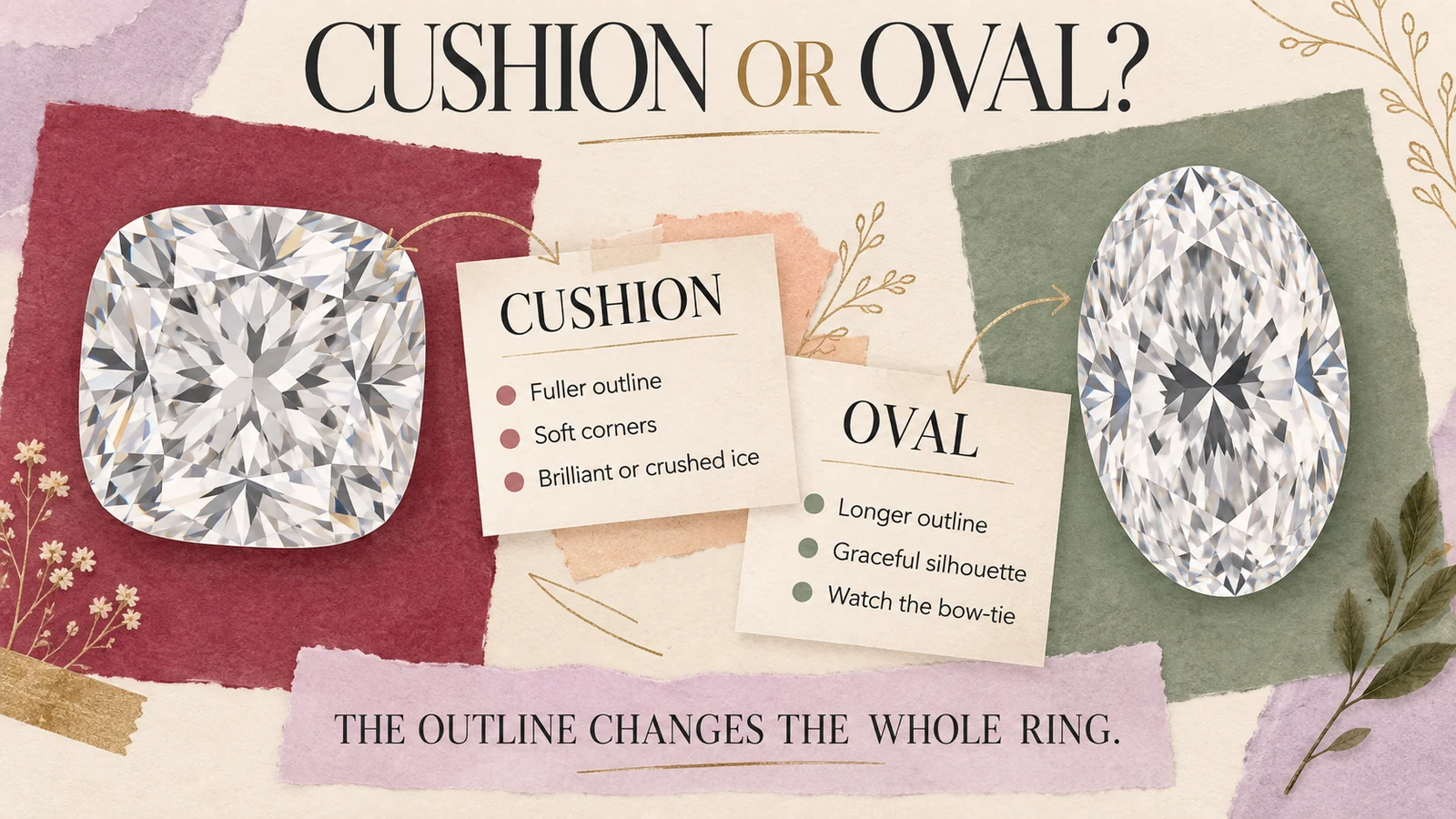
Both are softer alternatives to round, but they create very different silhouettes and patterns of light.
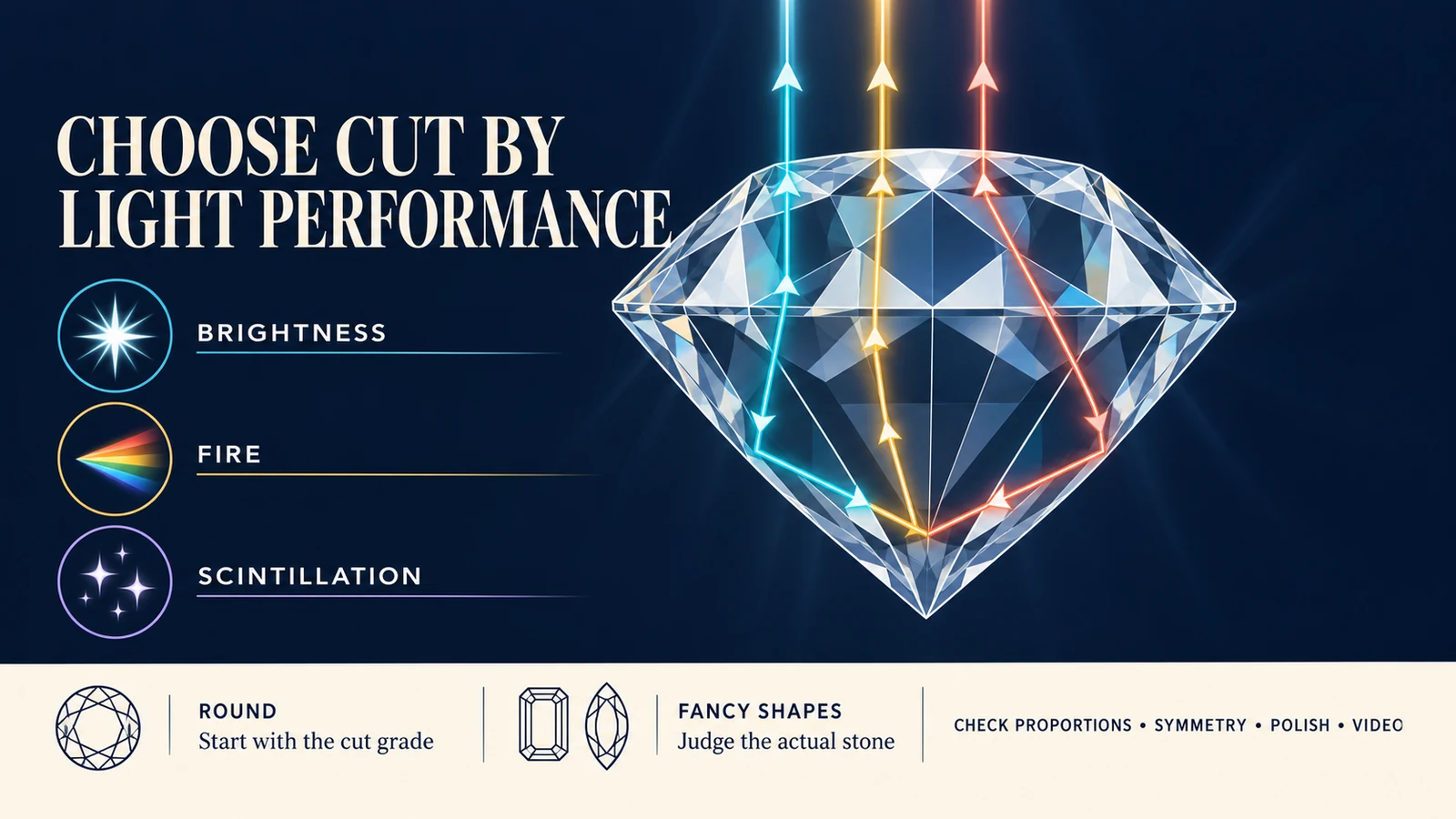
A cut grade is useful, but it is not the whole story. Learn what to check when the report does not give you an overall cut grade.
D is the top colour grade, and you do not need it. E and F sit in the same colourless range for less, which is where we would stop.
Learn to judge a stone with your own eyes — then, on a lab-grown diamond, take VVS anyway, because it costs so little to stop worrying about it.
There is no single best shape. The right one depends on the outline you like, how it sits on the hand and the kind of sparkle you want.
Carat tells you how much a diamond weighs. It does not tell you exactly how large it will look on your finger.
There is no correct number. A good diamond budget is one that fits your life before it fits a specification sheet.
You do not need to find the most expensive diamond. You need to find a diamond and design that make sense together.
@aureva_jewels
New pieces, work in progress and the occasional look at how something was made.
Follow Aureva