How to Choose a Lab-Grown Diamond Engagement Ring
You do not need to find the most expensive diamond. You need to find a diamond and design that make sense together.
Quick Answer
Choose the ring style first, then choose the diamond. Start with the shape you like, decide how large you want it to look, and compare cut, colour, clarity and carat within your budget. Finally, check the grading report and think about how the ring will feel when you actually wear it.
Key Takeaways
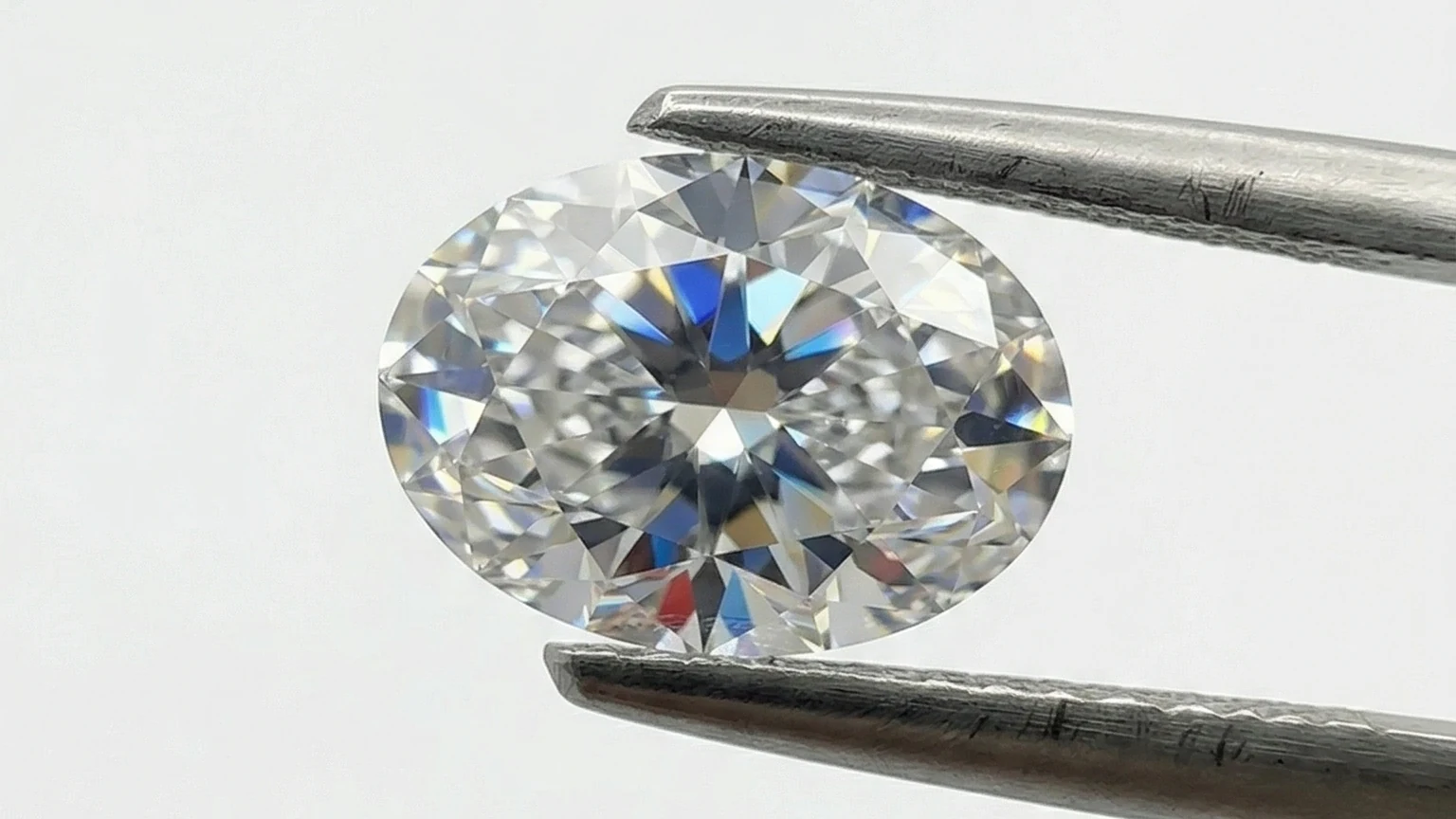
- An oval can look larger face-up than a round of the same carat weight because of its elongated outline.
- Cut has a direct effect on how a diamond handles light, so it should not be treated as an afterthought.
- On a lab-grown diamond, VVS clarity and EF colour cost far less than they do on a natural stone, so there is little reason to settle below them.
- The setting changes how the centre diamond looks, including its apparent size and colour.
- A grading report tells you about the stone, but it cannot tell you whether you personally like the finished ring.
Start With the Ring, Not the Certificate
It is very easy to start an engagement ring search by looking at diamond specifications.
That can make the process more confusing than it needs to be.
First decide what kind of ring you actually like. Do you prefer a simple solitaire, a halo, a three-stone design or something more detailed? Do you like yellow gold, white gold or rose gold? Do you want the diamond to be the main feature or part of a larger design?
Once those decisions are clearer, the diamond becomes easier to choose.
Choose the Diamond Shape
Shape is one of the most personal decisions.
Round is the classic choice and has a symmetrical outline with brilliant-style faceting. Oval gives a longer silhouette and can have a strong face-up presence. Cushion has softer corners and can feel a little more vintage. Emerald is cleaner and more reflective, while radiant gives a rectangular or square outline with more brilliant-style sparkle.
Pear and marquise shapes create a more distinctive look. Princess cuts have a crisp square or rectangular outline.
GIA notes that elongated shapes such as oval, marquise and pear can create a slimming effect on the hand.
| Shape | General look | Good starting point if you like |
|---|---|---|
| Round | Classic and symmetrical | Traditional sparkle |
| Oval | Elongated and graceful | A larger-looking outline |
| Cushion | Soft and rounded | A romantic or vintage feel |
| Emerald | Clean and reflective | Understated elegance |
| Radiant | Bright and rectangular | More sparkle with structure |
| Pear | Distinctive and tapered | Something less conventional |
| Princess | Crisp and geometric | A sharper modern look |
Pay Attention to Cut
Cut is not the same as shape.
It describes how the diamond has been fashioned, including its proportions and facet arrangement. Those details affect how light interacts with the stone.
If sparkle matters to you, cut deserves serious attention.
For round brilliant diamonds, GIA provides an overall cut grade. Fancy shapes such as oval, cushion, emerald and radiant do not currently receive the same overall GIA cut grade, so you need to look more closely at the individual stone.
Choose Colour and Clarity Based on What You See
On a natural diamond, D colour and VVS clarity are where the price climbs steeply, and most guidance tells you to stop short of them for that reason. Lab-grown changes the arithmetic rather than the gemology, and we would take EF and VVS.
How white a stone reads does depend on shape, setting and metal. GIA places D through F in the colourless range and G through J in the near-colourless range — and since EF sits inside the colourless range at a modest price on a lab-grown diamond, that is where we would stay rather than gambling on how a near-colourless stone behaves in a particular setting.
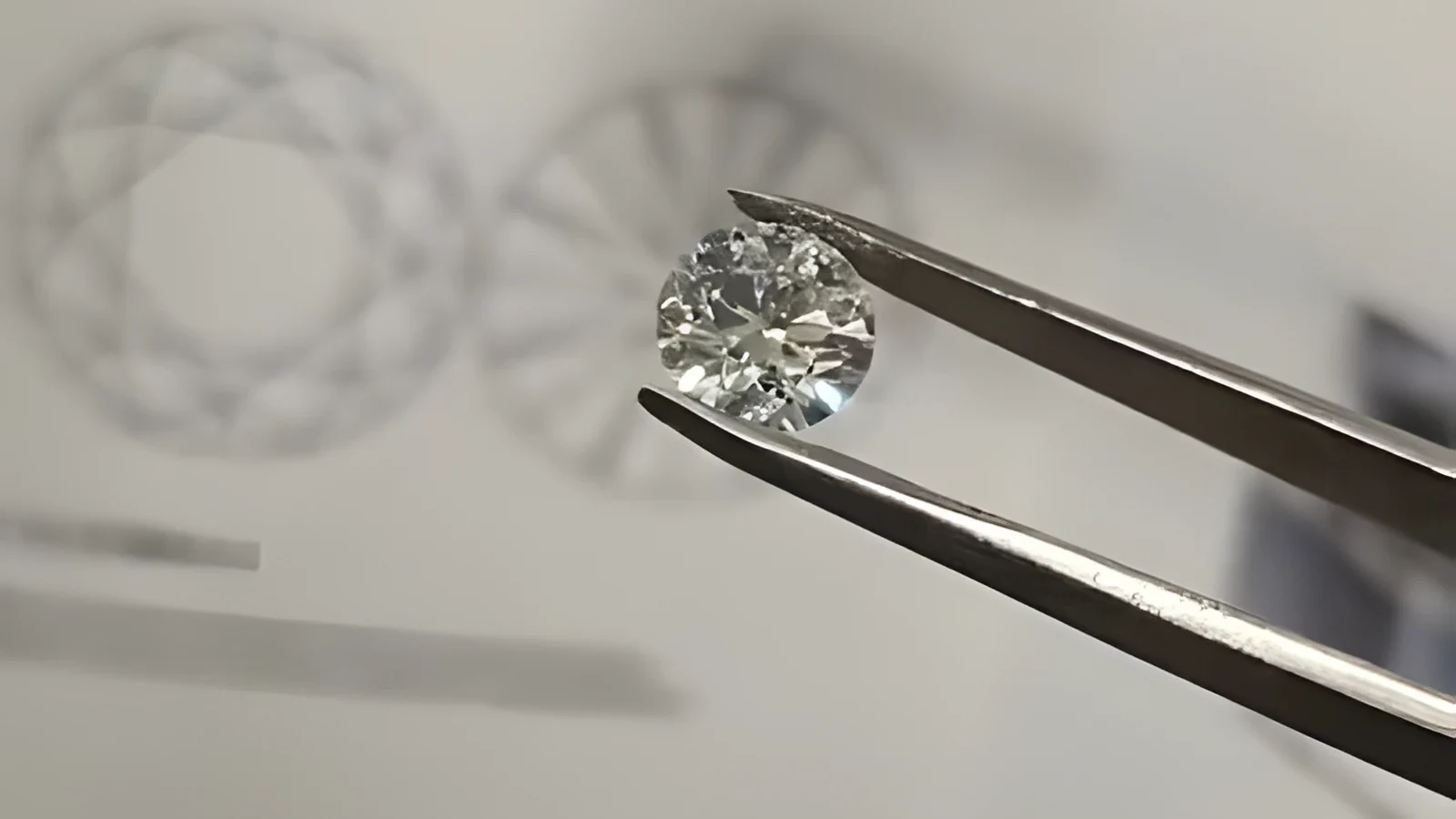
Clarity is similar. The question is not simply whether VS is higher or lower than VVS. It is whether the characteristics in that particular diamond are visible enough to bother you. GIA specifically notes that clarity depends on the size, location, visibility and number of characteristics.
Think About the Setting
The setting is not just the part that holds the diamond.
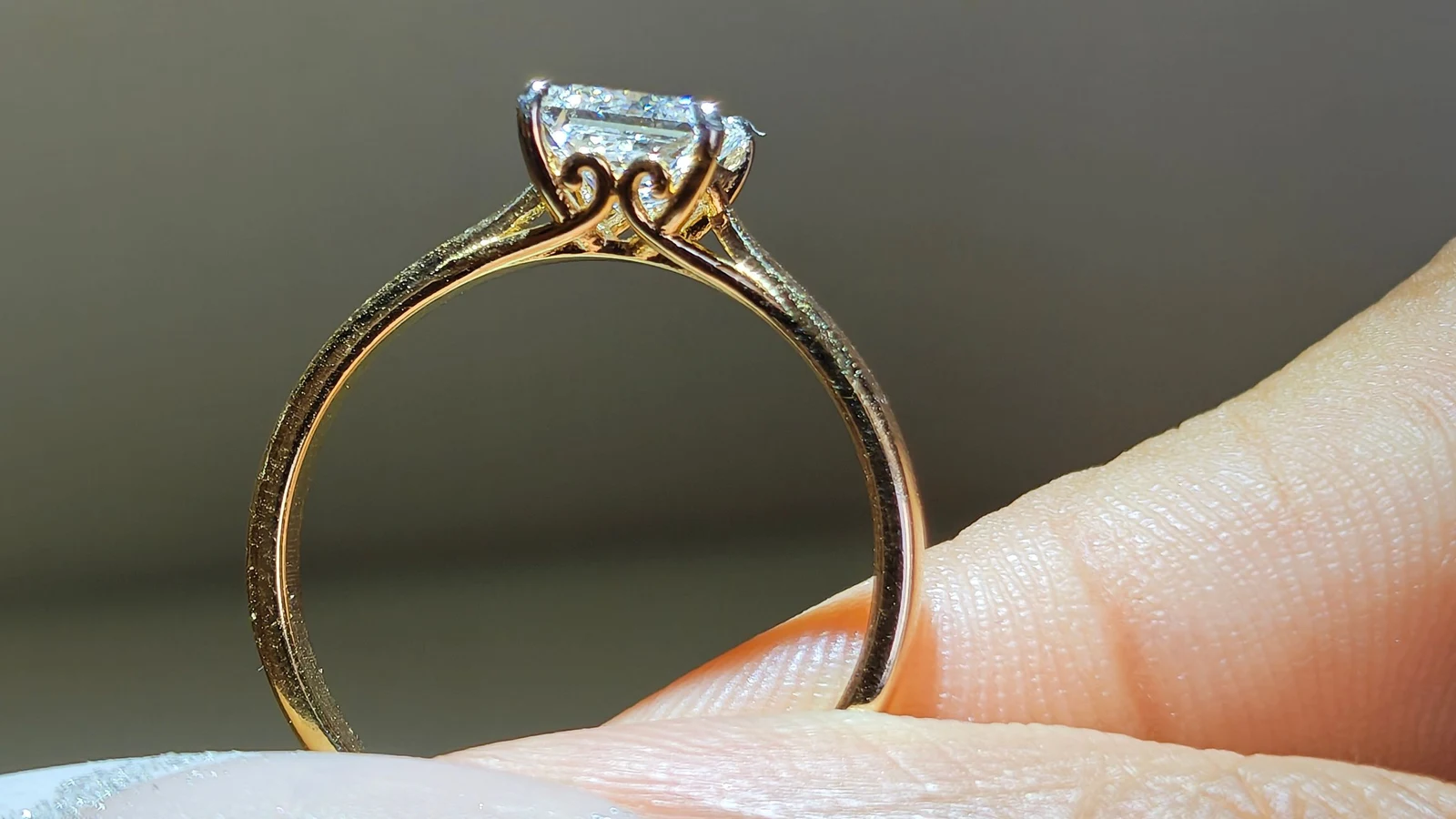
A halo can make the centre stone appear larger. A slim band can give the centre diamond more visual presence. White metal around the diamond can create a different colour contrast from yellow or rose gold.
The height of the setting also matters. A high-set ring may allow a larger centre stone to sit close to a wedding band, but it can also catch more easily on clothing.
Check the Grading Report
Before buying, check the report for the actual diamond.
Look for its laboratory-grown origin, carat weight, colour, clarity, measurements and any other information relevant to the stone.
Do not treat the report as a scorecard. It is a record of the diamond. You still need to decide whether that diamond looks good to you.
Think About Everyday Wear
An engagement ring usually spends a lot of time on the hand.
Think about whether the setting feels secure, whether the band is comfortable, whether the centre stone sits at a practical height and whether the design works with the way you use your hands every day.
A ring can look incredible in a product photograph and still not be the right ring for the person wearing it.
How We Would Approach It
At Aureva, we would rather start with the person than with the specification sheet.
If you know you want an oval solitaire in yellow gold, there is no point making you compare ten different round diamonds first. Narrow the design down, then spend the time comparing the stones that actually fit it.
That usually makes the decision feel much less overwhelming — and it is easier still if you fix the stone specification first. EF colour, VVS clarity and CVD growth are what we build to, which leaves only cut, shape and design to actually decide.
Aureva’s Perspective
If you take one shortcut from all of this, take ours: EF colour, VVS clarity, CVD-grown. That is what every Aureva ring is built around, and it is what we would tell a friend to ask for. It settles the three variables that are hardest to judge from a photograph and hardest to live with if you get them wrong, and it leaves your attention on the two things that actually make the ring yours — the cut of the stone and the design it sits in.
Frequently Asked Questions
Should I choose the diamond or the ring setting first?
Start with the overall design and shape, then compare diamonds that work with that design. The setting affects how the diamond looks, so it makes sense to consider both together.
Is a lab-grown diamond engagement ring graded the same way as a natural diamond?
Lab-grown diamonds can be independently graded using diamond characteristics such as colour, clarity and carat. The report should identify the stone as laboratory-grown.
Do I need D colour for an engagement ring?
You do not need D specifically. E and F sit in the same colourless range and cost less, which is why EF is the standard we build to. What we would not do on a lab-grown diamond is drop below the colourless range to save money, because the saving is small and the warmth is permanent.
What should I prioritise if my budget is limited?
Start with the look you want. Then compare cut, visible size, colour and clarity to find the combination that gives you the best result for your budget.
Should I choose a round or fancy shape?
Choose the outline you prefer. Round is classic, while fancy shapes give you more variety in silhouette and can sometimes offer a different face-up look for the weight.
About the Author
The Aureva Editorial Team
The Aureva editorial team writes the Journal. We work with lab-grown diamonds and 14KT gold every day, and we write about what we can verify, such as grading reports, growth methods, and what we see across our own orders.