The 4Cs of Diamonds: Cut, Colour, Clarity & Carat Explained
Four measures, one stone. What each of them describes, and why the balance between them matters more than any single grade.
Quick Answer
The 4Cs of diamonds are Cut, Colour, Clarity and Carat. They describe important characteristics of a diamond. Carat tells you the diamond's weight. Colour describes its body colour. Clarity describes internal and external characteristics. Cut describes how the diamond has been fashioned and how its proportions and facets affect its interaction with light.
Key Takeaways
- Carat measures weight, not size.
- Colour describes body colour.
- Clarity describes inclusions and blemishes.
- Cut has a major effect on how a diamond handles light.
- A higher grade in one C does not automatically make a diamond better overall.
- The right balance depends on the individual diamond and your priorities.
Why Are the 4Cs Important?
Buying a diamond can get confusing quickly.
You may hear terms such as VS, VVS, D colour, one carat and excellent cut. The 4Cs give you a basic framework for understanding what these terms mean.
They are not a complete description of everything that makes a diamond appealing, but they are a useful starting point.
1. Cut
Cut is about how the diamond has been fashioned.
It includes things such as proportions, symmetry and the way the facets are arranged.
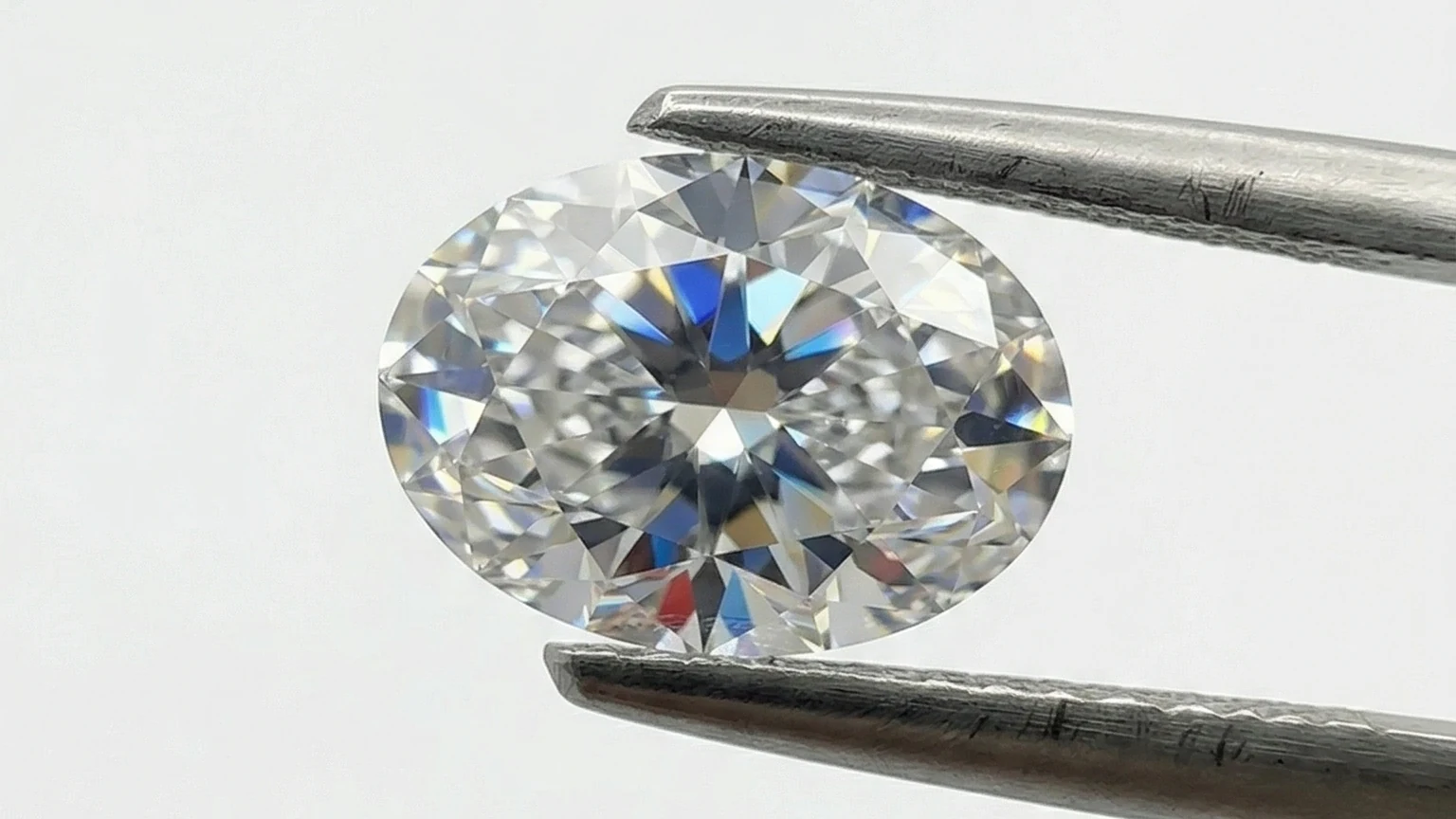
A well-cut diamond can return light effectively and show strong brightness, fire and scintillation.
Cut is often confused with shape.
For example, "oval" describes a shape. "Cut" describes how that oval was fashioned and how it interacts with light.
2. Colour
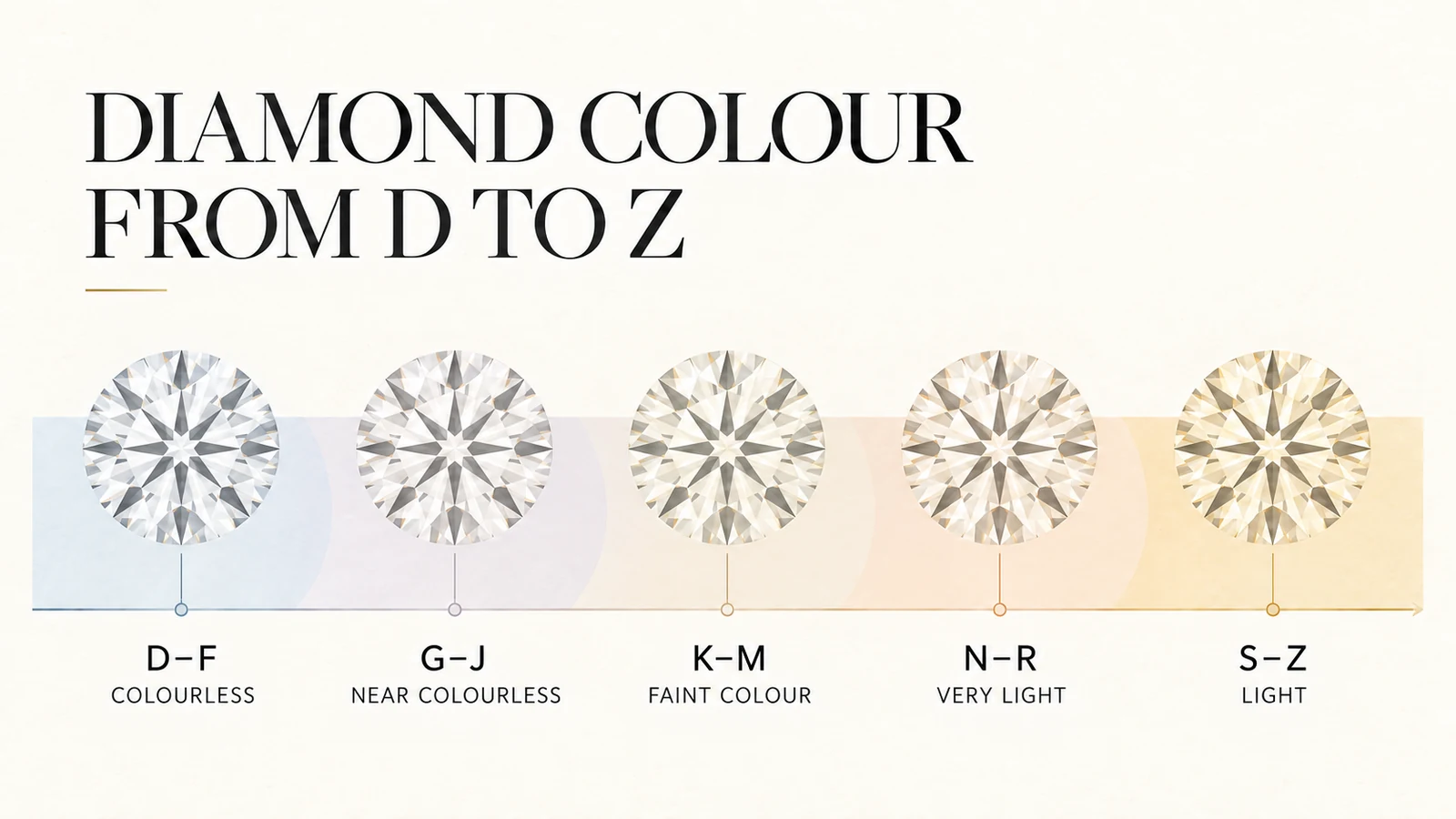
For many white diamonds, colour grading describes how much body colour is visible.
The commonly used scale runs from D, at the colourless end, downward as more colour becomes noticeable.
Shape, setting and metal colour all affect how a colour grade reads in the finished piece. On a natural diamond that is where the compromises start, because each step up the scale costs a great deal. On a lab-grown diamond it costs a fraction of that, so there is little reason to plan around a lower grade when the colourless range is within reach.
3. Clarity
Clarity describes internal and external characteristics, often called inclusions and blemishes.
The scale includes categories such as Flawless, Internally Flawless, VVS, VS, SI and Included.
Not every inclusion is equally visible. Two diamonds with the same clarity grade can still look different, so it is useful to look at the actual stone rather than the grade alone.
4. Carat
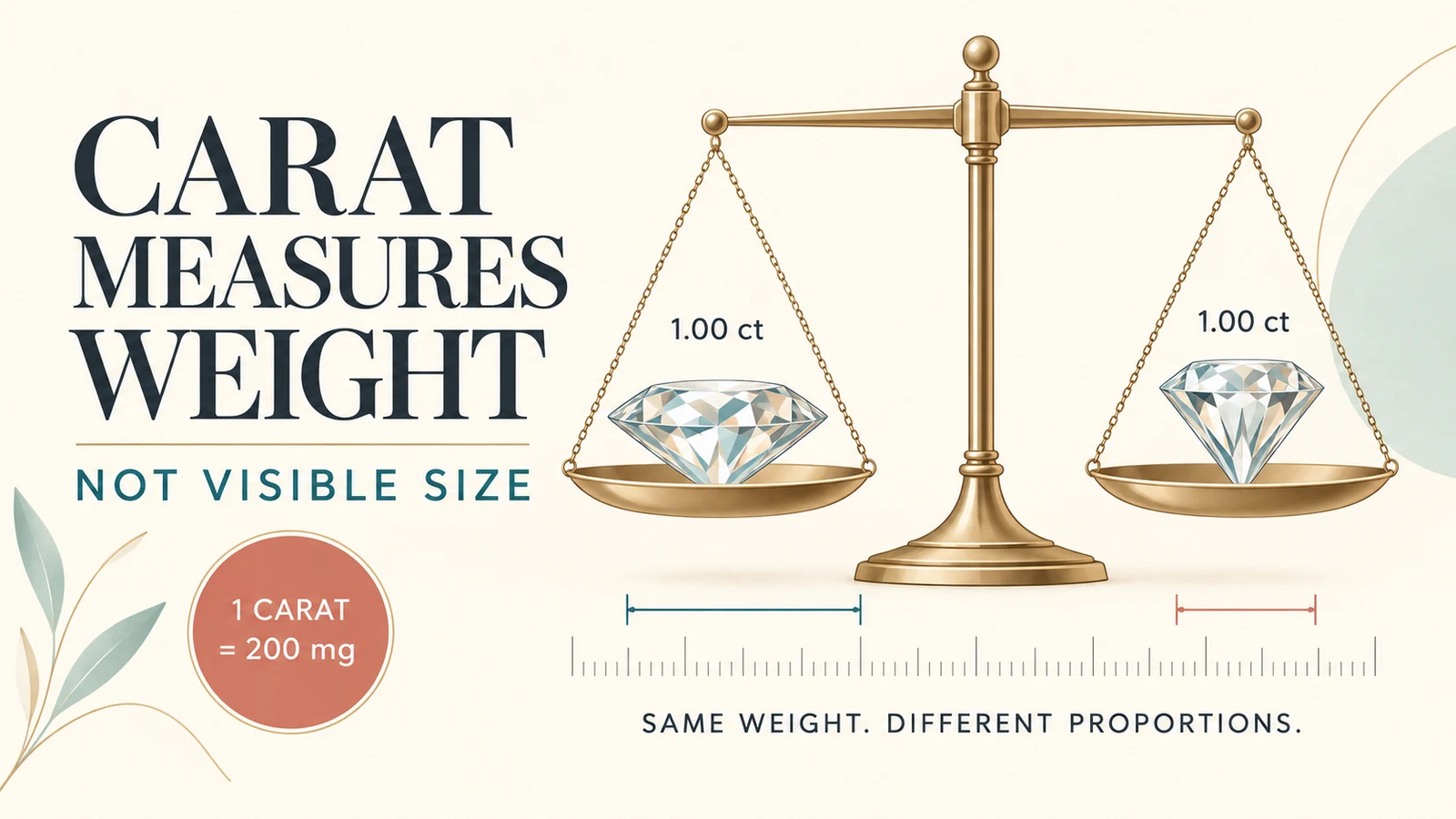
Carat is a measurement of weight.
One carat equals 200 milligrams.
A larger carat weight generally means a heavier diamond, but carat and visible size are not exactly the same thing. Shape and proportions affect how large a diamond looks from the top.
The 4Cs Work Together
It is easy to think of the 4Cs as a ladder where you simply choose the highest grade available.
Real diamond buying is not quite that simple.
With a natural diamond you generally have to choose: spend on cut, or spend on colour and clarity, or spend on size. The premium at the top of each scale is what forces that choice.
The right combination depends on your priorities and the individual diamond.
A Simple Example
Imagine you are comparing two one-carat diamonds.
Diamond A has higher colour and clarity grades but weaker proportions.
Diamond B has slightly lower colour and clarity grades but a stronger cut and better visual appearance.
There is no rule saying Diamond A must be better. On a natural diamond that is a real dilemma, and it is the reason most diamond advice is written as a series of trade-offs. On a lab-grown diamond it largely dissolves: the difference in price between the top grades and the ones just below is small enough that you can have a strong cut, EF colour and VVS clarity together, rather than picking two of the three. If you are buying lab-grown, that is what we would do. Buy the best quality, because for the first time you can.
This is why diamond buying involves looking at the whole stone.
What Should You Prioritise?
There is no universal order, but a practical starting point is to pay close attention to cut and overall appearance.
Then set colour and clarity rather than trading them: on a lab-grown diamond, EF and VVS cost little enough that they are worth fixing, and carat can take whatever the budget has left.
For some shapes, the balance can be different.
Aureva’s Perspective
We think the 4Cs are useful because they make diamond terminology much less intimidating. But once you understand them, our own answer is short. We build Aureva pieces around EF colour and VVS clarity, and we would tell you to hold that line too. On a lab-grown diamond the step up to EF/VVS costs far less than it does on a natural stone, and it removes the two things people most often come to regret: a warmth that shows once the stone sits against white metal, and an inclusion they cannot stop looking for. Set colour and clarity there, then spend everything else on cut and on the design.
Frequently Asked Questions
Which of the 4Cs is most important?
There is no single answer. Cut can have a major effect on appearance, but the right balance depends on the diamond, shape, budget and your priorities.
Does higher carat mean a better diamond?
No. Carat measures weight. A larger diamond is not automatically a better-cut or better-looking diamond.
Is D colour always the best?
D is at the top of the standard colour scale, but you do not need D specifically — E and F sit in the same colourless range for less. What we would avoid on a lab-grown diamond is dropping below that range, because the saving is modest and the warmth is permanent.
Is VVS better than VS?
VVS is a higher clarity grade than VS, and the visibility and type of inclusions in the actual stone still matter. On a natural diamond the gap in price between them is what makes VS the sensible choice for many buyers. On a lab-grown diamond that gap is much smaller, which is why we build to VVS and would suggest you do the same.
Are the 4Cs used for lab-grown diamonds?
Yes. Lab-grown diamonds can also be evaluated using diamond grading criteria such as carat, colour, clarity and cut.
Sources

About the Author
The Aureva Editorial Team
The Aureva editorial team writes the Journal. We work with lab-grown diamonds and 14KT gold every day, and we write about what we can verify, such as grading reports, growth methods, and what we see across our own orders.