How to Choose Diamond Clarity
Learn to judge a stone with your own eyes — then, on a lab-grown diamond, take VVS anyway, because it costs so little to stop worrying about it.
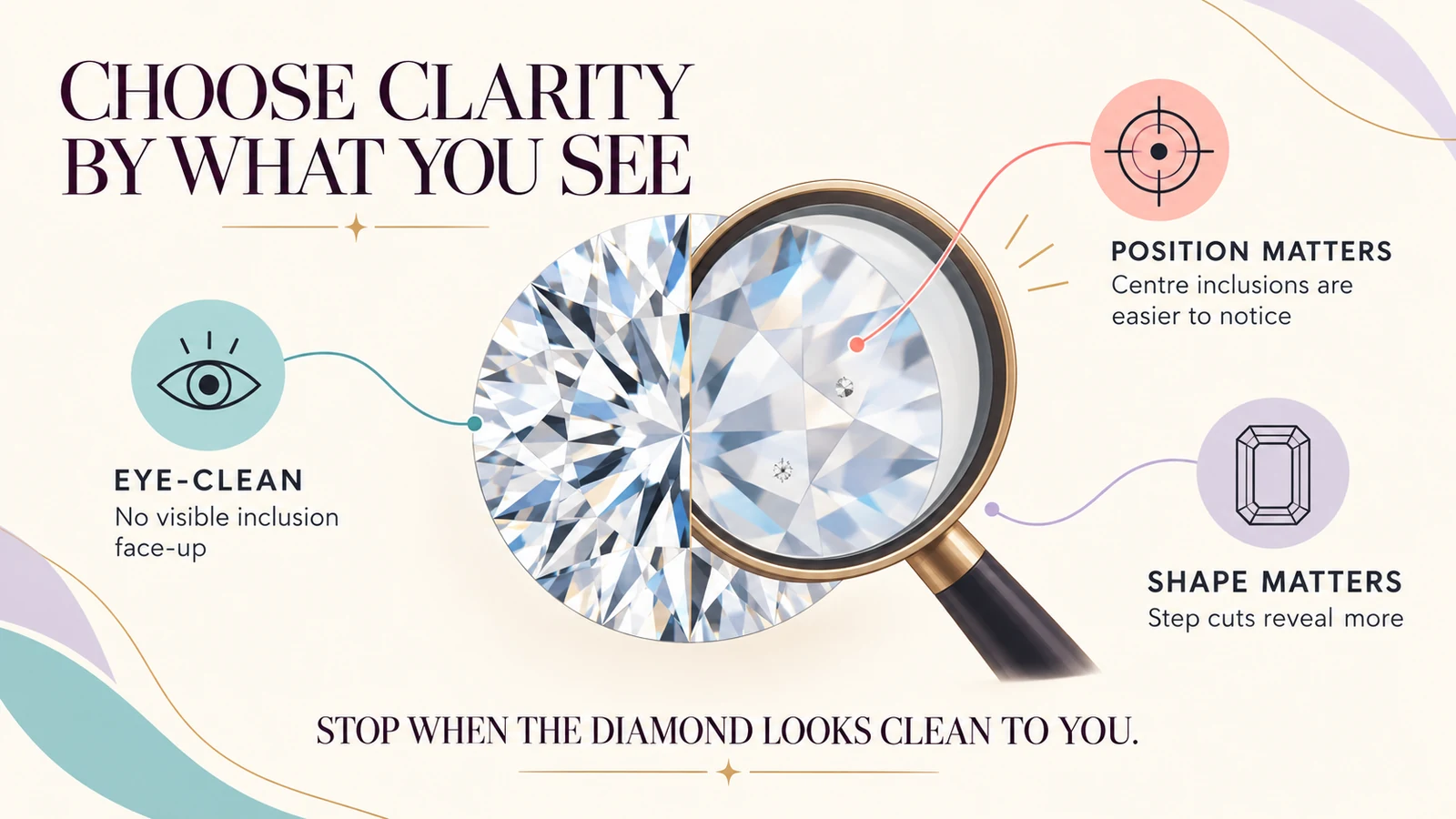
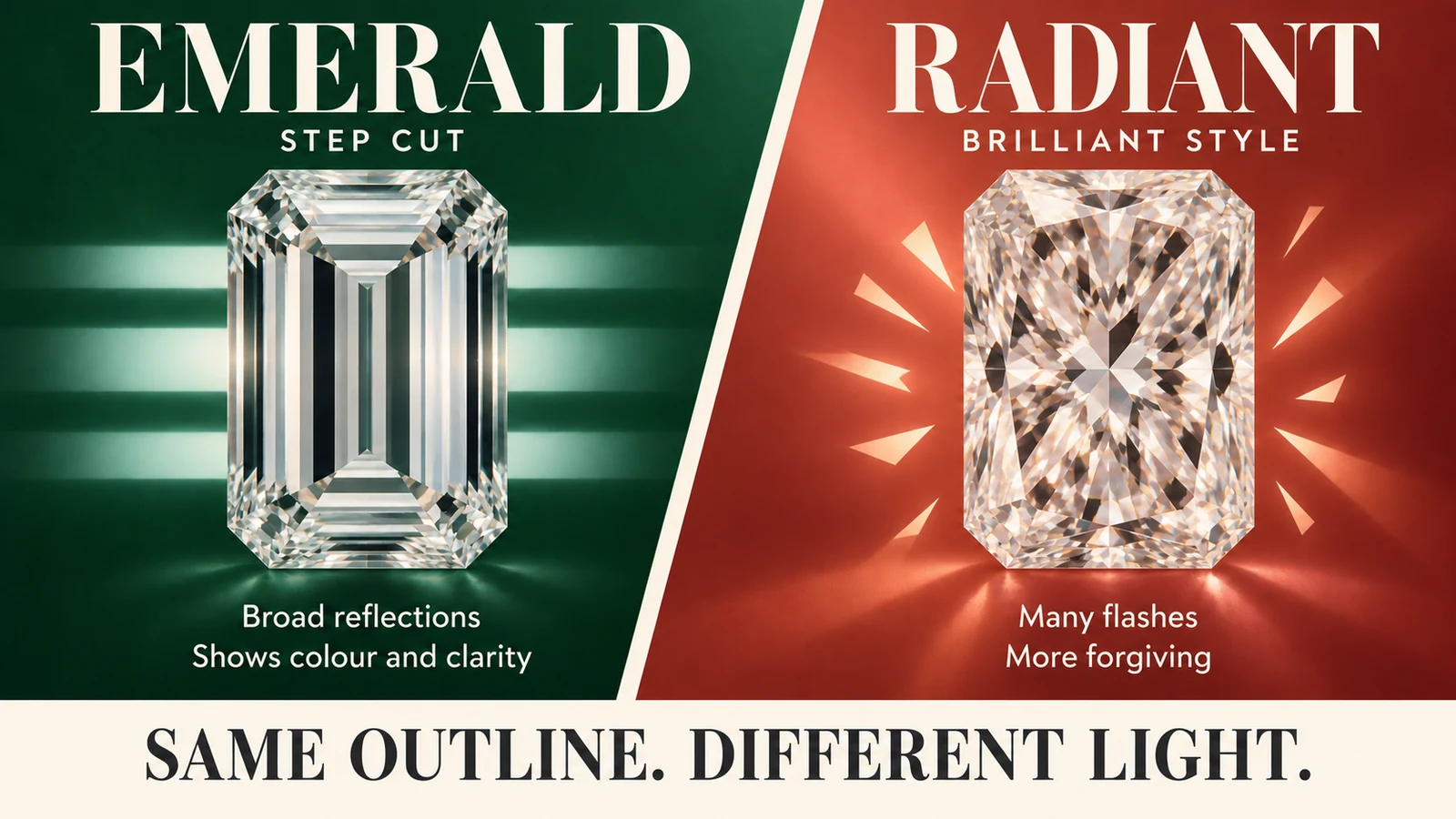
The illustration explains eye-clean appearance, inclusion position and shape. The guide below also explains Aureva’s separate preference for VVS clarity in lab-grown diamonds.
Quick Answer
Choose clarity by looking at the actual diamond, not just the letters on the report. A diamond's clarity grade considers the size, number, position and visibility of its characteristics. Some VS and SI diamonds can be eye-clean, although there is no fixed eye-clean grade. Shape, carat size and the location of an inclusion all affect what you can see.
Key Takeaways
- "Eye clean" is a buying description, not an official GIA clarity grade.
- The position of an inclusion can matter as much as its clarity grade.
- Larger diamonds can make the same inclusion easier to notice.
- Broad step-cut facets can reveal inclusions more readily than many brilliant cuts.
- On a lab-grown diamond the step up to VVS is small enough that there is little reason not to take it.
Start With the Actual Stone
Clarity grades are useful because they give buyers a standard language.
But the report cannot show you everything you will notice in person.
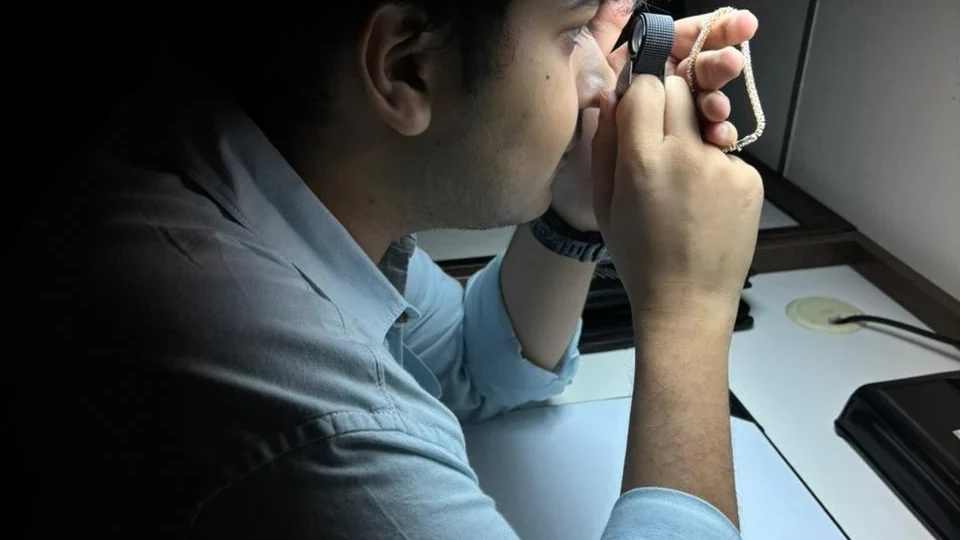
GIA evaluates clarity under 10x magnification and considers the size, nature, position, colour or relief and quantity of clarity characteristics.
Your eye sees something simpler: is there anything in this diamond that bothers me?
That is the question a buying guide should help you answer.
Where Does "Eye Clean" Usually Sit?
There is no official clarity grade that means eye clean.
GIA explicitly describes eye clean as an industry term and does not use it as a grading category.
In practice, some VS stones and some SI stones can look eye-clean, but the actual stone matters more than the grade label.
But you cannot apply that as a rule to every diamond.
Why Inclusion Position Matters
Imagine two diamonds with the same clarity grade.
One has a tiny inclusion near the edge.
The other has a similar inclusion directly under the table.
The second may be much easier to notice.
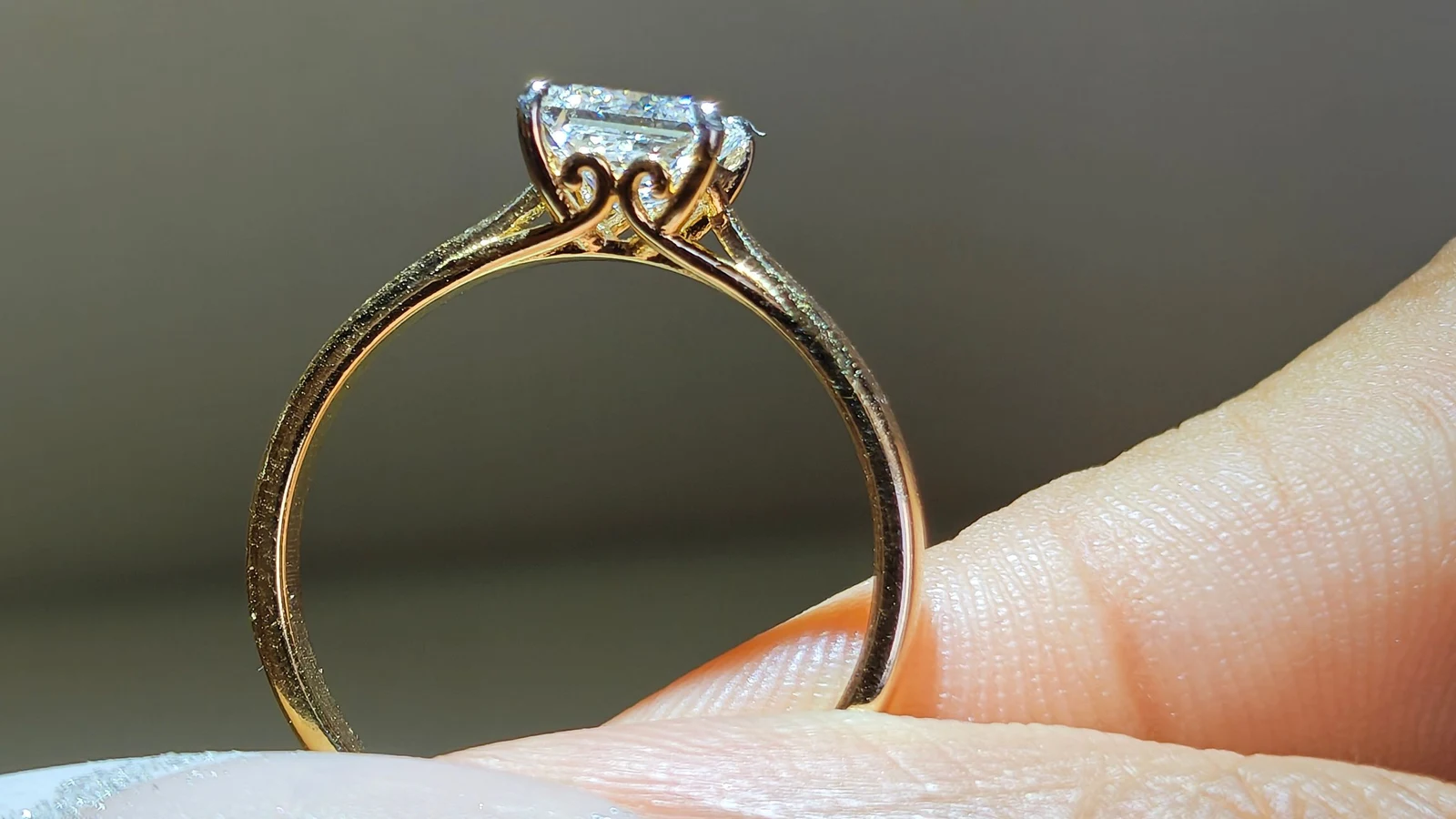
GIA notes that inclusions away from the centre can be less visible and that some can be hidden by the setting.
That is why the clarity plot and actual stone are both useful.
Size Changes the Equation
A characteristic that is hard to notice in a small diamond can become easier to see as the stone gets larger.
It means the same clarity grade can behave differently depending on the stone.
If you are buying a larger centre diamond, spend more time looking at the actual stone rather than choosing from a grade alone. On a natural stone that size VVS carries a real premium, which is why many buyers stop short of it. On a lab-grown diamond it does not, so we treat VVS as the floor rather than the upgrade.
Shape Matters Too
Brilliant-style shapes can break up the view of some inclusions through their faceting.
Step-cut diamonds such as emerald cuts have broad, open facets, so inclusions can be easier to see.
GIA recommends paying particular attention to clarity when considering step cuts because their faceting can reveal characteristics more readily.
VS vs VVS
VVS is a higher clarity category than VS.
The question is whether you can see a difference that matters.
If a VS1 diamond is clean to your eye, the visible gain from VVS may be nothing at all — and on a natural stone that is a strong argument for stopping at VS.
On a lab-grown diamond the argument weakens, because what you save by stopping is small. That is why we take VVS: not because it always looks different, but because it costs little to never wonder.
What You Are Actually Paying For
A useful stopping point is when further clarity improvement stops changing what you see.
If you compare a VS and a VVS diamond and cannot see a meaningful difference, the question becomes what that difference costs. On a natural diamond it is enough to redirect into cut or size. On a lab-grown diamond it usually is not.
GIA similarly notes that buyers who cannot see inclusions with the unaided eye may already have a clarity level suitable for their jewellery.
A Practical Clarity Checklist
Before choosing:
- Read the clarity grade.
- Look at the inclusion plot if available.
- Find out where the main characteristics are.
- View the diamond without magnification.
- Check it under more than one lighting condition.
- Compare it with another diamond.
- Decide what the higher grade costs — on a lab-grown diamond, usually very little.
How We Think About Clarity
We would rather show someone two diamonds than tell them a grade is better in the abstract. But when the stone is lab-grown and VVS costs so little more, our advice is simply to take it.
Clarity is useful information.
On a lab-grown diamond it also does not have to be a compromise, which is the part that has genuinely changed.
Aureva’s Perspective
The advice above is about learning to judge a stone with your own eyes, which is a skill worth having. Our own answer, though, is to buy VVS and stop optimising. Aureva builds to VVS, and on a lab-grown diamond the premium over an eye-clean SI is small enough that we would always spend it. It buys you a stone you never have to inspect again, which is worth more over twenty years than the difference shows on the invoice.
Frequently Asked Questions
What is the best clarity grade to buy?
There is no universal best grade. A good starting point is to find the lowest grade that still gives you the visual appearance you want.
Is VS clarity good enough?
Often, yes, but it depends on the individual stone. Some VS diamonds can be very difficult to distinguish from higher clarity stones without magnification.
Is VVS worth paying more for?
Only if the higher grade matters to you. If both diamonds look equally clean, the extra money may be better used elsewhere.
Are SI diamonds eye clean?
Some can be, but not all. SI covers a range of diamonds, and the actual inclusion type and position matter.
Does clarity matter more in an emerald cut?
It can. Step-cut facets are more open and can make inclusions easier to see, so inspect the actual emerald diamond carefully.
About the Author
The Aureva Editorial Team
The Aureva editorial team writes the Journal. We work with lab-grown diamonds and 14KT gold every day, and we write about what we can verify, such as grading reports, growth methods, and what we see across our own orders.