How to Choose Diamond Colour
D is the top colour grade, and you do not need it. E and F sit in the same colourless range for less, which is where we would stop.
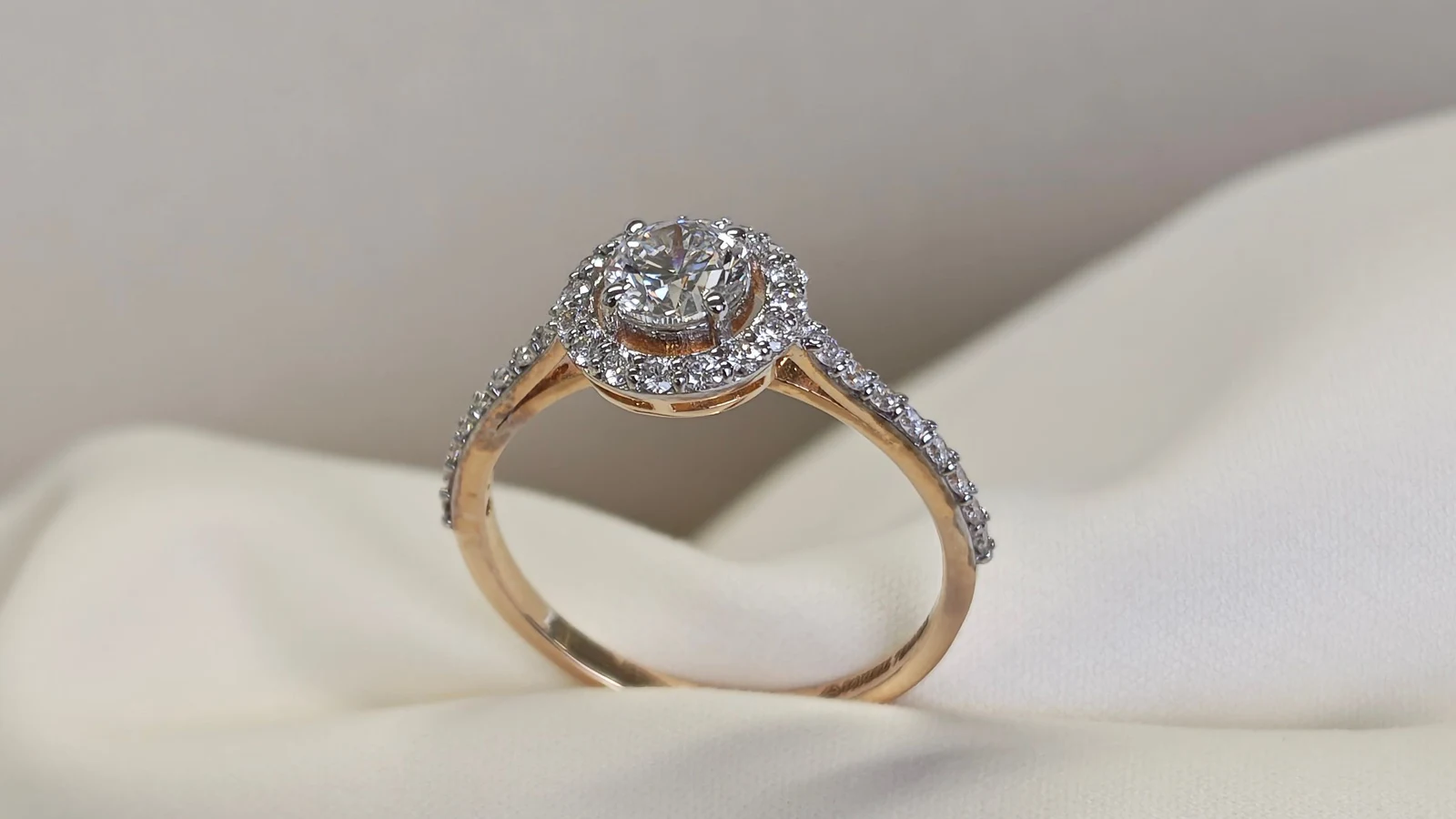
Quick Answer
Choose diamond colour based on the actual look you want in the finished jewellery. D through F are in the colourless range and G through J are near-colourless on the GIA scale. The right stopping point depends on the diamond's shape, size, cut, metal and setting. A well-cut near-colourless diamond can look very white in jewellery — but on a lab-grown stone the colourless range costs little enough that we would stay inside it rather than rely on the setting to do that work.
Key Takeaways
- D is the top of the GIA D-to-Z colour scale.
- G through J are generally considered near-colourless.
- White metal tends to make subtle warmth more noticeable than yellow gold.
- Larger stones can reveal body colour more readily.
- Step cuts such as emerald can make colour easier to notice than many brilliant cuts.
Understand What Colour Actually Measures
Diamond colour is about body colour.
It is not about the rainbow flashes you see when light moves through a well-cut stone.
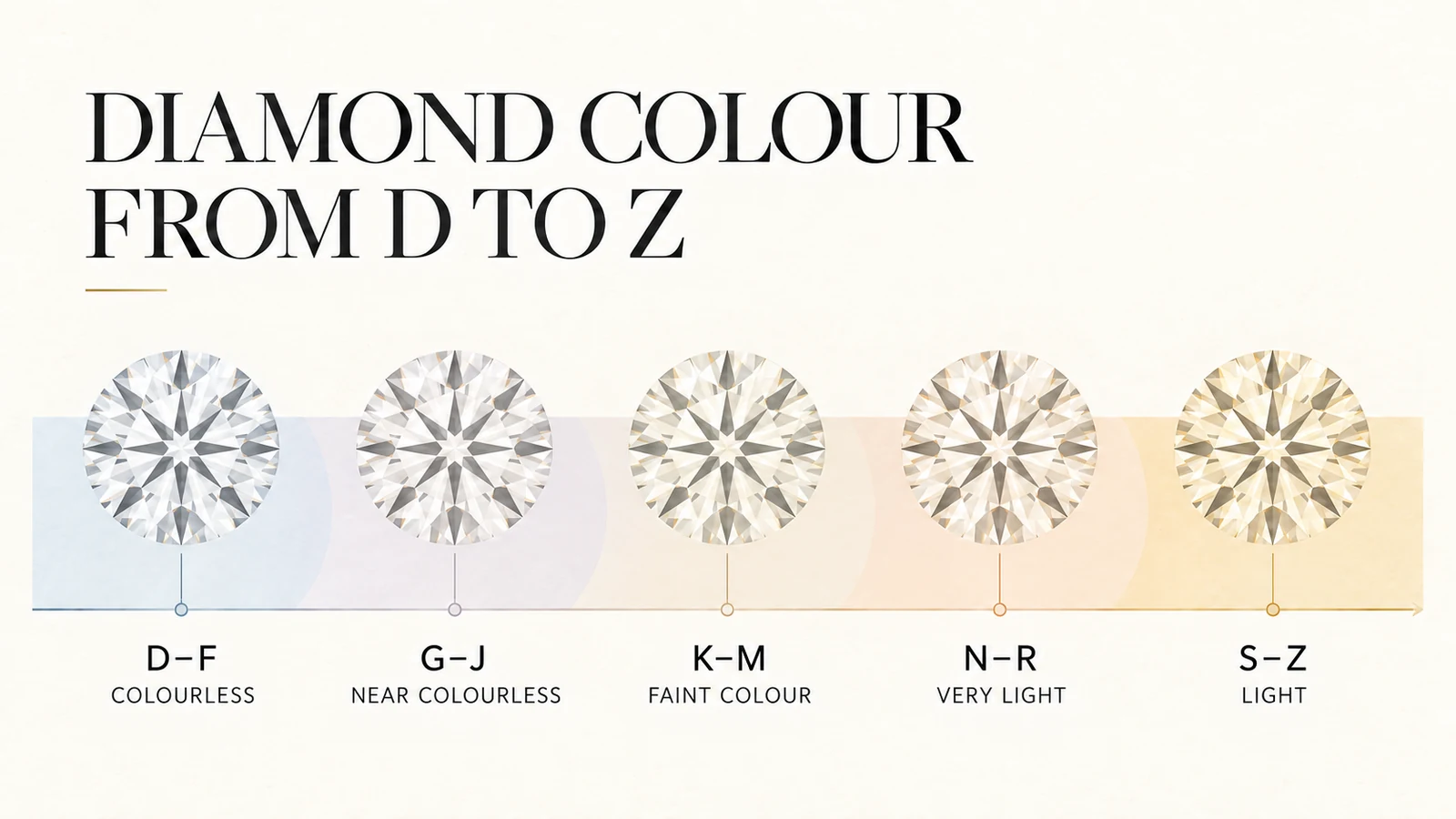
The GIA D-to-Z scale runs from D, at the colourless end, through Z, where more yellow, brown or grey body colour is visible.
The scale is useful because it gives you a common language.
It does not tell you exactly how the finished ring will look.
D-F, G-J and Beyond
The broad groups are:
| Grade range | General category | What it means for a buyer |
|---|---|---|
| D-F | Colourless | Very little visible body colour |
| G-J | Near-colourless | Subtle warmth may be present |
| K-M | Faint | Warmth becomes more noticeable |
| N-R | Very light | More visible body colour |
| S-Z | Light | Noticeable colour |
These are broad categories, not a replacement for seeing the actual diamond.
Metal Changes the Look
The setting around a diamond matters.
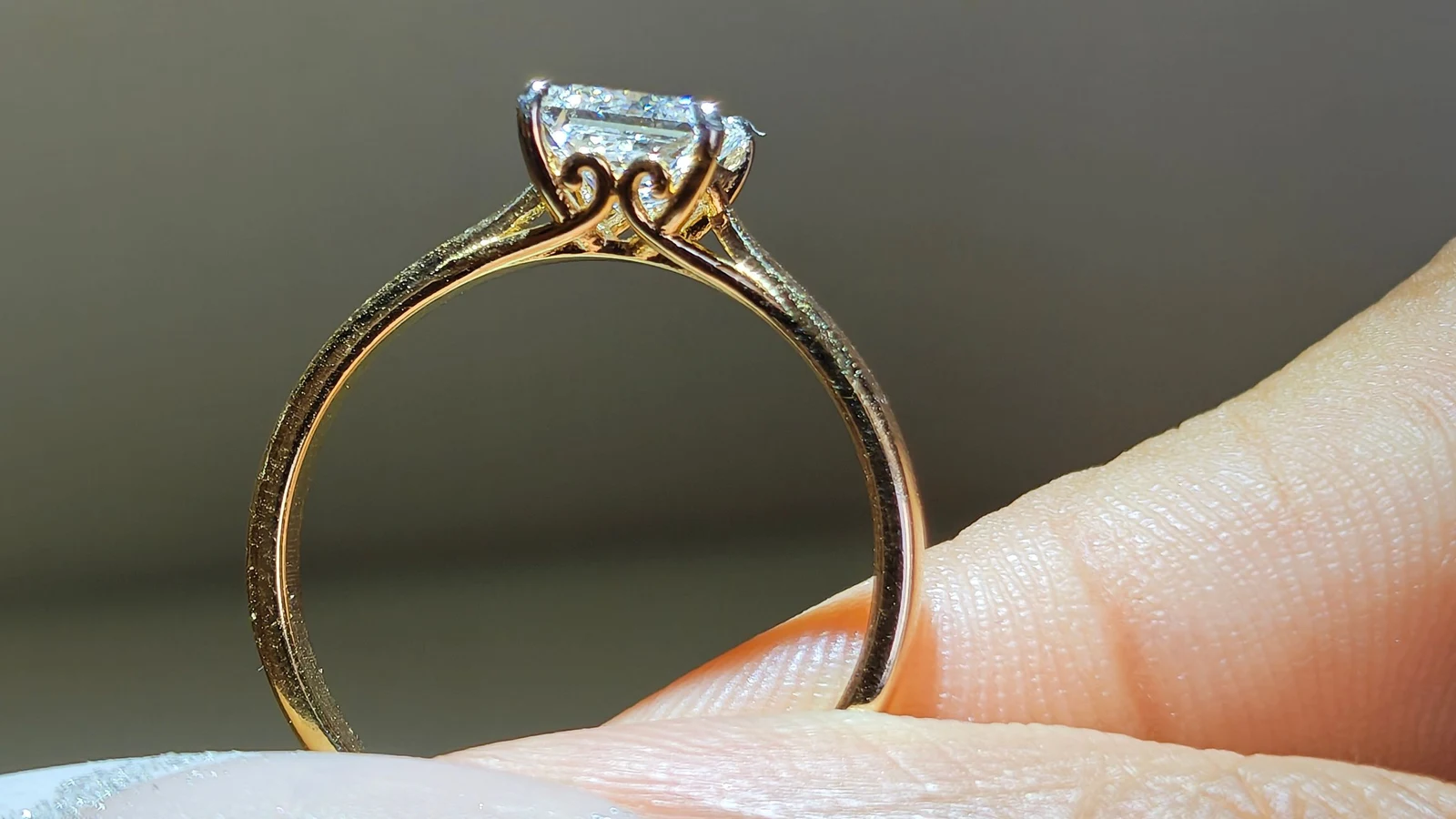
GIA notes that diamonds reflect the colour of their surroundings and gives different metal recommendations across the colour scale. White metals can emphasise a colourless look, while warmer metals can work naturally with diamonds that have more visible warmth.
That means a G colour diamond in yellow gold can look very different from the same colour grade in a white metal setting.
What About Rose Gold?
Rose gold creates a warmer visual environment than white gold or platinum.
That does not mean you need a lower colour grade with rose gold. It simply means the surrounding colour becomes part of the way the diamond is perceived.
The same principle applies to yellow gold.
If you are choosing between colour grades, look at the actual diamond in the metal you plan to wear.
Size Changes What You See
As diamond size increases, subtle body colour can become easier to notice.
That does not mean a large diamond automatically needs D or E.
It means you should be more careful about judging colour from a grade alone.
A larger stone is worth viewing from the side as well as face-up.
Shape Matters
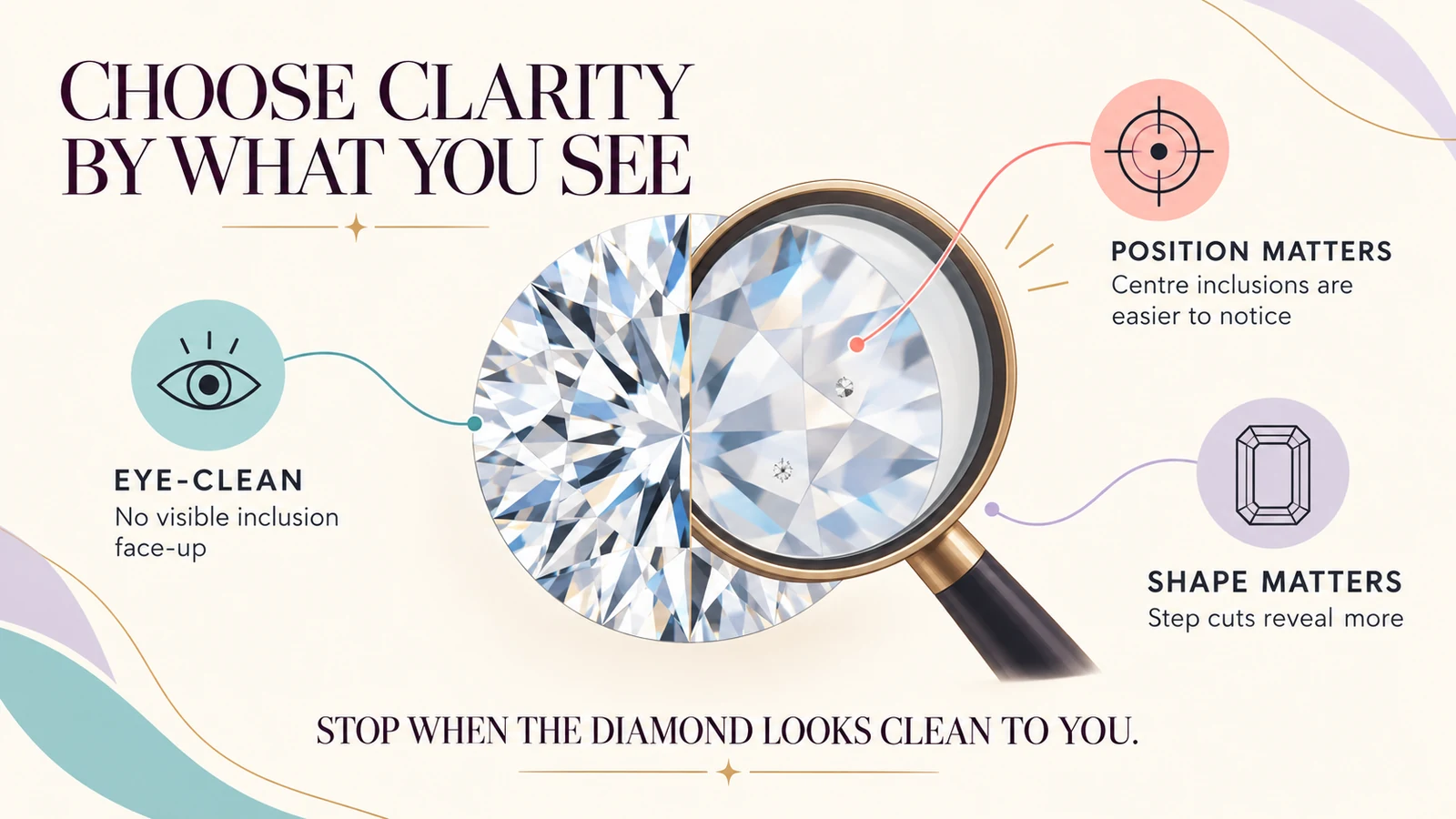
Brilliant-style shapes can disguise some body colour through their faceting.
Step cuts such as emerald have broad, open facets, which can make colour more apparent.
This is one reason colour recommendations should always take shape into account.
Where Is the Sensible Stopping Point?
The useful stopping point is where the diamond reads as white in the finished ring — and on a lab-grown stone the colourless range is cheap enough to reach that there is no reason to stop below it.
If you cannot see a meaningful difference between two adjacent grades, you may decide that the higher grade is not worth the extra cost.
GIA notes that differences between nearby colour grades can be difficult to see once a diamond is set and worn.
That does not make lower colour "better". It simply gives you another way to allocate your budget.
How to Compare Colour Properly
When possible:
- Compare diamonds side by side.
- Look at them face-up.
- Look at them from the side.
- View them in the intended metal.
- Check them under more than one light source.
- Decide what amount of warmth you are comfortable with.
How We Think About Colour
We do not think the goal should be to win the colour alphabet.
If a G or H diamond looks right to you in the ring, it looks right. But the reason most buyers settle there is the price of the colourless range on a natural stone, and that reason does not carry over to lab-grown, where EF is close enough in cost that we would simply take it.
The grade is information. The finished jewellery is the experience.
Aureva’s Perspective
Everything above is how to judge colour for yourself. Our own position is simpler: choose EF. That is the standard every Aureva piece is built to, and on a lab-grown diamond it is close enough in price to the grades below it that we see no reason to go lower. Judge the stone in the setting you actually want, in daylight, and if you are choosing between a larger stone one or two grades down and an EF, we would take the EF every time.
Frequently Asked Questions
Is D colour always worth the extra money?
No. D is the top of the standard colour scale, but whether you need it depends on the shape, setting, size and your own preference.
Is G colour good for an engagement ring?
G is in the near-colourless range and can look very white, especially in a well-cut diamond.
What colour works well with yellow gold?
A range of colour grades can work. Warmer metal can make subtle diamond warmth feel more intentional, but the best choice is the one you like in the actual setting.
Should I choose higher colour for a larger diamond?
Larger stones can make body colour easier to notice, so it is worth comparing actual stones carefully. On a lab-grown diamond, where the colourless grades cost comparatively little, the simplest way to remove that risk is to stay in the EF range.
Does an emerald cut need higher colour?
It can be worth considering because the broad step facets can reveal colour more readily.

About the Author
The Aureva Editorial Team
The Aureva editorial team writes the Journal. We work with lab-grown diamonds and 14KT gold every day, and we write about what we can verify, such as grading reports, growth methods, and what we see across our own orders.