Diamond Carat Explained: What Does Carat Really Mean?
Carat is a weight, and weight can hide where nobody sees it. That gap is where most of the confusion lives.
Quick Answer
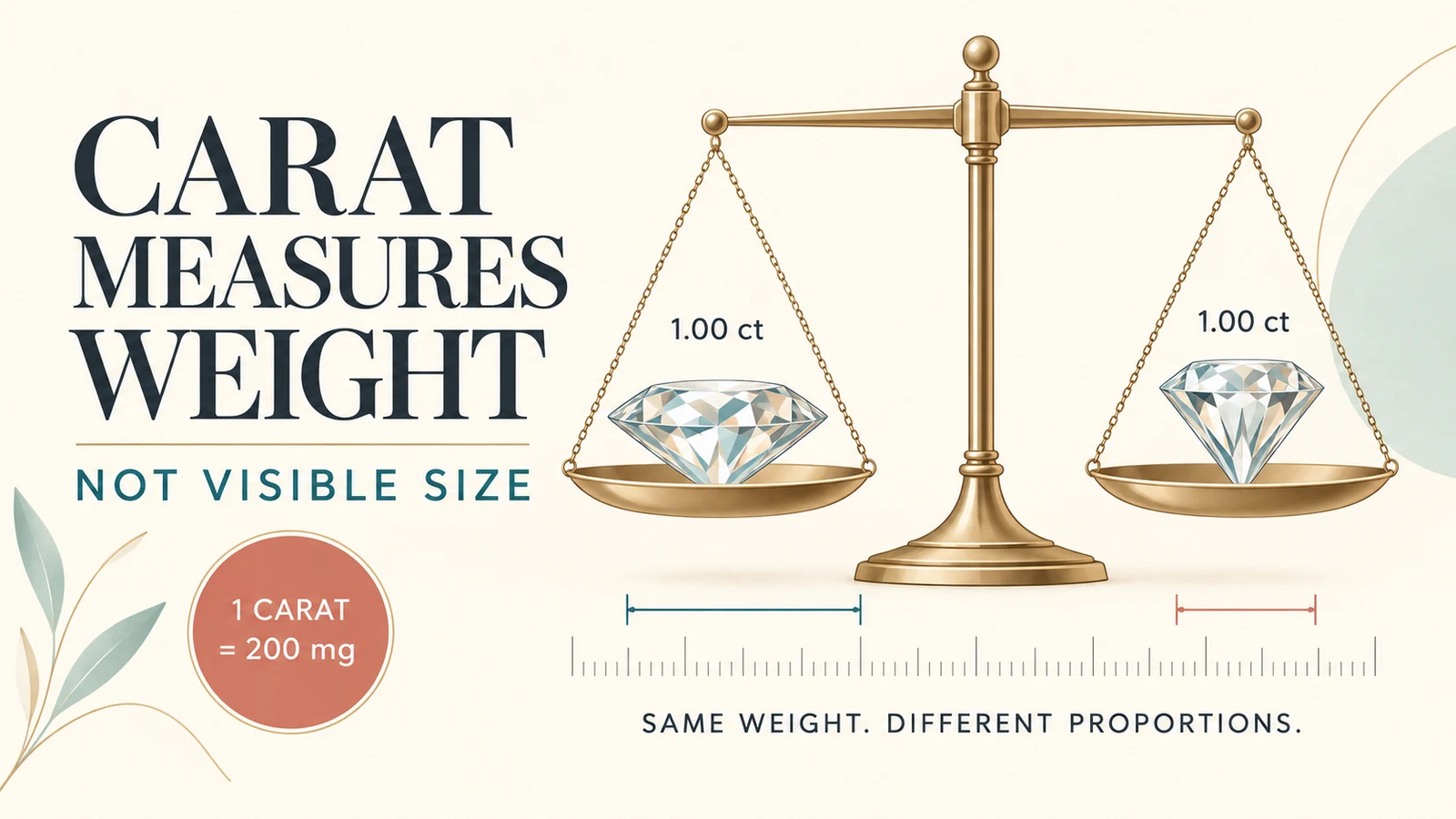
Carat is a measurement of a diamond's weight, not its size. One carat equals 200 milligrams. A higher carat weight generally means a heavier diamond, but it does not tell you exactly how large the diamond will look from the top. Shape, proportions and cutting style all affect visible size. This is why two diamonds with the same carat weight can look different in a ring.
Key Takeaways
- Carat measures weight, not visual size.
- One carat equals 200 milligrams.
- Two diamonds with the same carat weight can have different dimensions.
- Shape and proportions affect how large a diamond looks.
- Carat should be considered alongside cut, colour and clarity.
What Is a Carat?
Carat is the standard unit used to describe the weight of diamonds and many other gemstones.
One carat equals 200 milligrams, or 0.2 grams.
A diamond weighing 0.50 carats weighs half a carat. A diamond weighing 2.00 carats weighs twice as much as a one-carat diamond.
Carat Is Not the Same as Size
This is where many first-time buyers get confused.
Carat tells you weight.
It does not tell you the exact measurements you will see when looking at the diamond from above.
A diamond's dimensions depend on its shape and proportions.
For example, two one-carat diamonds can have different length and width measurements.
Why Can Two Diamonds With the Same Carat Look Different?
Cutting plays a big role.
A diamond can carry more of its weight in depth rather than spread, which can make it look smaller from the top.
Another diamond with the same weight can have proportions that give it more visible surface area.
Shape also matters.
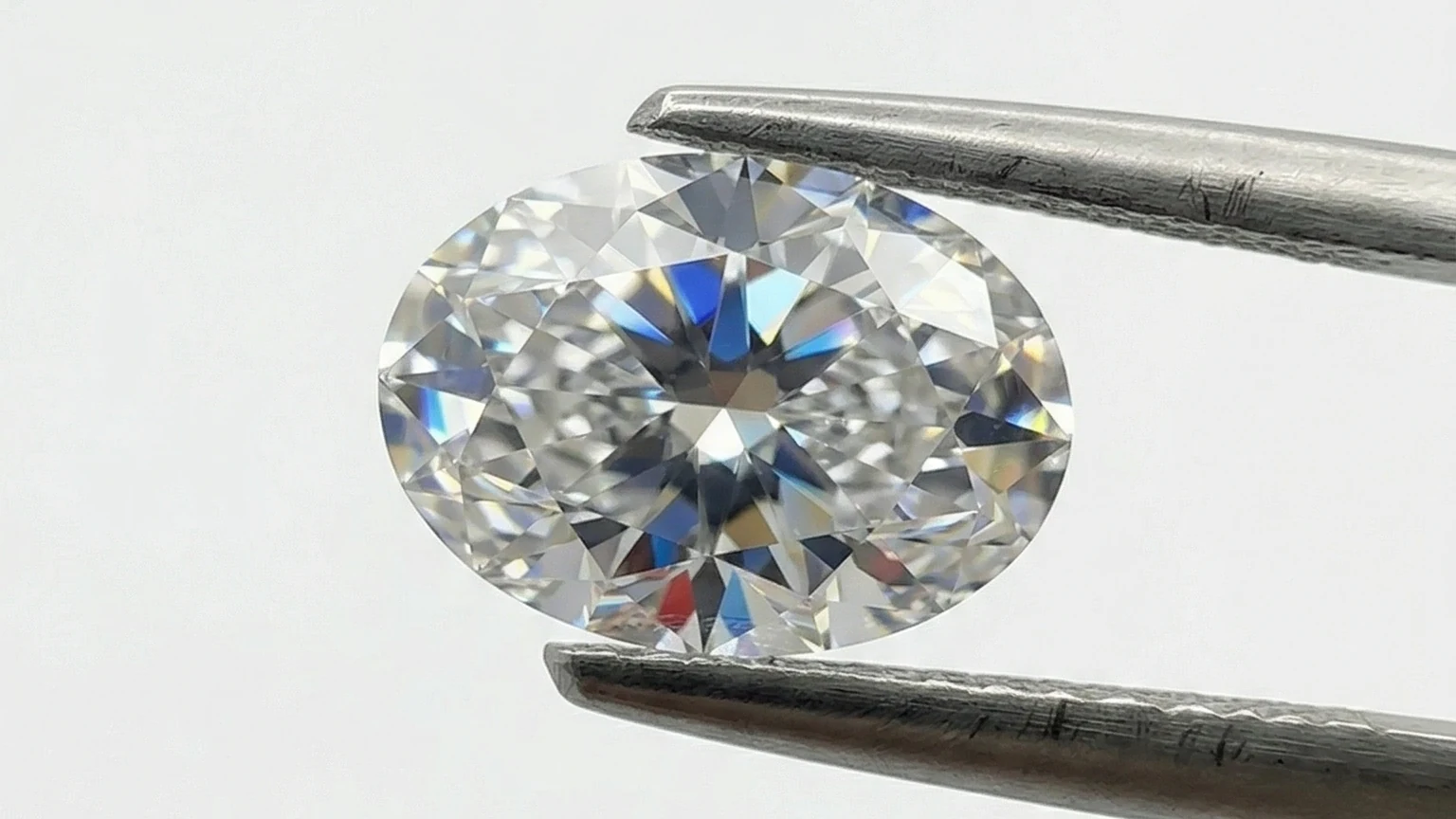
An elongated oval and a round diamond with the same carat weight will not have the same outline or face-up appearance.
Carat Weight vs Measurements vs Size
These terms are often mixed together.
Carat weight: how much the diamond weighs.
Measurements: the physical dimensions of the diamond, usually given in millimetres.
Face-up size: how large the diamond appears when viewed from above.
They are related, but they are not interchangeable.
Does Bigger Mean Better?
No.
A larger diamond can be more noticeable, but size is only one part of choosing a diamond.
A smaller diamond with a strong cut can look more lively than a larger diamond with poor proportions.
Your decision should balance:
- Carat
- Cut
- Colour
- Clarity
- Shape
- Budget
- Design
What Carat Size Should You Buy?
There is no universal ideal carat size.
Some people want a subtle diamond for everyday wear. Others prefer a larger centre stone.
The right size depends on your budget, the design, the wearer's style and what looks right to you.
Instead of starting with a fixed number, it can help to decide how the finished jewellery should look and then work backwards.
What About Lab-Grown Diamonds?
Lab-grown diamonds are also measured in carats.
A one-carat lab-grown diamond weighs the same as a one-carat natural diamond.
The difference between them is origin, not the meaning of the carat measurement.
As with natural diamonds, lab-grown diamonds with the same carat weight can still have different measurements and visual appearances.
What About "Magic Sizes"?
You may hear about carat sizes such as 0.50, 1.00, 1.50 or 2.00 carats.
These are common points buyers look for because prices per carat can rise around these thresholds.
However, there is no rule that says you need to reach a round carat number. A diamond just below a popular threshold can look very similar while sometimes costing less per carat.
What matters is the finished stone and whether the visual difference is meaningful to you.
How Should You Compare Carat?
When comparing diamonds, look at:
- Carat weight
- Measurements
- Shape
- Cut and proportions
- Overall appearance
Do not compare carat weight alone.
If size is important to you, measurements and face-up appearance can be just as useful.
Aureva’s Perspective
We think carat is probably the easiest of the 4Cs to understand, but it is also one of the easiest to overvalue. It is natural to look at a bigger number and assume it means a better diamond. But once you start comparing actual stones, you realise that weight is only part of the picture.
Frequently Asked Questions
Is one carat a large diamond?
There is no universal definition of large. One carat is a weight measurement, and the visible size depends on the diamond's shape and proportions.
How much does one carat weigh?
One carat equals 200 milligrams, or 0.2 grams.
Does a higher carat mean a bigger diamond?
Usually a higher carat weight means a heavier diamond, but not necessarily a proportionally larger face-up appearance.
Is a one-carat lab-grown diamond the same size as a one-carat natural diamond?
Not necessarily. Both weigh one carat, but their measurements can differ depending on their shape and proportions.
What is the best carat size for an engagement ring?
There is no single best size. Choose based on the design, budget, wearer's preference and how the finished diamond looks.
Sources
About the Author
The Aureva Editorial Team
The Aureva editorial team writes the Journal. We work with lab-grown diamonds and 14KT gold every day, and we write about what we can verify, such as grading reports, growth methods, and what we see across our own orders.