Diamond Colour Explained: What Should You Actually Choose?
The scale runs from D downward. Shape, metal and size all change how a grade reads — but on a lab-grown diamond the colourless range costs little enough to simply stay inside it.
Quick Answer
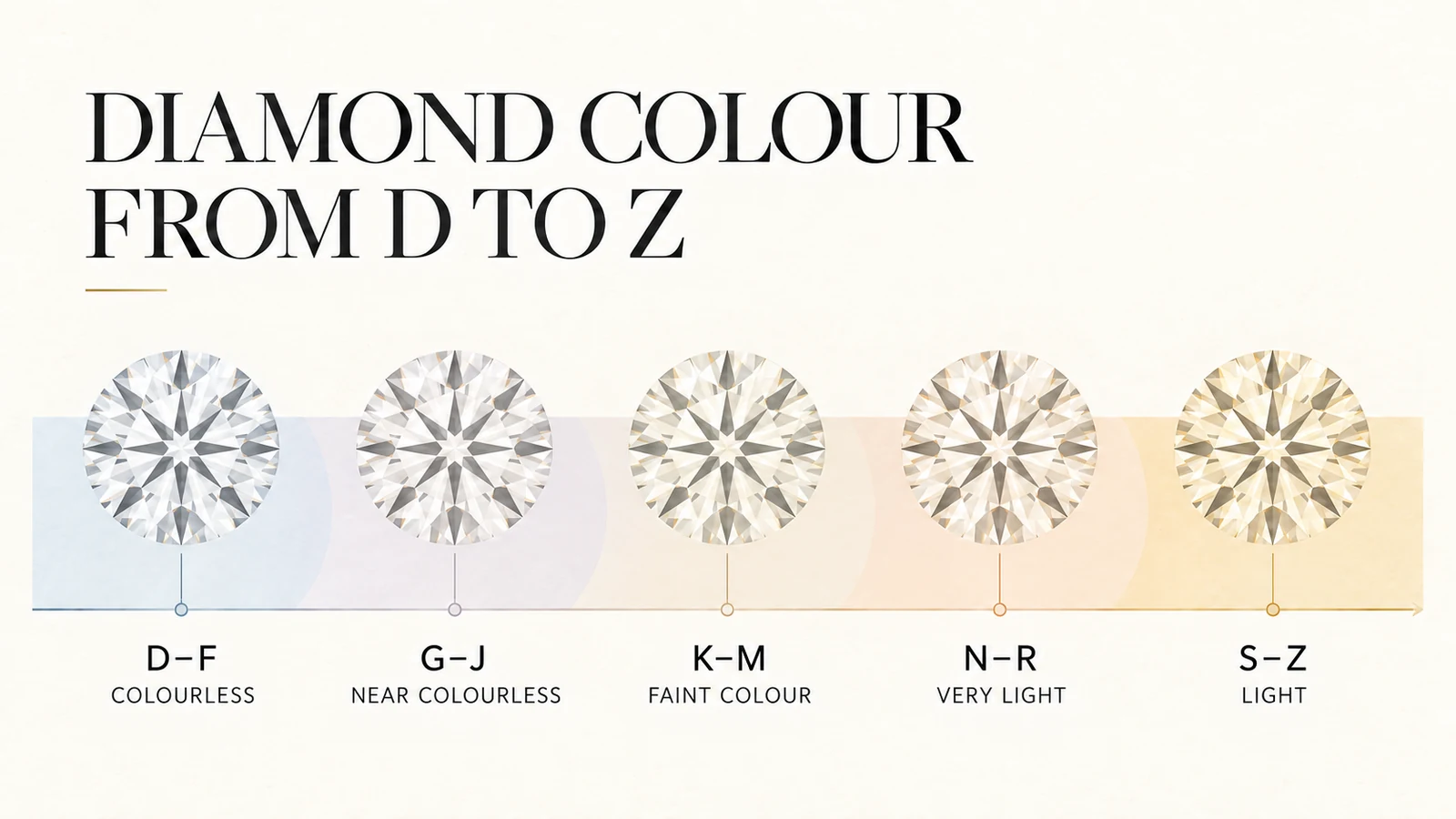
For traditional white diamonds, colour grading describes how much body colour is visible in the stone. The commonly used scale runs from D, at the top of the colourless range, downward as more colour becomes noticeable. Shape, setting, metal colour and size all affect how a given grade reads in a finished piece. On a natural diamond the colourless range carries a steep premium, which is why so much buying advice is about settling lower; on a lab-grown diamond it does not, so the EF range is worth simply taking.
Key Takeaways
- D is at the top of the standard D-to-Z colour scale.
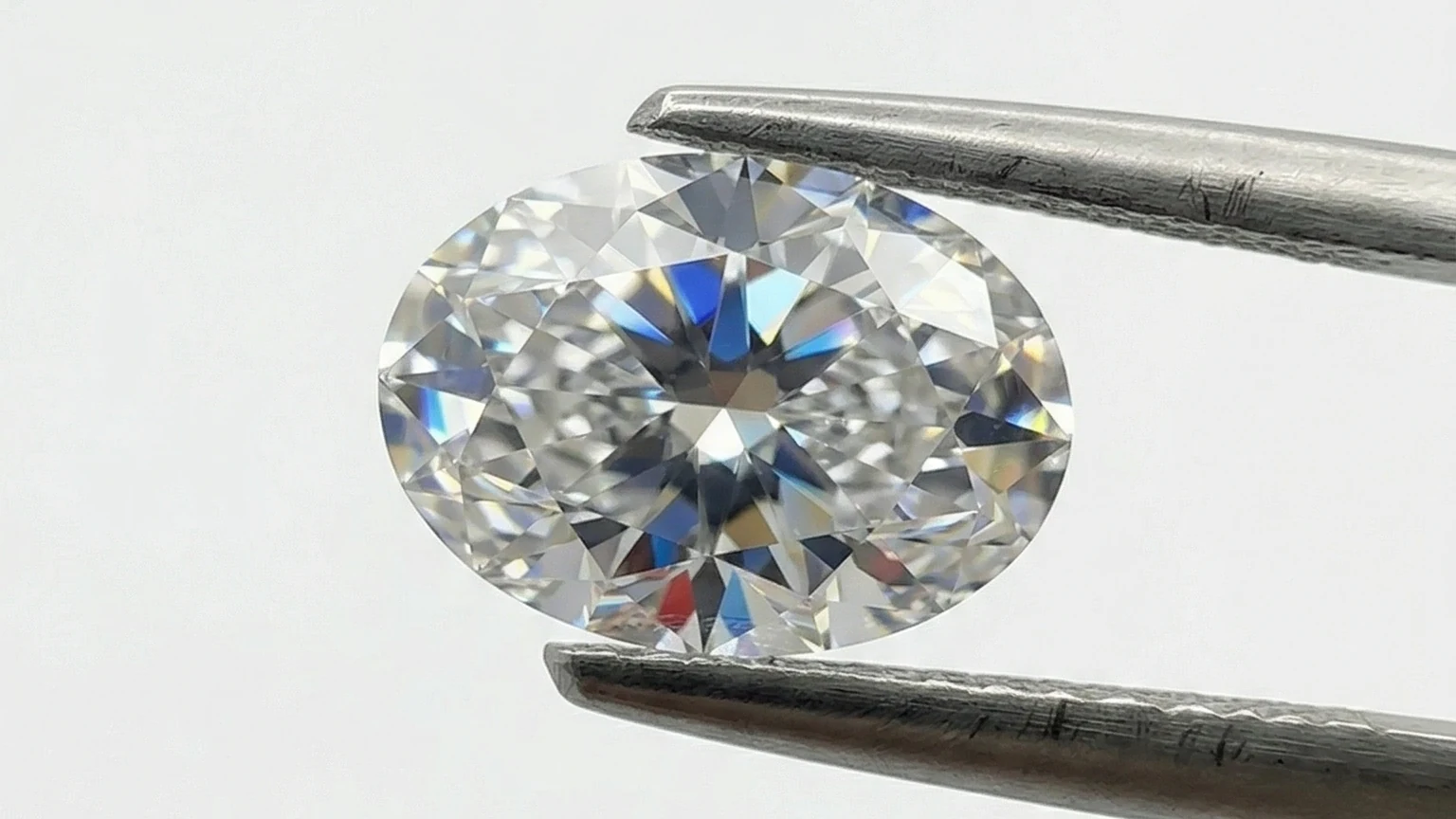
- Colour refers to body colour, not the flashes of colour you see from a diamond's facets.
- Higher colour grades are not always necessary for a diamond to look beautiful.
- Shape and setting can affect how colour is perceived.
- The right colour depends on the individual stone and your preferences.
What Does Diamond Colour Mean?
When people talk about diamond colour, they are usually talking about how much yellow or brown body colour is visible in a traditional white diamond.
The standard D-to-Z scale is widely used for this purpose.
D represents the highest colourless end of the scale. As you move down the scale, more body colour can become visible.
The D-to-Z Colour Scale
A simplified view is:
```text D E F ↓ Colourless
G H I J ↓ Near Colourless
K L M ↓ Faint Colour
N O P Q R ↓ Very Light
S T U V W X Y Z ↓ Light ```
The exact appearance of a diamond depends on more than its letter grade.
Does D Colour Mean a Better Diamond?
D is the highest colour grade in the standard scale, but "higher" does not always mean "better for you."
You may not see a dramatic difference between nearby colour grades when the diamonds are viewed in jewellery.
The setting and metal colour can also change how the diamond is perceived.
Colourless vs Near Colourless
The colourless range generally includes D, E and F.
The near-colourless range generally includes G through J.
On a natural diamond, near-colourless is where most buyers land, because it can still appear very white for considerably less money.
On a lab-grown diamond the saving is much smaller, so we stay in the colourless range and take EF rather than relying on the setting to keep a warmer stone looking white.
Does Diamond Shape Affect Colour?
Yes.
Different shapes can show colour differently.
Shapes with more open facets or longer outlines can sometimes make body colour easier to notice.
Round brilliant diamonds tend to hide body colour relatively well compared with some fancy shapes.
This is why a colour recommendation should not be separated from the shape.
Does Gold Colour Matter?
It can.
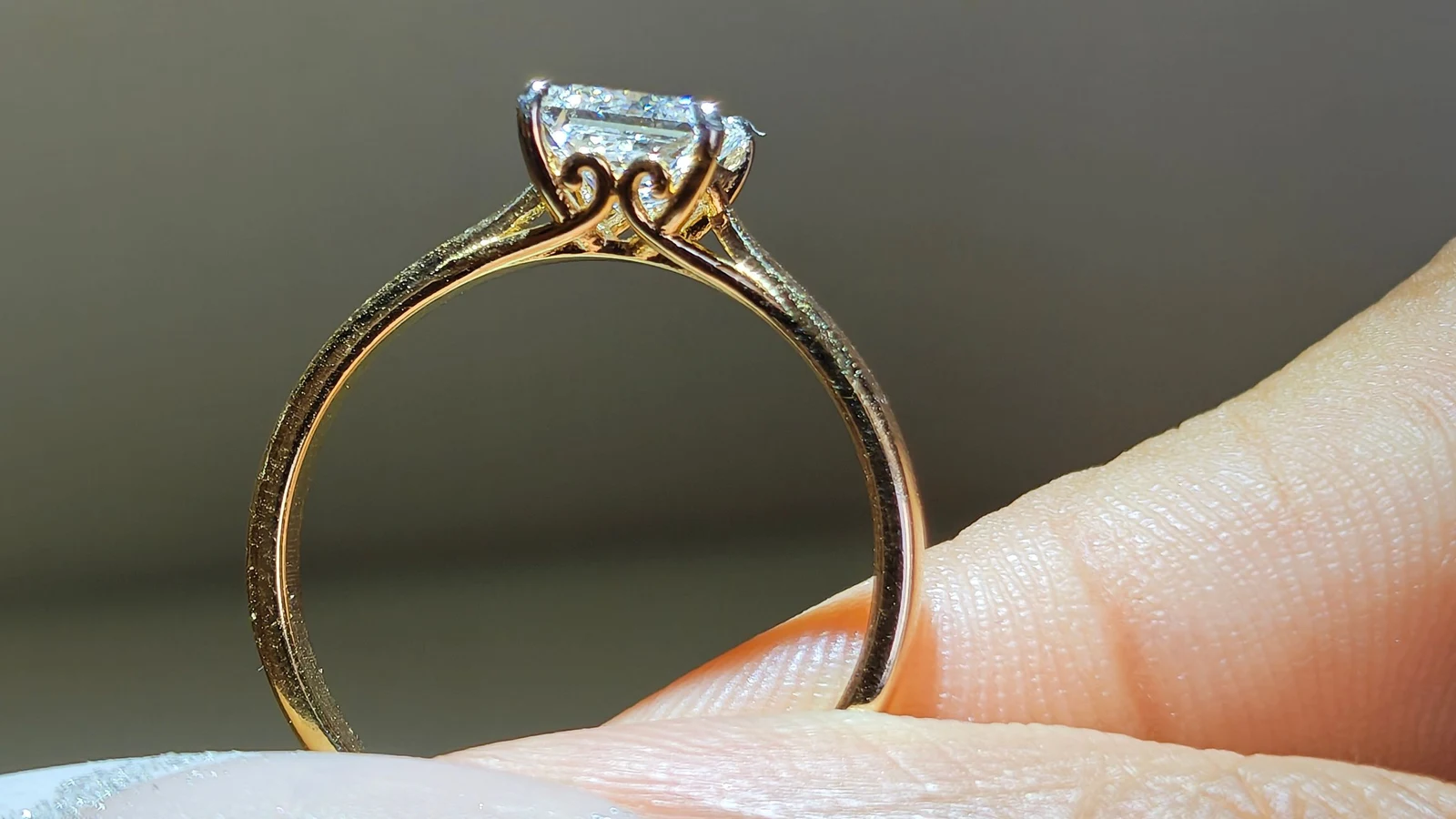
A diamond set in white metal may make subtle body colour more noticeable because the surrounding metal is also relatively white.
Yellow or rose gold creates a different visual context.
This does not mean you must choose a certain colour grade for a particular metal. It simply means the setting is part of the overall picture.
What Colour Should You Choose?
There is no single answer.
A practical approach is to choose the highest colour grade that makes a visible difference to you and fits your budget.
For some people, that may mean prioritising a higher colour grade.
On a natural diamond, dropping to near-colourless frees real budget for size, cut or design, and that is a fair trade. On a lab-grown diamond it frees very little, which is why we hold EF.
How Should You Compare Diamond Colour?
Whenever possible, compare actual diamonds rather than colour grades in isolation.
Look at them:
- In the jewellery setting
- From the top
- From the side
- Under different lighting
- Next to each other if you are comparing stones
The goal is not to win a grading contest. It is to choose a diamond that looks right to you.
What About Lab-Grown Diamonds?
Lab-grown diamonds can also be graded for colour.
The same basic colour concepts can be used when evaluating them.
A lab-grown diamond is still a diamond, so colour remains one of the characteristics to weigh alongside cut, clarity and carat. What changes is the price of being fussy: the colourless range is close enough in cost that EF is the grade we build to and the one we would recommend.
Aureva’s Perspective
Colour is the grade people most often try to save money on, and the one we would not. Aureva works to EF, at the colourless end of the scale, and we think you should ask for the same. The reason is practical rather than technical: a faint warmth that is invisible in a loose stone under a lamp can become obvious once the diamond is set against white gold or platinum, and by then it is a remount rather than a decision. On a lab-grown diamond EF is affordable enough that there is little reason to gamble.
Frequently Asked Questions
Is D colour the best diamond colour?
D is the top of the standard D-to-Z colour scale for colourless diamonds. Whether it is the best choice for you depends on your preferences and budget.
Is G colour good?
G is in the near-colourless range and can look very white, especially when the diamond is well cut and viewed in jewellery.
Is H colour good for a diamond?
H is also in the near-colourless range. Whether it is right depends on the diamond's shape, cut, setting and your preference.
Does lab-grown diamond colour work the same way?
Lab-grown diamonds can also be graded for colour. The colour grade is one part of evaluating the finished diamond.
Does a higher colour grade make a diamond sparkle more?
Not directly. Cut has a stronger effect on light performance. Colour describes body colour rather than sparkle.
Sources
About the Author
The Aureva Editorial Team
The Aureva editorial team writes the Journal. We work with lab-grown diamonds and 14KT gold every day, and we write about what we can verify, such as grading reports, growth methods, and what we see across our own orders.