Oval vs Round Lab-Grown Diamonds: Which Should You Choose?
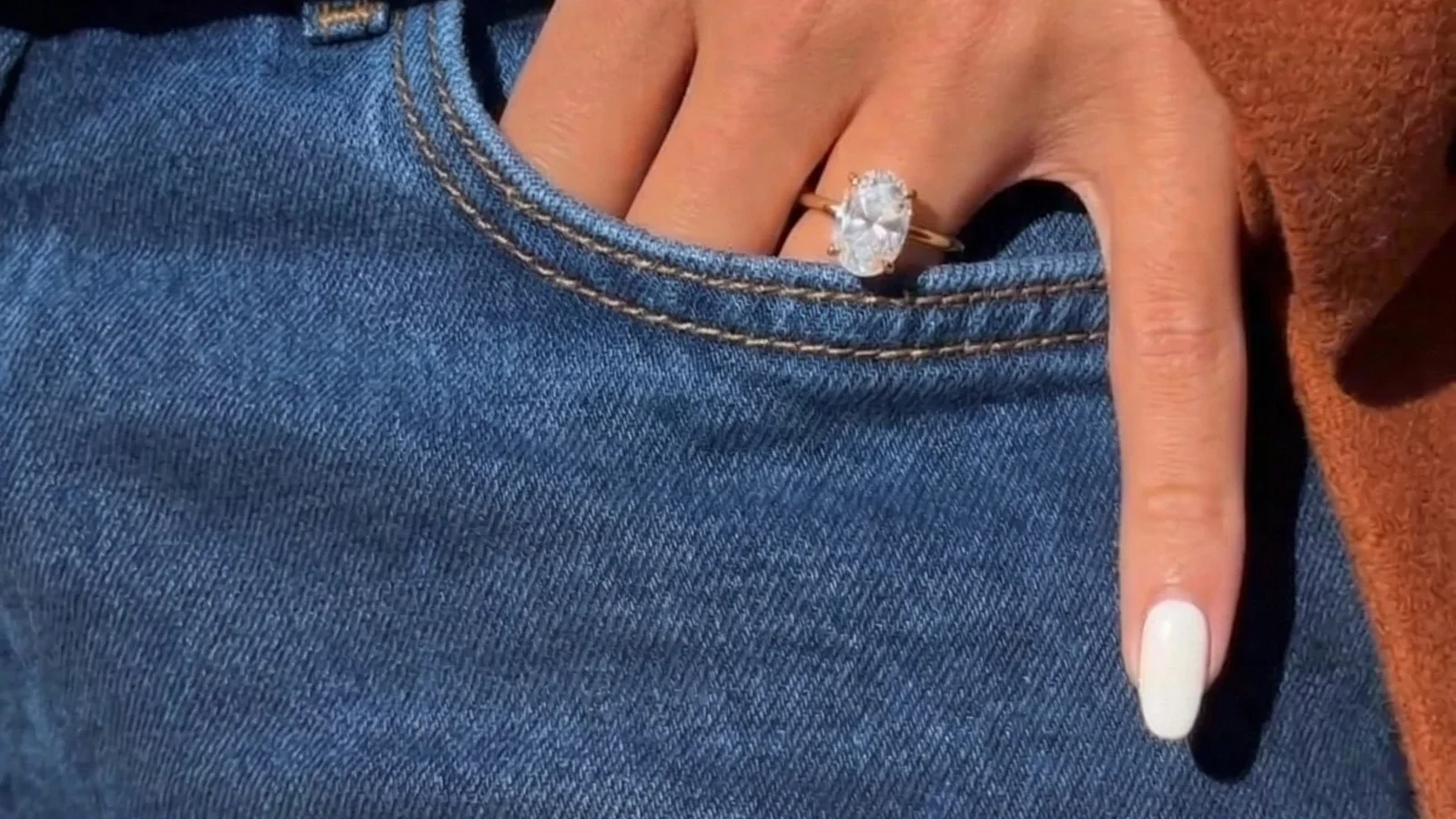
Round is the classic. Oval gives you a longer outline and can look larger for its weight. The better choice depends on what you want to see on the hand.
Quick Answer
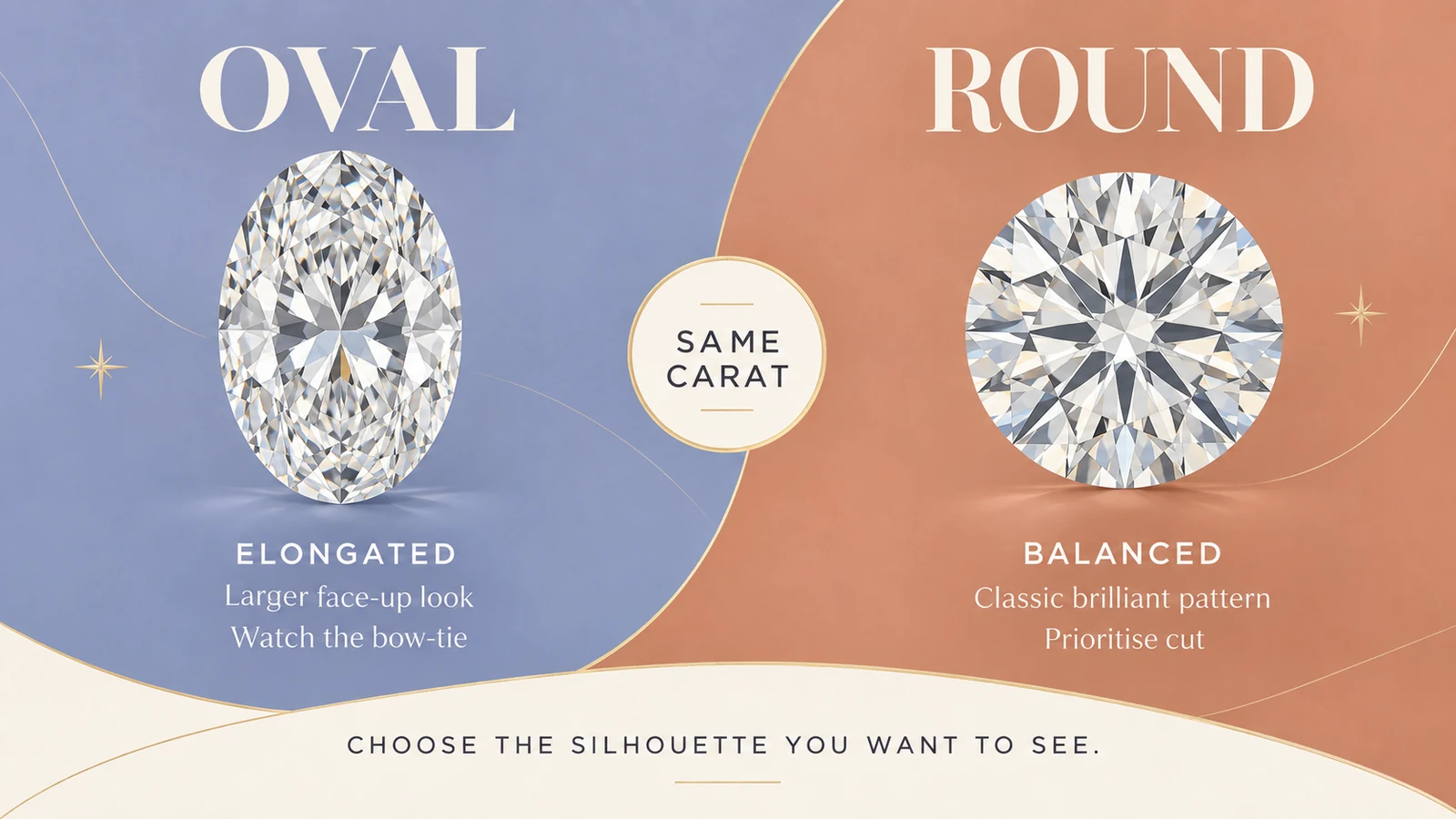
Round and oval lab-grown diamonds are both popular, but they create different rings. Round brilliant diamonds are symmetrical and have a standardised brilliant faceting pattern. Ovals have an elongated outline and can show more face-up area for the same carat weight. Ovals can also show a bow-tie pattern, so the individual stone matters more than the shape name.
Key Takeaways
- Ovals can have a larger face-up appearance than rounds of the same carat weight.
- Round brilliant diamonds have an established overall GIA cut grade; ovals do not.
- Ovals can show a darker bow-tie across the centre, and the strength varies by stone.
- Oval shapes can create a lengthening effect on the finger.
- Round diamonds often carry a higher price per carat than fancy shapes, although actual pricing varies.
The Main Difference Is the Silhouette
Round is compact and symmetrical.
Oval stretches the diamond vertically.
That difference changes the entire visual language of the ring.
A round centre stone often feels traditional and balanced. An oval can feel softer and more elongated while still giving you brilliant-style sparkle.
Oval vs Round at a Glance
| Oval | Round | |
|---|---|---|
| Outline | Elongated | Circular |
| Face-up size | Often large for its weight | More compact |
| Light style | Brilliant-style, varies by stone | Standardised brilliant pattern |
| Cut grade | No overall GIA cut grade | GIA overall cut grade available |
| Finger effect | Can look longer | More symmetrical |
| Main watch-out | Bow-tie and outline | Cut quality |
| Price tendency | Often lower per carat than round | Often higher per carat |
The price point is not a rule. Actual pricing changes with the diamond's characteristics and the market.
Which Looks Bigger?
This is one of the biggest reasons people choose oval.
GIA notes that ovals have a larger surface area than round diamonds of the same carat weight, creating the impression of a larger stone.
That does not mean every oval looks bigger than every round.
Length-to-width ratio and depth matter.
A shorter oval can look quite different from a long, slender oval.
Which Sparkles More?
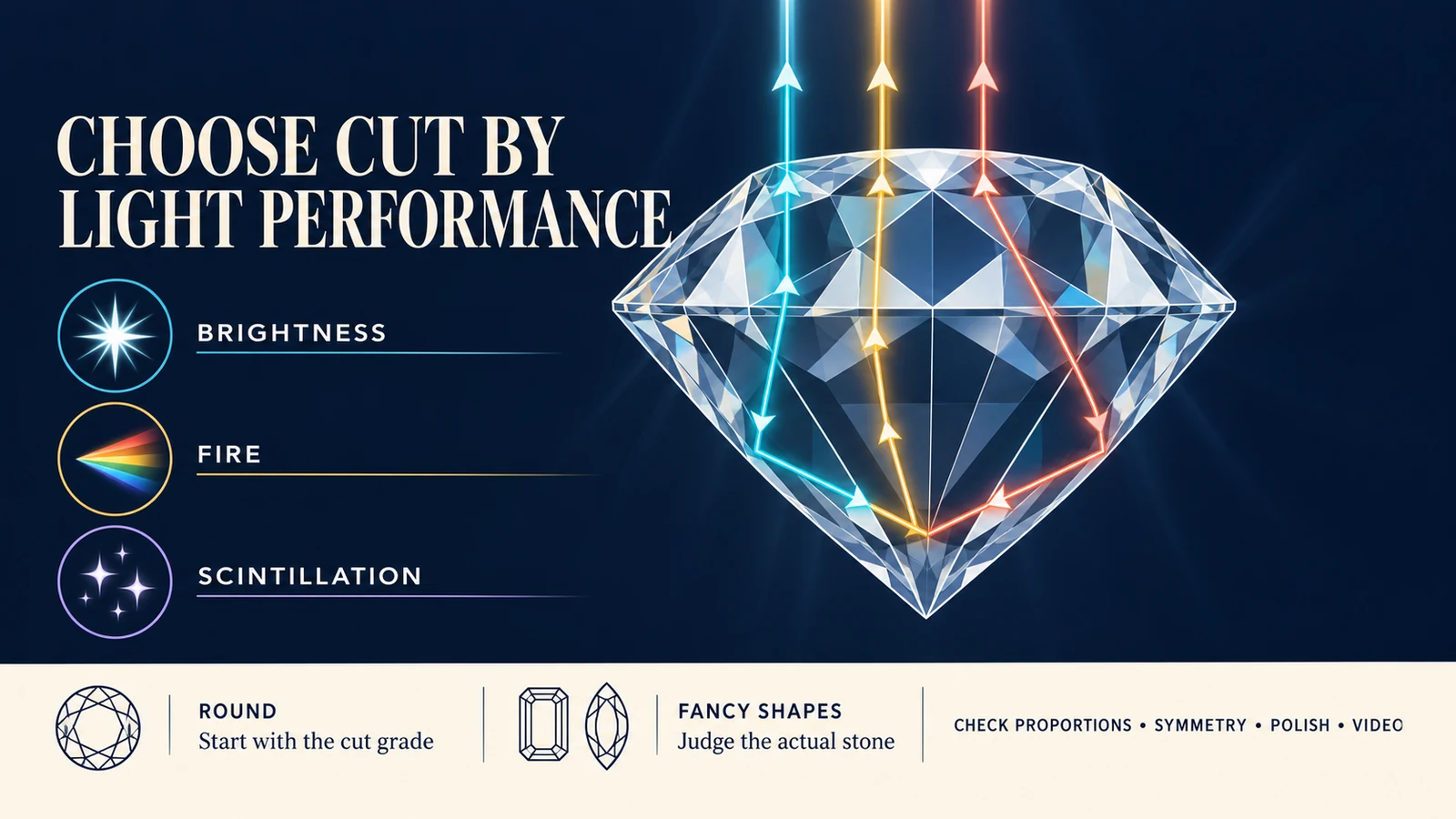
Round brilliant has a very established brilliant faceting pattern designed around light performance.
Ovals are also commonly brilliant cut, but their facet arrangements vary more.
That means there is more variation from one oval to another.
If you want an oval, do not choose it only because you like the outline. Watch the actual stone.
The Bow-Tie Question
Some ovals show a dark area across the centre that resembles a bow tie.
A bow-tie is not automatically a defect. The question is how strong it is and whether it affects the way you see the diamond.
GIA research found that people have different preferences for bow-tie patterns, but prominent dark or dull areas that reduce overall brightness are more consistently disliked.
This is a good reason to ask for video when buying an oval online.
Which Looks Better on the Finger?
Ovals can create a lengthening effect because of their vertical outline. GIA specifically notes this slimming effect for elongated shapes.
Round creates a more centred, symmetrical look.
Try both if you can.
A ring can look completely different once it is on the hand.
What About Price?
There is a tendency for round brilliant diamonds to cost more per carat than many fancy shapes.
GIA notes that round brilliants typically cost more than fancy shapes such as ovals and pears.
The actual difference depends on the individual diamond, so do not use a fixed percentage when comparing prices.
Which Is Better for Everyday Wear?
Both can work well.
Oval has rounded ends rather than sharp points, which is practical for a ring worn frequently.
Round has no corners either and is extremely straightforward to set.
Everyday durability depends on both the diamond shape and the setting. Rounded outlines such as oval and round avoid the exposed points found on shapes such as pear or marquise.
How We Would Choose
If you want the classic engagement ring look and a very predictable cut language, start with round.
If you want an elongated silhouette and more face-up presence, look at oval.
Then forget the labels for a moment and compare actual stones.
Aureva’s Perspective
If you want the classic engagement ring look and a very predictable cut language, start with round. If you want an elongated silhouette and more face-up presence, look at oval. Then forget the labels for a moment and compare actual stones.
Frequently Asked Questions
Do oval lab-grown diamonds look bigger than round diamonds?
They can. Ovals often have more face-up surface area for the same carat weight.
What is the bow-tie effect in an oval diamond?
It is a darker pattern that can appear across the centre of an oval. Its strength varies between stones.
Is round more expensive than oval?
Round brilliants often carry a higher price per carat than fancy shapes such as oval, but actual pricing depends on the diamond.
Which is more flattering on the finger?
Oval can create a lengthening effect because of its elongated outline. Round creates a more compact, symmetrical look.
Which should I choose?
Choose round if you prefer classic symmetry and established brilliant faceting. Choose oval if you prefer an elongated outline and larger-looking face-up presence.
About the Author
The Aureva Editorial Team
The Aureva editorial team writes the Journal. We work with lab-grown diamonds and 14KT gold every day, and we write about what we can verify, such as grading reports, growth methods, and what we see across our own orders.