What Is the Best Diamond Shape for an Engagement Ring?
There is no single best shape. The right one depends on the outline you like, how it sits on the hand and the kind of sparkle you want.
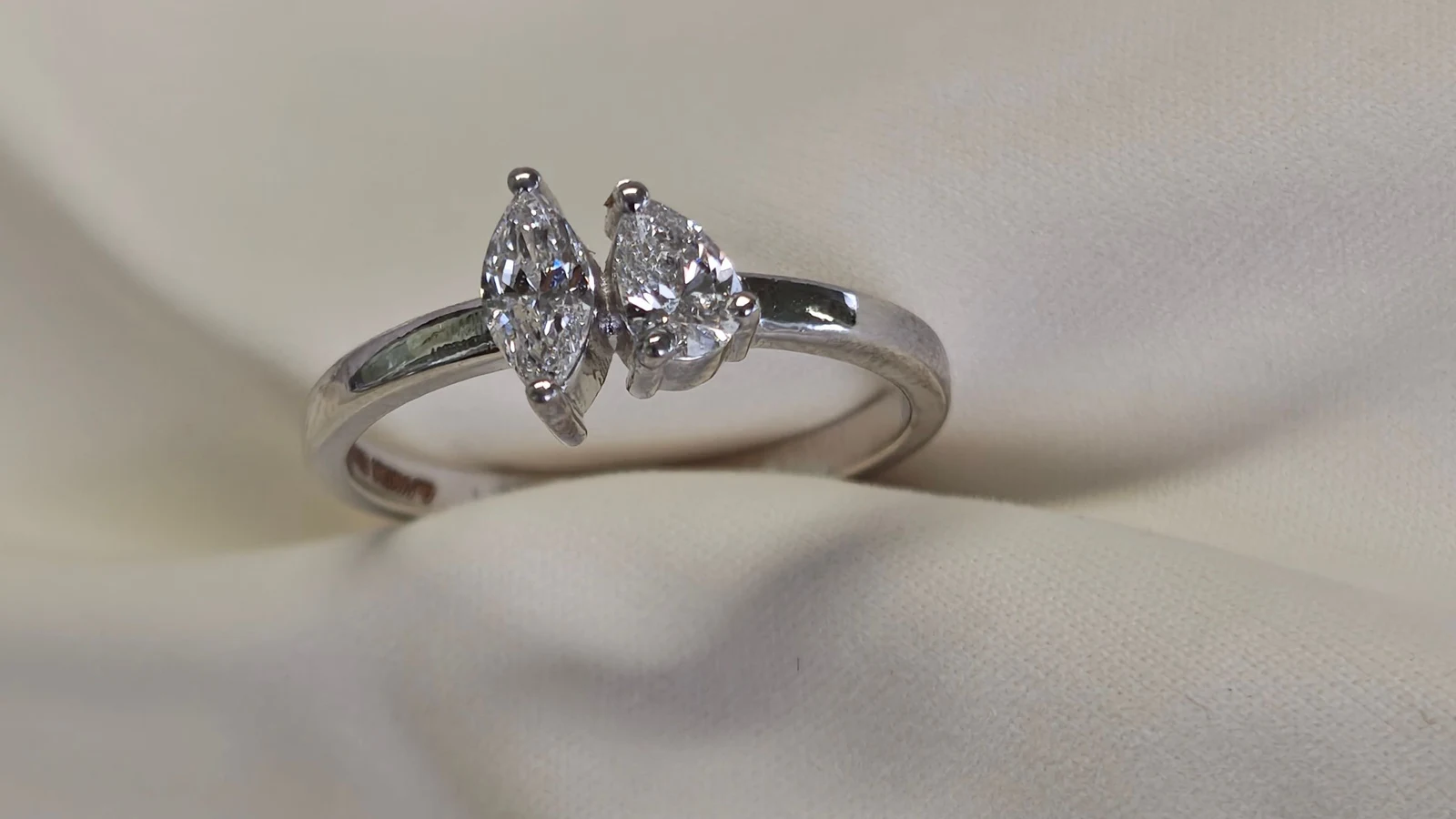
Quick Answer
Round is the classic choice, but oval, cushion, emerald, radiant, pear and princess shapes can all make beautiful engagement rings. The main difference is not simply how they look in a photograph. Shape affects the silhouette of the ring, the way the diamond handles light, how large it appears face-up and what characteristics are easier to notice.
Key Takeaways
- Round gives you a symmetrical outline and a familiar brilliant-style look.
- Oval can give the finger a longer visual line and strong face-up presence.
- Cushion has soft corners, with brilliant and crushed-ice-style faceting available.
- Emerald is quieter and more reflective because of its step-cut facets.
- Radiant gives a rectangular or square outline with brilliant-style sparkle.
- Pear and marquise are more directional shapes, so setting and orientation matter.
The Shape You Choose Changes the Whole Ring
The diamond is the centre of an engagement ring, so its outline affects everything around it.
A round centre stone creates a balanced, symmetrical look. An oval stretches the design vertically. A cushion feels softer because of its rounded corners. An emerald cut gives the ring a more architectural appearance.
GIA describes non-round diamonds as fancy shapes and notes that elongated shapes can have a slimming effect on the hand.
Shape Comparison
| Shape | Look on the hand | Light character | What to watch |
|---|---|---|---|
| Round | Balanced and classic | Bright, brilliant-style | Cut quality |
| Oval | Long and graceful | Brilliant-style, can vary by stone | Bow-tie and symmetry |
| Cushion | Soft and slightly vintage | Brilliant or crushed-ice styles | Faceting and depth |
| Emerald | Clean and structured | Broad reflections | Colour and clarity |
| Radiant | Defined but lively | Brilliant-style | Proportions |
| Pear | Tapered and distinctive | Brilliant-style | Symmetry and tip |
| Princess | Crisp and geometric | Brilliant-style | Corners and setting |
Round
Round brilliant is the most familiar engagement ring shape for a reason.
Its symmetry and standardised faceting make it easier to evaluate and compare. GIA currently provides an overall cut grade for round brilliant diamonds, unlike fancy shapes.
Choose round if you like a classic silhouette and want a diamond with a very established cut language.
Oval
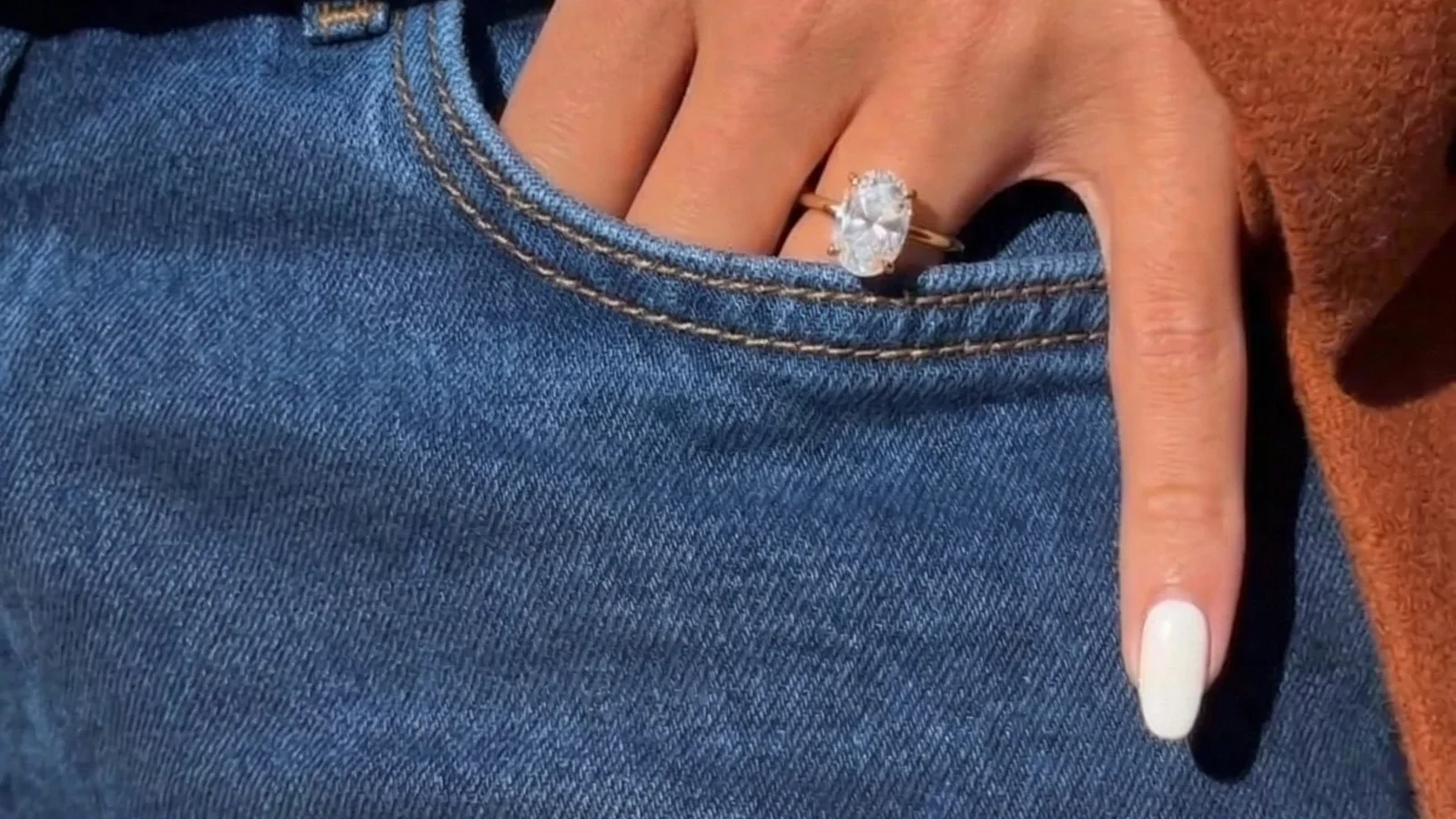
Oval has an elongated outline and can make the finger appear longer.
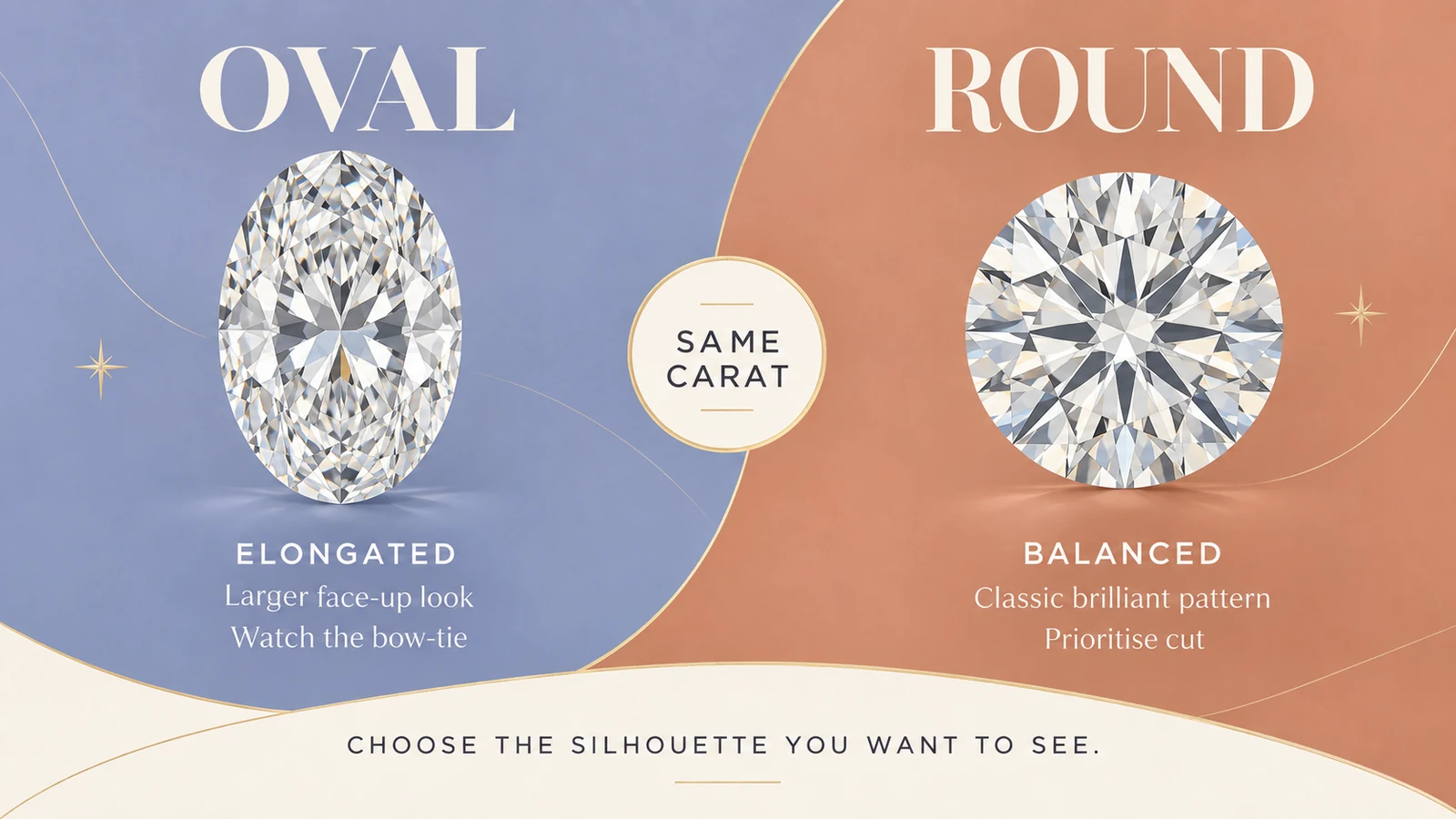
It can also look larger face-up than a round of the same weight. GIA notes that ovals offer a larger surface area for their carat weight.
The catch is that ovals vary considerably. Look at the length-to-width ratio, outline and the centre of the stone for any distracting dark bow-tie effect.
Cushion
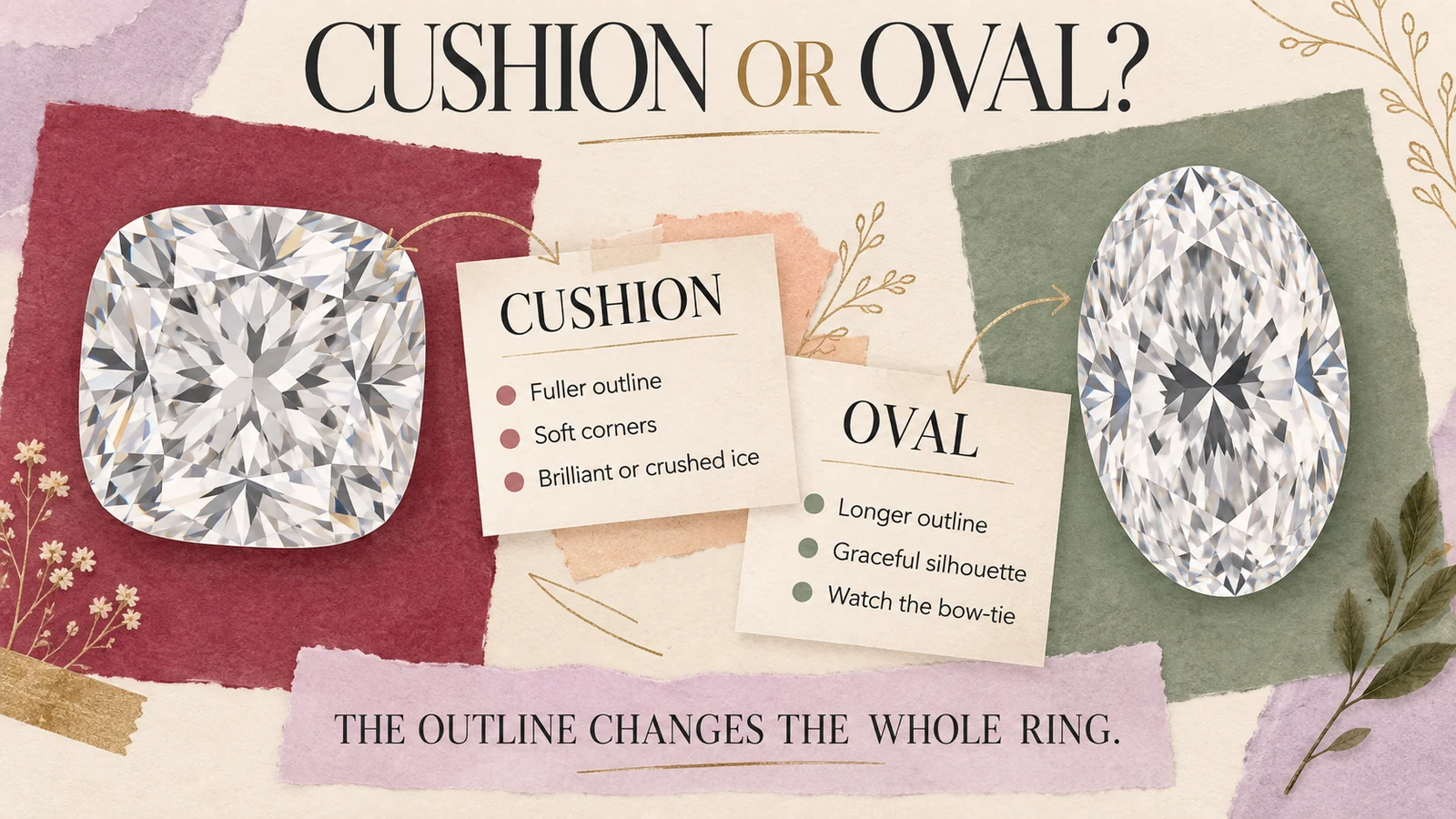
Cushion diamonds have rounded corners and a square or rectangular outline.
There are different faceting styles. GIA distinguishes brilliant cushions from modified cushions, with modified cushions often producing the "crushed ice" appearance.
If you like softer edges and a slightly vintage character, cushion is worth trying.
Emerald
Emerald cuts use step-style faceting rather than the brilliant-style pattern associated with round and radiant diamonds.
The result is a quieter look with broad reflections. It can be extremely elegant, but the open facets can also make colour and clarity characteristics easier to see.
Radiant
Radiant cuts combine a square or rectangular outline with brilliant-style faceting.
They are useful if you like the clean shape of an emerald but want more flashes of light.
Because radiant is a fancy shape, look at the individual stone rather than relying on a single overall cut grade.
Pear and Princess
Pear gives you a rounded end and a point. That point needs a secure setting, especially for a ring worn every day.
Princess gives you a crisp square or rectangular outline and a more geometric feel.
Neither is a compromise choice. They simply create a different ring.
So Which One Should You Choose?
Try them on.
That sounds obvious, but shape is one area where a photograph can be misleading.
Look at the ring from the top, from the side and with your hand relaxed. Notice whether the stone feels too long, too wide, too small or exactly right.
Then compare the actual diamonds.
Aureva’s Perspective
We would never tell someone that round is the "correct" engagement ring shape. If you keep saving photos of ovals, that is useful information. If you keep going back to emerald cuts, that is useful too. The job of the buying process is not to talk you out of your taste. It is to help you understand the shape well enough to choose the right stone within it.
Frequently Asked Questions
Which diamond shape looks biggest?
Elongated shapes such as oval can have a strong face-up appearance for their carat weight.
Which diamond shape is the most classic?
Round brilliant is the classic choice, but "classic" does not mean it is the best fit for everyone.
Which shape is best for a vintage-style ring?
Cushion and emerald can both work well with vintage-inspired designs, but the setting often contributes as much to the vintage character as the centre stone.
Which shape hides inclusions best?
Brilliant-style faceting can make some inclusions less noticeable than broad step facets. The individual stone still matters.
Which shape should I choose for everyday wear?
Choose based on the setting as well as the shape. Pear points need protection, while rounded outlines such as oval and cushion have no exposed sharp point.
About the Author
The Aureva Editorial Team
The Aureva editorial team writes the Journal. We work with lab-grown diamonds and 14KT gold every day, and we write about what we can verify, such as grading reports, growth methods, and what we see across our own orders.