CVD vs HPHT Diamonds: What's the Difference?
Two routes to the same material. What actually separates them, and how much it matters once a stone is finished.
Quick Answer
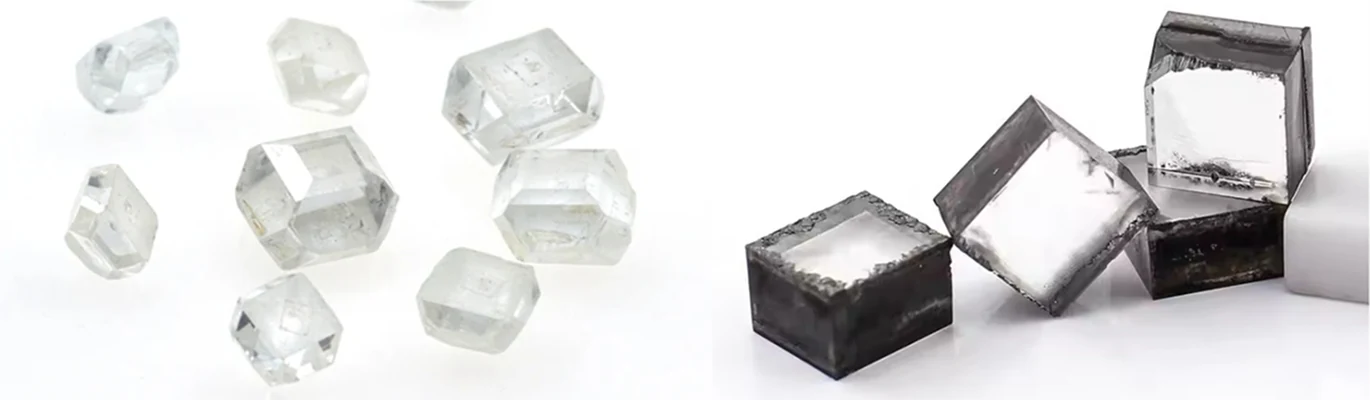
CVD and HPHT are two different methods used to grow lab-grown diamonds. CVD, or Chemical Vapor Deposition, grows diamond from carbon-containing gases in a controlled chamber. HPHT, or High Pressure High Temperature, uses very high pressure and temperature to grow diamond from a seed. Both methods can produce genuine diamonds. The growth method is only one part of evaluating a finished diamond.
Key Takeaways
- CVD and HPHT use different diamond-growth processes.
- Both can produce genuine lab-grown diamonds.
- CVD uses a controlled gas-filled chamber and plasma.
- HPHT uses very high pressure and temperature.
- Neither method automatically means a diamond is better.
- The individual diamond's cut, colour, clarity and other characteristics still matter.
What Does CVD Mean?
CVD stands for Chemical Vapor Deposition.
A small diamond seed is placed in a controlled chamber with carbon-containing gases. Energy creates a plasma, and carbon deposits onto the seed as the diamond crystal grows.
The process allows the crystal to grow layer by layer.
What Does HPHT Mean?
HPHT stands for High Pressure High Temperature.
A diamond seed and carbon source are placed in a growth cell. Very high pressure and temperature create conditions that allow carbon to crystallise around the seed.
The diamond crystal grows until the desired size is reached.
CVD vs HPHT: Side by Side
| Feature | CVD | HPHT |
|---|---|---|
| Full name | Chemical Vapor Deposition | High Pressure High Temperature |
| Main environment | Controlled chamber | High-pressure growth cell |
| Typical growth conditions | Lower pressure and temperature than HPHT | Extreme pressure and high temperature |
| Main ingredients | Diamond seed + carbon-containing gases | Diamond seed + carbon source |
| Growth approach | Carbon deposits onto the seed | Carbon crystallises around the seed |
| Produces genuine diamond? | Yes | Yes |
| Used for gem-quality diamonds? | Yes | Yes |
Does CVD or HPHT Produce Better Diamonds?
Not as a rule of the material itself.
It would be misleading to say every CVD stone is better than every HPHT stone. A finished diamond earns its grades individually, and the report is what tells you.
Things such as:
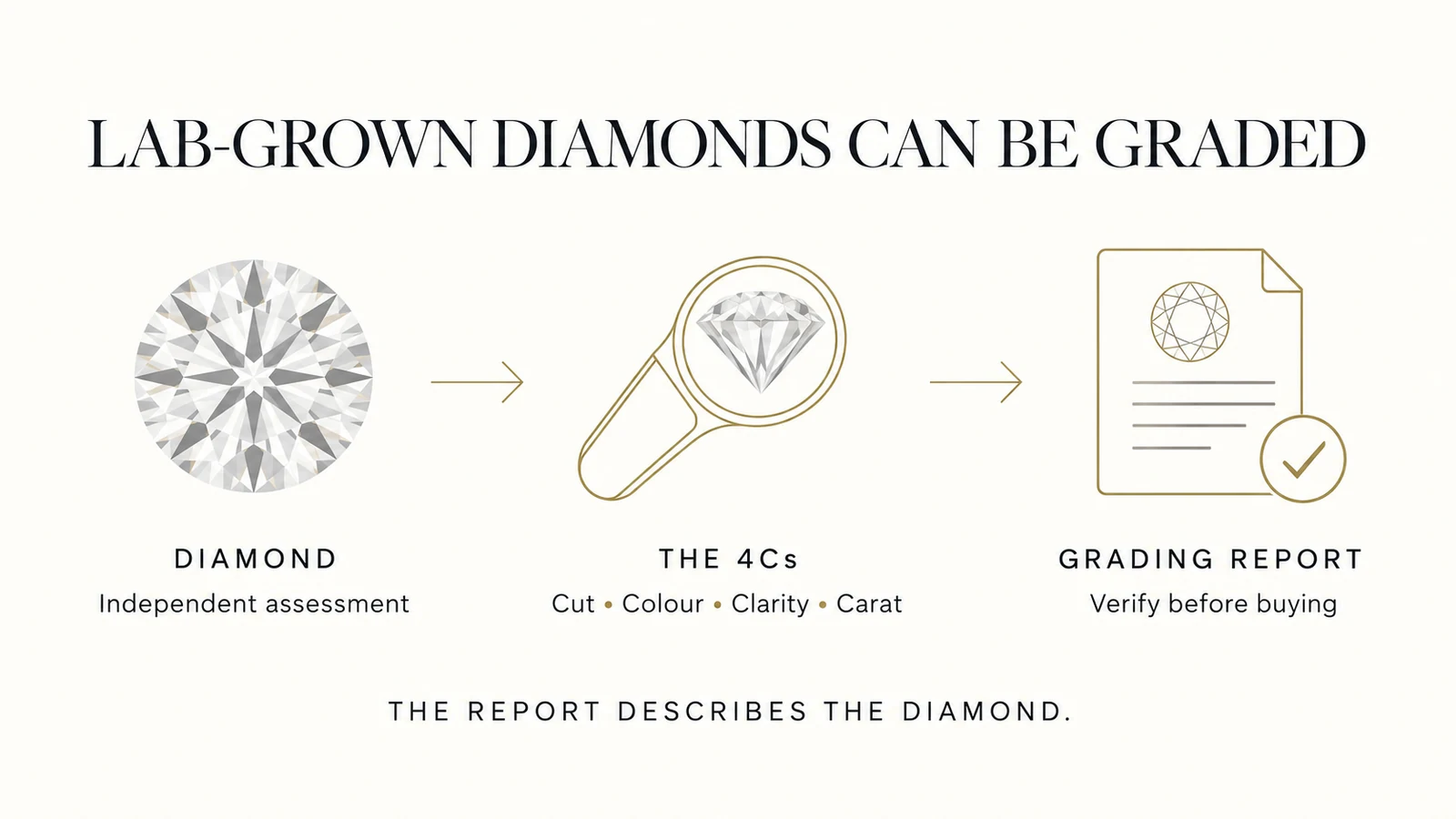
- Cut
- Colour
- Clarity
- Carat
- Proportions
- Polish
- Symmetry
- Treatments
- Overall appearance
can all affect the result.
So the growth method is not a substitute for reading the grades. It is still a real choice, though, and ours is settled: Aureva works in CVD, and CVD is what we would tell you to buy.
Can CVD Diamonds Have Inclusions?
Yes.
Like natural diamonds and HPHT-grown diamonds, lab-grown diamonds can contain internal characteristics.
The type and appearance of these characteristics can vary with the growth process.
This is one reason clarity should be considered on the individual diamond rather than assumed from its growth method.
Can HPHT Diamonds Have Colour?
Yes.
Lab-grown diamonds can occur in different colours, and colour can be influenced by the growth environment and other factors.
Some stones may also undergo post-growth treatment, including HPHT treatment, to alter or improve colour.
If colour or treatment matters to your purchase, check the diamond's grading documentation.
How Can a Lab Identify the Growth Method?
Gemological laboratories use specialised instruments and analysis to identify characteristics associated with laboratory growth.
Reports can include information about the diamond's laboratory-grown origin and, where applicable, growth method and treatments.
The exact reporting format depends on the laboratory and report type.
Which Should You Choose?
Both processes can produce excellent diamonds, and a report will tell you what you are looking at either way. Our own recommendation, though, is straightforward: for a lab-grown diamond, choose CVD.
That said, the growth method is not the whole decision.
Look at their grading reports. Compare their cut, colour, clarity, measurements and appearance. Then consider the growth method as another piece of information.
CVD is what Aureva works in, it is the material our sourcing and inspection is built around, and it is the process we are willing to stand behind on a finished piece. So compare the stones in front of you on their own merits — but where the growth method is the open question, that is our answer.
Aureva’s Perspective
We think this comparison is worth understanding, but it should not become a technical decision you agonise over. For what it is worth, we have already made it. Aureva works in CVD-grown diamonds, and if you are choosing, we would tell you to choose CVD. It is the process we know best, the one our sourcing and checking is built around, and the one we are willing to stand behind on a finished piece. Understand the difference, then spend your attention on the diamond, the design and how the piece looks on you.
Frequently Asked Questions
Is CVD better than HPHT?
Not automatically. Both methods can produce genuine gem-quality diamonds. The individual stone should be evaluated on its characteristics.
Is HPHT better than CVD?
Not automatically. Growth method alone does not determine the quality of a finished diamond.
Are CVD diamonds real?
Yes. CVD is a method for growing genuine diamonds.
Are HPHT diamonds real?
Yes. HPHT is also a method for growing genuine diamonds.
Can you see the difference between CVD and HPHT?
The growth method is generally not something you can reliably determine just by looking at a finished diamond. Specialised gemological testing can identify growth characteristics.
Sources
About the Author
The Aureva Editorial Team
The Aureva editorial team writes the Journal. We work with lab-grown diamonds and 14KT gold every day, and we write about what we can verify, such as grading reports, growth methods, and what we see across our own orders.