Emerald vs Radiant Cut Lab-Grown Diamonds: Which Should You Choose?
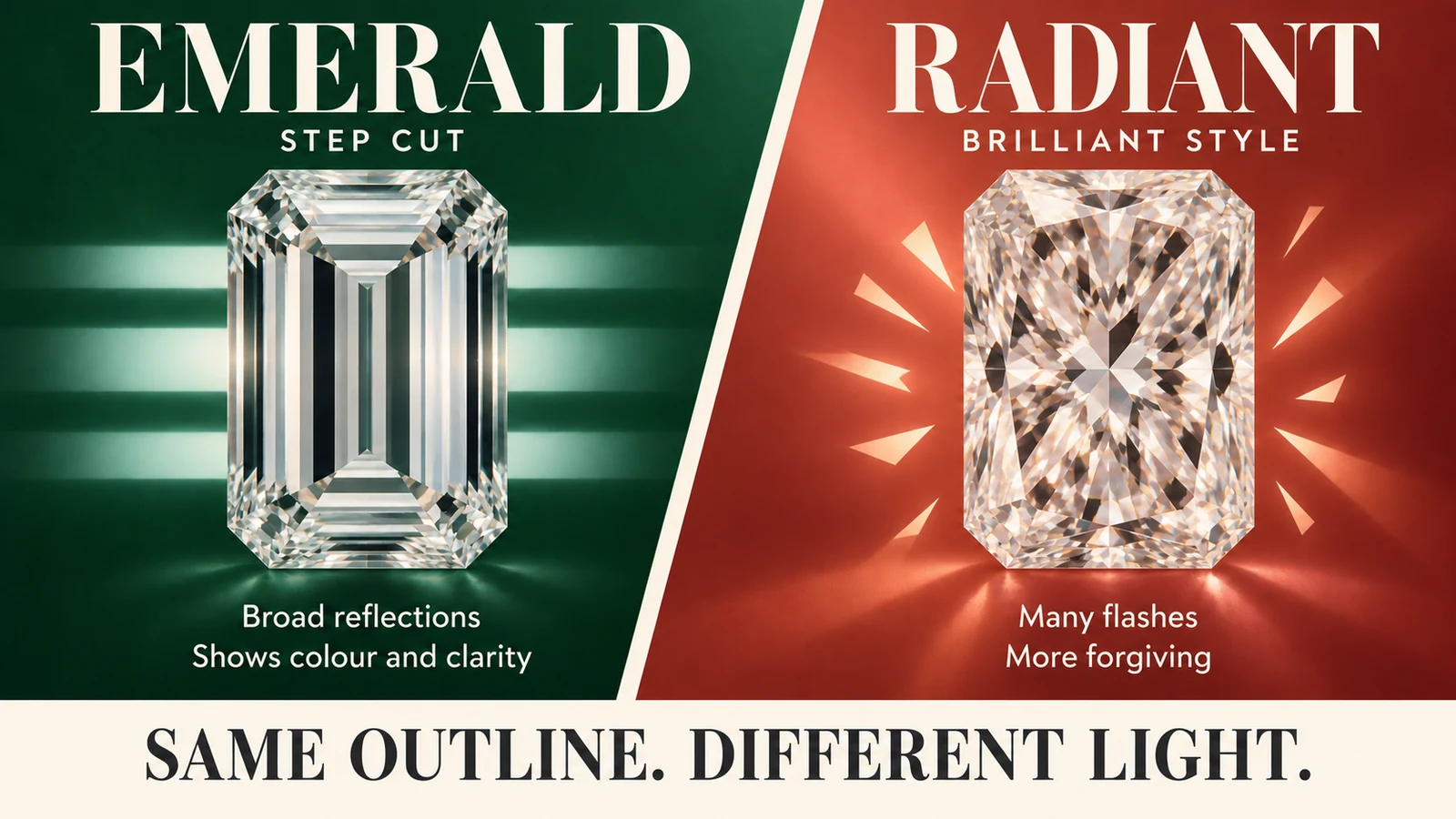
They can share a rectangular outline, but emerald and radiant cuts create almost opposite kinds of light.
Quick Answer
Emerald and radiant lab-grown diamonds can both have square or rectangular outlines, but their faceting is very different. Emerald uses step-cut facets that create broad reflections and a hall-of-mirrors effect. Radiant uses brilliant-style faceting, giving it more flashes and a livelier appearance. Emerald generally needs more attention to colour and clarity because its open facets can reveal both more readily.
Key Takeaways
- Emerald is a step cut with broad, orderly facets.
- Radiant uses brilliant-style faceting and generally gives more sparkle.
- Emerald's open facets can make inclusions and body colour easier to see.
- Radiant is useful if you like a rectangular outline but want more brilliant-style light performance.
- Neither is better. They simply create different visual experiences.
The Similarity Ends at the Outline
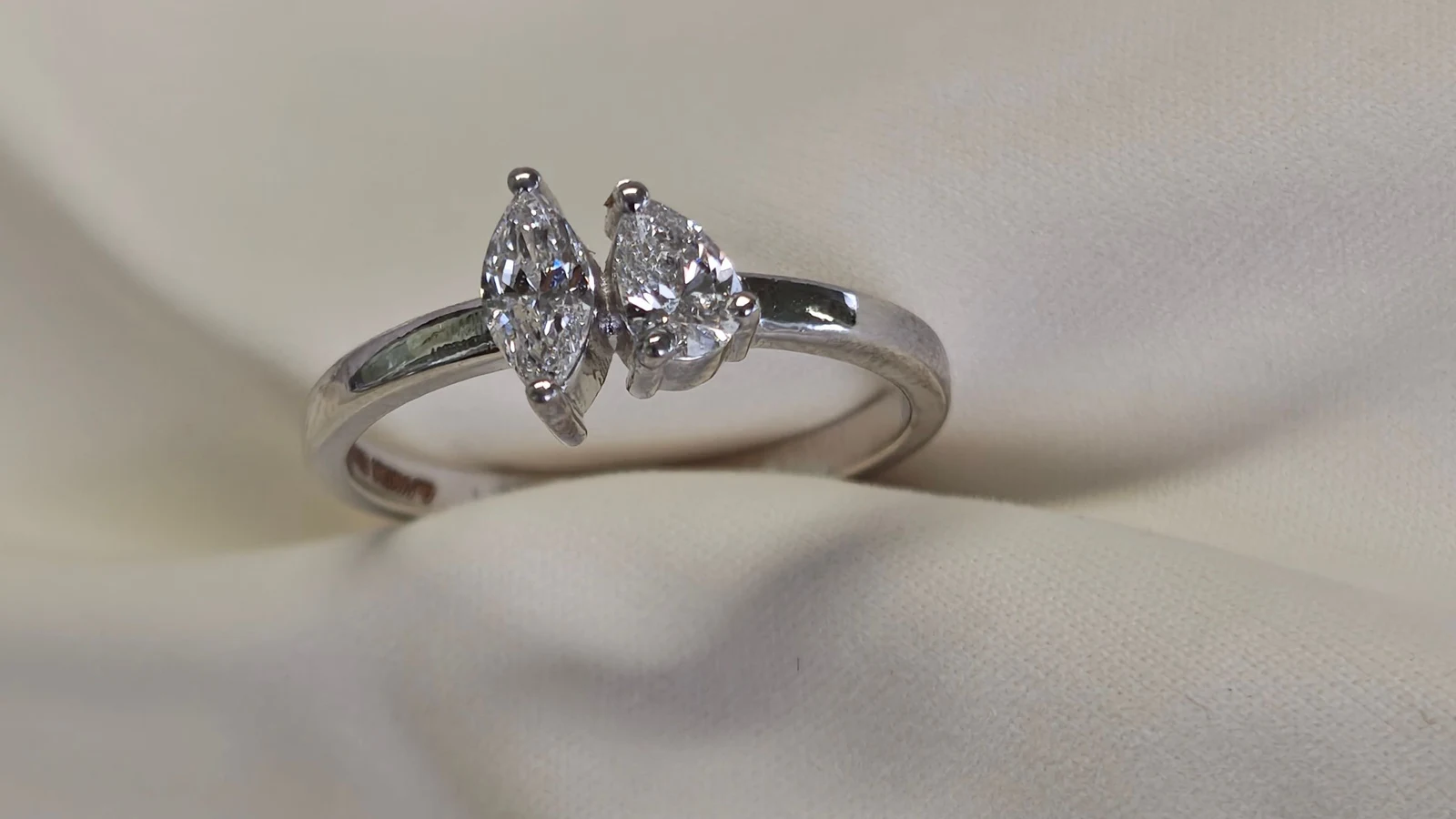
An emerald and a radiant can look similar in a catalogue because both can be rectangular.
Put them next to each other, though, and the difference becomes obvious.
Emerald has broad step facets.
Radiant has brilliant-style facets.
That changes how light moves through the stone and what you notice when you look at it.
Emerald vs Radiant at a Glance
| Emerald | Radiant | |
|---|---|---|
| Faceting | Step cut | Brilliant style |
| Main visual effect | Broad reflections | Many flashes of light |
| Overall feel | Clean and understated | Bright and lively |
| Colour visibility | More noticeable | Often less noticeable |
| Clarity visibility | More noticeable | Often more forgiving |
| Shape | Square or rectangular | Square or rectangular |
| Best starting point | If you like restraint | If you want sparkle |
The Emerald Hall-of-Mirrors Effect
Emerald cuts have long, step-like facets arranged in parallel rows.
Instead of producing lots of small flashes, they create larger reflections that appear and disappear as the stone moves.
GIA describes the emerald cut as having an elegant hall-of-mirrors effect rather than the same kind of brilliance associated with brilliant cuts.
This is why emerald can look extremely sophisticated without looking particularly "sparkly" in the conventional sense.
Radiant Is the More Sparkly Option
Radiant combines a rectangular or square outline with brilliant-style faceting.
The result is generally more active.
You get more flashes as the diamond moves, rather than the larger mirror-like reflections of an emerald.
If you want a rectangular centre stone but still want a lively, sparkly appearance, radiant is the obvious one to try first.
Why Colour Matters More in an Emerald
Step-cut diamonds have broad, open facets.
That makes body colour easier to see than it can be in many brilliant-cut diamonds.
GIA specifically recommends considering higher colour and clarity when purchasing a step-cut diamond because these characteristics can be more visible.
That does not mean you need a D colour emerald. E and F sit in the same colourless range for less, which is where we would buy — and in a step cut, where the facets hide nothing, that margin matters more than it does in a brilliant.
It means colour should be judged carefully.
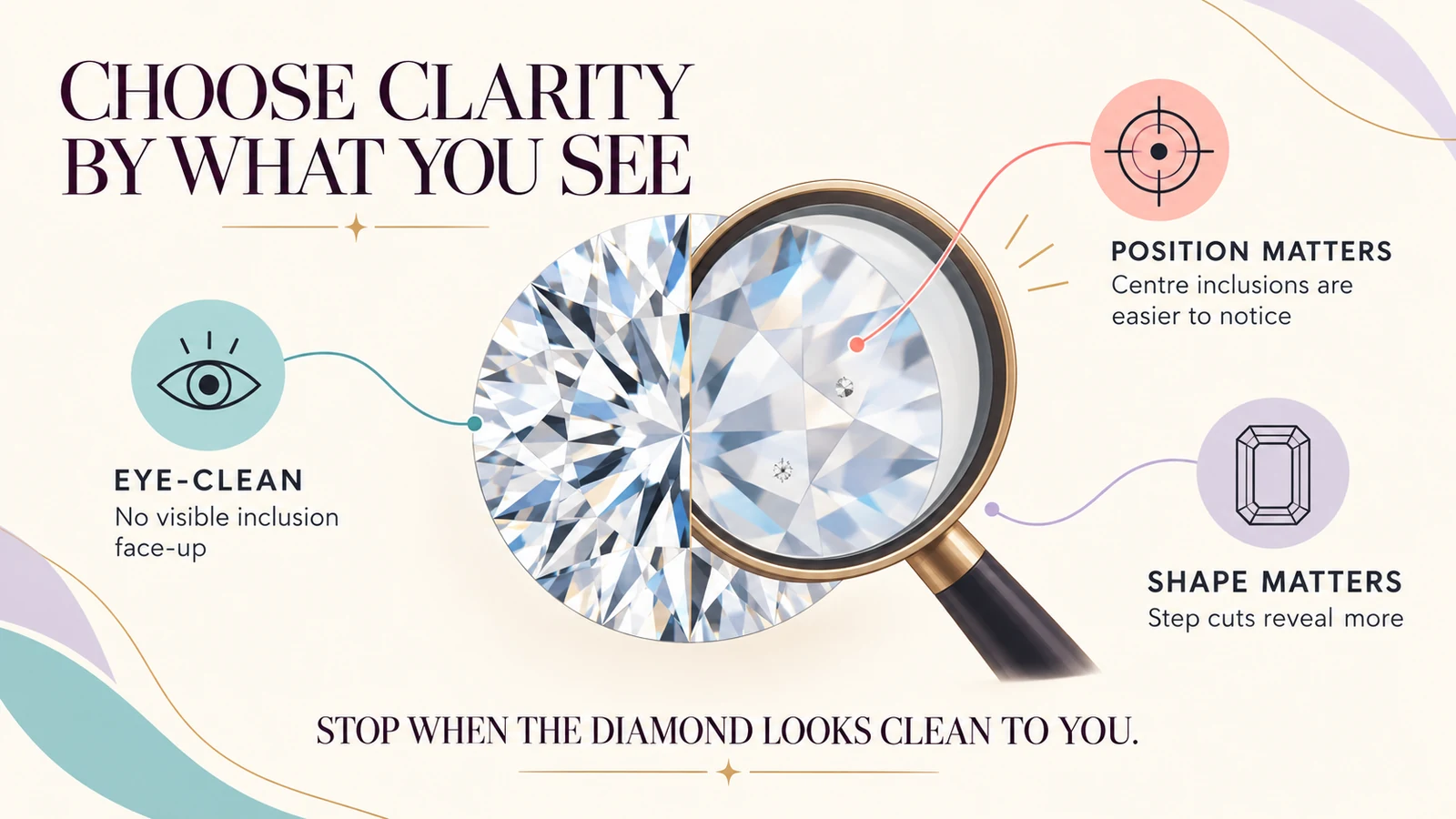
Why Clarity Matters More in an Emerald
The same principle applies to inclusions.
An emerald's broad facets can make an inclusion easier to spot.
With a radiant, the more fragmented brilliant-style facet pattern can sometimes make minor inclusions less obvious, although the individual stone still needs to be inspected.
But again, this is not a guarantee. Look at the actual diamond.
Which Looks Bigger?
Both can have a strong rectangular face-up appearance.
The important measurements are length, width and depth.
A longer emerald can create a more dramatic line on the finger. A broader radiant can look more substantial.
Compare the actual dimensions rather than choosing based only on carat weight.
Which Looks More Modern?
Both can look modern.
Emerald tends to feel more minimal and architectural.
Radiant feels more energetic and glamorous.
The setting makes a big difference. A simple solitaire can make either one feel contemporary, while a halo or detailed band can push the design in a more traditional direction.
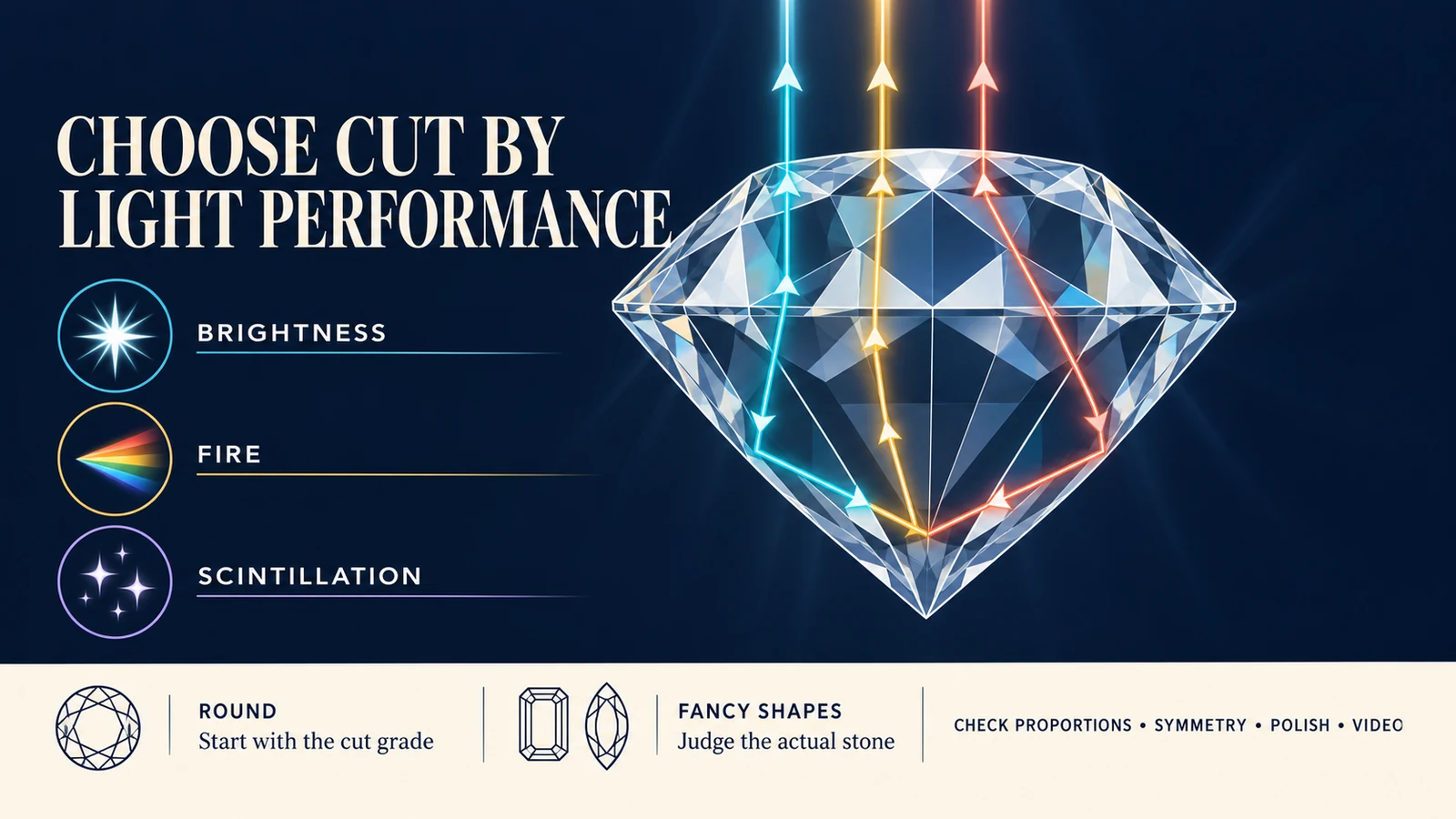
What About Cut Grades?
This is an important buying point.
So do not reject an emerald or radiant because the report does not contain an overall cut grade.
Instead, look at proportions, symmetry, polish and the actual appearance.
How We Would Choose
Choose emerald if you want the diamond to feel calm, clean and reflective.
Choose radiant if you want the rectangular outline but want more movement and sparkle.
Neither is a compromise.
They are two completely different ways of using the same basic outline.
Aureva’s Perspective
Choose emerald if you want the diamond to feel calm, clean and reflective. Choose radiant if you want the rectangular outline but want more movement and sparkle. Neither is a compromise. They are two completely different ways of using the same basic outline. One practical note: because a step cut shows colour and inclusions more readily, this is the shape where we would be least willing to drop below EF and VVS.
Frequently Asked Questions
Which sparkles more, emerald or radiant?
Radiant generally gives more brilliant-style sparkle, while the exact appearance depends on the individual stone and its faceting. Emerald is known more for broad reflections and its hall-of-mirrors effect.
Which shows inclusions more easily?
Emerald can show inclusions more readily because of its broad step facets.
Which shows colour more?
Emerald can reveal body colour more easily than many brilliant cuts. Radiant's faceting can be more forgiving, but the actual stone still matters.
Is radiant cut the same as emerald cut?
No. They can share a rectangular outline, but radiant is brilliant cut while emerald is step cut.
Which is better for an engagement ring?
Choose emerald if you prefer clean reflections and a quieter look. Choose radiant if you prefer more sparkle and flashes of light.
About the Author
The Aureva Editorial Team
The Aureva editorial team writes the Journal. We work with lab-grown diamonds and 14KT gold every day, and we write about what we can verify, such as grading reports, growth methods, and what we see across our own orders.