Are Lab-Grown Diamonds Real?
The short answer is yes. The more useful answer is about what the question is really asking.
Quick Answer
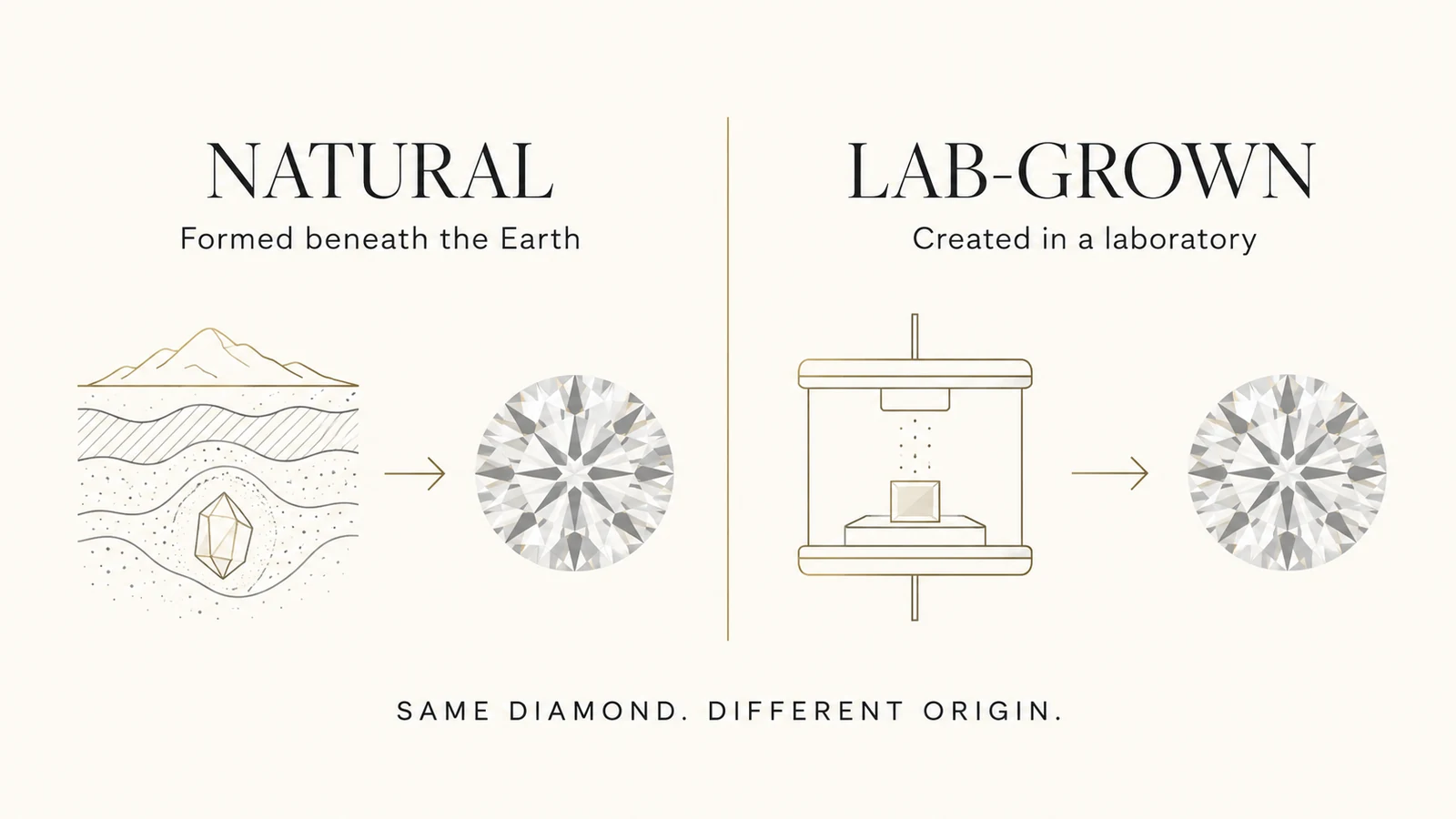
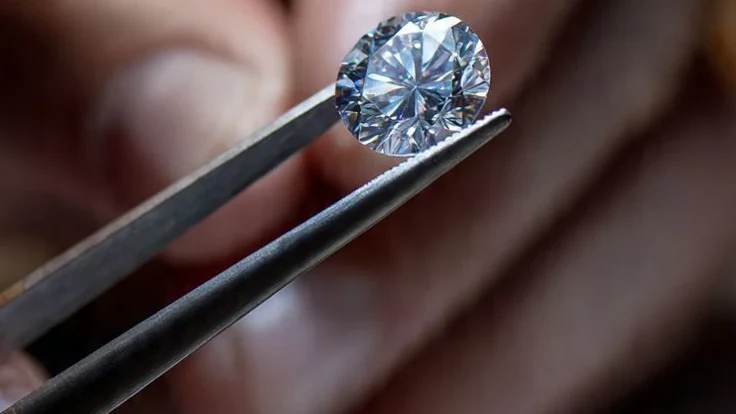
Yes. Lab-grown diamonds are real diamonds. They are not diamond simulants such as cubic zirconia or moissanite. Lab-grown diamonds have essentially the same chemical composition, crystal structure, and physical and optical properties as natural diamonds. The main difference is their origin. Natural diamonds form through geological processes in the Earth, while lab-grown diamonds are produced in controlled laboratory environments using CVD or HPHT technology.
Key Takeaways
- "Lab-grown" describes where the diamond came from.
- Lab-grown diamonds are different from diamond simulants.
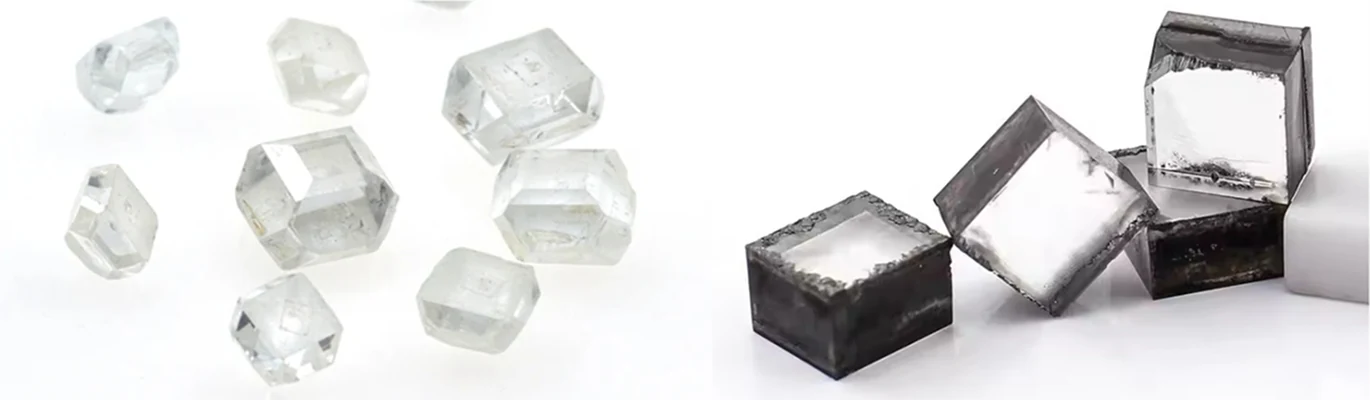
- CVD and HPHT are the two main laboratory growth methods.
- Natural and lab-grown diamonds can have the same fundamental diamond properties while having different origins.
- Gemological laboratories can identify a diamond's origin.
What Does "Real Diamond" Mean?
"Real diamond" is a common question, but there is a simpler way to look at it.
Ask whether the material is actually diamond.
Diamond is a crystalline form of carbon. Natural diamonds and lab-grown diamonds both have the diamond crystal structure and essentially the same fundamental chemical, physical, and optical properties.
So yes, a lab-grown diamond is a real diamond.
What changes is its origin.
Lab-Grown Diamond vs Natural Diamond
The easiest comparison is where each one comes from.
| Natural Diamond | Lab-Grown Diamond | |
|---|---|---|
| Material | Diamond | Diamond |
| Origin | Natural geological formation | Controlled laboratory growth |
| Growth process | Geological | CVD or HPHT |
| Can it be graded? | Yes | Yes |
| Is it a diamond? | Yes | Yes |
Both can be cut and polished for jewellery and evaluated using diamond grading criteria.
The difference is not that one is diamond and the other is something else. The difference is how the diamond came to exist.
Is a Lab-Grown Diamond the Same as a Diamond Simulant?
No.
This is probably the most important distinction to understand.
A diamond simulant is a different material that is used because it resembles diamond. Moissanite and cubic zirconia are examples.
A lab-grown diamond is diamond material that was produced through a technological process rather than geological formation.
So if you are comparing lab-grown diamonds with natural diamonds, you are comparing two diamond origins.
If you are comparing a lab-grown diamond with cubic zirconia, you are comparing diamond with a different material.
Can You Tell a Lab-Grown Diamond From a Natural Diamond?
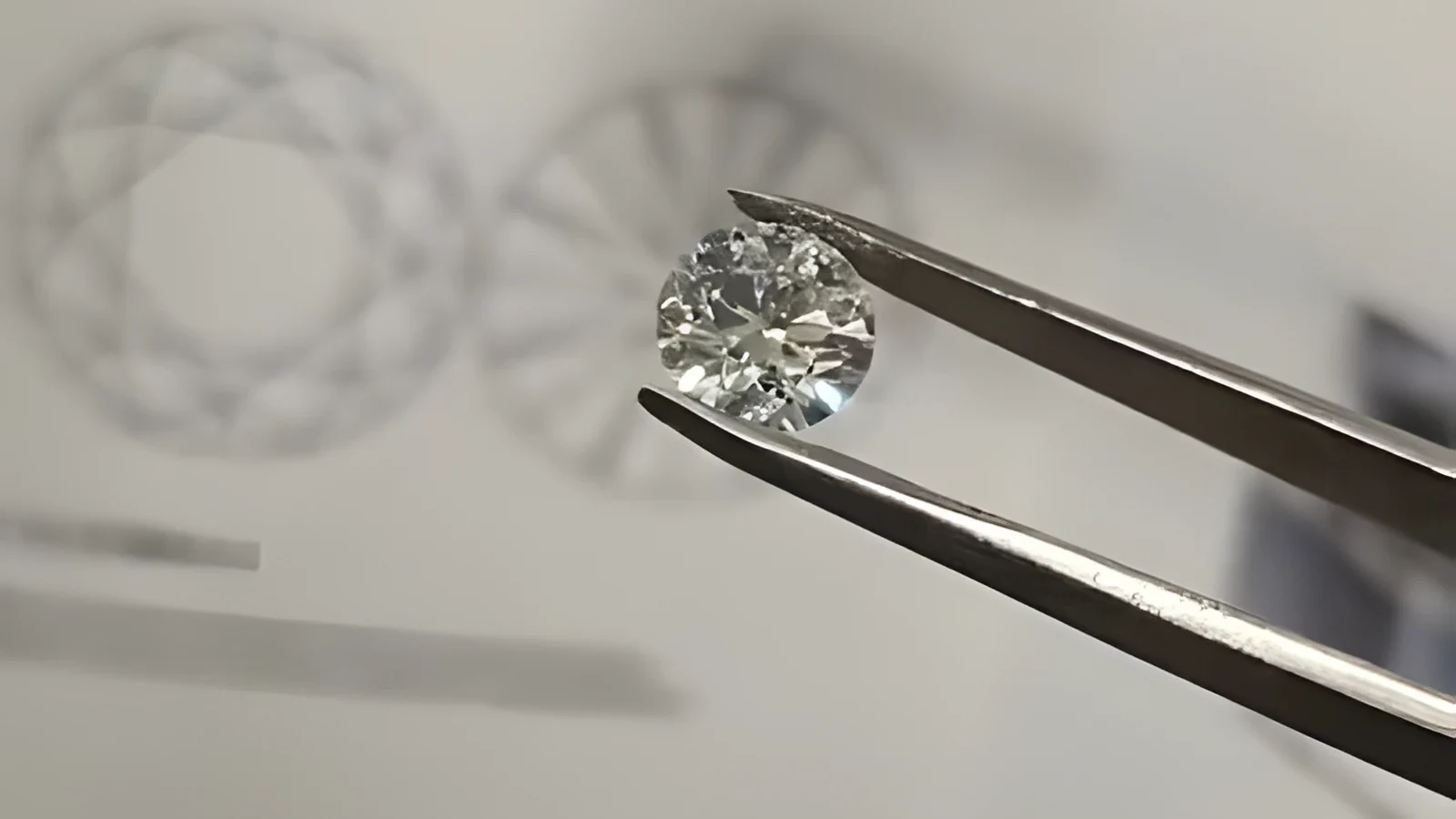
Not reliably just by looking at it.
A finished lab-grown diamond can look very similar to a natural diamond. However, the two can have different growth characteristics that specialised gemological equipment can detect.
Gemological laboratories use advanced testing to determine whether a diamond is natural or laboratory-grown.
This is one reason documentation matters when buying a diamond.
Do Lab-Grown Diamonds Have the Same Hardness?
Yes. Lab-grown diamonds have the characteristic hardness associated with diamond and are generally rated at 10 on the Mohs scale, just like natural diamonds.
Hardness alone, however, does not tell you whether a diamond is natural or lab-grown.
Do Lab-Grown Diamonds Sparkle Like Natural Diamonds?
They can.
Sparkle is strongly influenced by the quality of the finished diamond. Cut, proportions, symmetry, polish, colour, clarity, and lighting all affect how a diamond looks.
Because lab-grown diamonds have essentially the same optical properties as natural diamonds, a well-cut lab-grown diamond can have the same kind of brilliance and fire you would expect from a well-cut natural diamond.
So when comparing two diamonds, it is worth looking beyond origin and considering the characteristics of each individual stone.
What About the Term "Synthetic Diamond"?
You may see the term "synthetic diamond" in technical or scientific material.
In gemological language, synthetic diamond refers to diamond produced through technological processes rather than natural geological processes. It does not mean a diamond simulant.
For consumer-facing Aureva content, we will generally use "lab-grown diamond" because it is clearer and more familiar to shoppers.
Are Lab-Grown Diamonds Graded?
Yes.
Lab-grown diamonds can be submitted to gemological laboratories for independent grading.
A report can document details such as:
- Carat weight
- Colour
- Clarity
- Cut, where applicable
- Measurements
- Laboratory-grown origin
- Growth method or treatment information where reported
For a buyer, this gives you information about the specific diamond rather than asking you to rely only on a seller's description.
So, Are Lab-Grown Diamonds Worth Buying?
There is no universal answer.
For some buyers, the appeal may be the opportunity to choose a diamond with a laboratory-grown origin. Others may place more importance on natural origin.
Either way, the same basic questions are useful:
- What are the diamond's characteristics?
- Is it independently graded?
- What does the report say?
- Is the cut good?
- Does the diamond look right to you?
- Does it work with the jewellery design?
- Does the overall purchase make sense for your budget and priorities?
The right choice depends on what matters most to you.
Aureva’s Perspective
We do not think the useful question is simply whether a lab-grown diamond is "real". It is. The more useful question is what you want from your diamond. For one person, origin may be the most important part. For another, it may be the design, size, quality, or budget. Understanding those priorities makes it easier to make a jewellery decision without getting lost in marketing language.
Frequently Asked Questions
Are lab-grown diamonds real diamonds?
Yes. Lab-grown diamonds are genuine diamonds with essentially the same chemical, physical, and optical properties as natural diamonds.
Are lab-grown diamonds fake?
No. They are diamonds grown using laboratory technology. They are different from diamond simulants such as moissanite and cubic zirconia.
Can a jeweller tell if a diamond is lab-grown?
Not reliably through visual inspection alone. Specialised equipment and gemological testing can be used to identify laboratory-grown origin.
Do lab-grown diamonds last as long as natural diamonds?
They are diamond material and have the characteristic hardness associated with diamond. Like any diamond jewellery, durability in everyday use also depends on the setting, construction, wear, and care.
Are lab-grown diamonds worth buying?
That depends on your priorities. Consider the diamond's characteristics, documentation, design, budget, and origin before deciding.
About the Author
The Aureva Editorial Team
The Aureva editorial team writes the Journal. We work with lab-grown diamonds and 14KT gold every day, and we write about what we can verify, such as grading reports, growth methods, and what we see across our own orders.